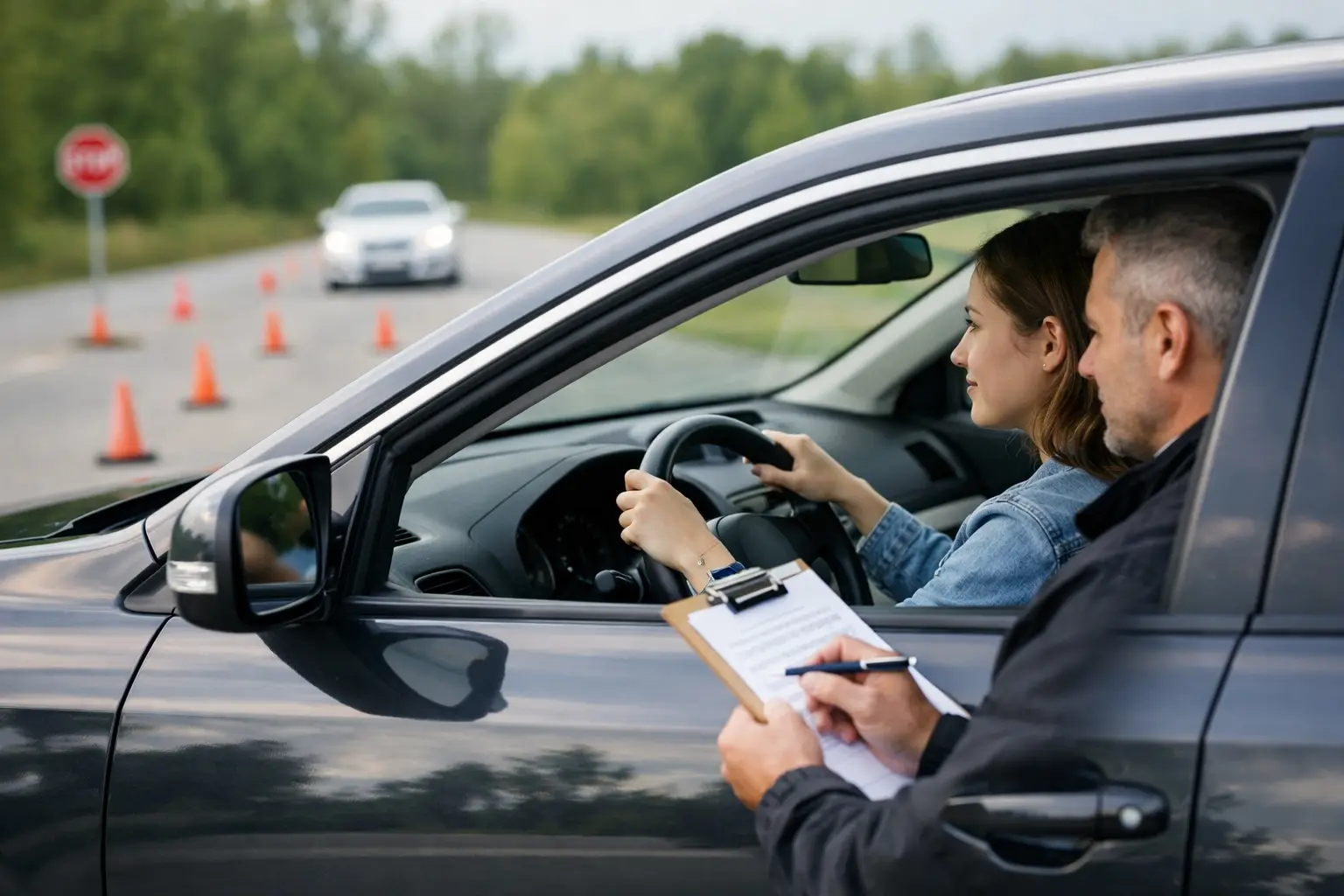
Driving Instructor Versus Parent for New Drivers
The first time a new driver approaches a busy Ottawa intersection, they need more than someone saying, “You’ve got this.” The driving instructor versus parent question matters because both can help, but they teach very differently. A parent may know their child better than anyone. A professional instructor knows how to turn nervous practice into safe, repeatable skills that hold up on a road test and long after it.
For most learners, the strongest plan is not choosing one or the other. It is using family practice to build hours behind the wheel and professional lessons to build technique, judgment, and confidence.
Driving Instructor Versus Parent: The Biggest Difference
Parents often teach from experience. They have driven for years, react naturally to traffic, and can provide frequent practice close to home. That familiarity can make a learner feel comfortable getting started.
The challenge is that experienced drivers do many things automatically. They may check mirrors, scan intersections, adjust speed, and judge following distance without consciously explaining each step. A new driver does not yet have those instincts. They need clear instructions, repetition, and feedback at the exact moment a habit is forming.
A driving instructor teaches the why behind every action. Instead of saying, “Watch for cars,” an instructor can show a student how to scan ahead, when to check mirrors, where to look before changing lanes, and how to identify risks before they become emergencies. That structure is especially valuable for students preparing for a G2 or G road test.
Professional instruction also comes with a neutral perspective. A parent may become worried when their teenager brakes late or misses a shoulder check. The learner may then feel criticized, embarrassed, or tense. Even supportive families can find that driving lessons create stress in a way neither person expects.
An instructor is trained to stay calm, correct mistakes clearly, and keep the lesson moving forward. That calmer environment gives students room to make mistakes, understand them, and improve without feeling judged.
What Parents Do Well
Parents should not be left out of the learning process. They play an important role because safe driving requires practice well beyond a single lesson each week. Regular drives with a parent help a learner become familiar with the vehicle, develop smoother control, and gain comfort in normal traffic.
Family practice is also useful for building consistency. A student can repeat a route to school, work, or the grocery store until everyday tasks feel less overwhelming. Parking at quieter times, practicing turns in familiar neighborhoods, and driving in different weather conditions can all add valuable experience.
The best parent practice sessions are calm and focused. Pick one or two skills for each drive instead of trying to correct everything at once. For example, a parent might focus on smooth stops and proper following distance during one outing, then lane changes and mirror checks during the next.
It also helps to agree on how feedback will be given before the car starts moving. Short, specific comments work better than constant talking. “Check your right mirror before moving over” is more helpful than “Be careful.” If either person becomes frustrated, pull over safely, take a break, and reset.
Where Parent-Led Lessons Can Fall Short
Good intentions do not always produce good driving habits. Parents may have picked up habits that are safe enough for daily driving but do not meet the standard an examiner expects. Rolling stops, incomplete shoulder checks, coasting too quickly into turns, or holding the wheel casually can all affect road-test results.
Parents can also have different expectations. One parent may encourage a learner to enter traffic quickly, while another may tell them to wait too long. Mixed advice makes it harder for a new driver to know what the correct decision is.
There is also the practical issue of local test preparation. A road test is not simply a drive around the block. Students need to demonstrate observation, speed control, lane discipline, right-of-way decisions, parking skills, and defensive driving under pressure. They need to understand what examiners are looking for and how to recover safely from a small error without letting nerves take over.
A professional instructor can identify weak areas early. If a student has trouble with parallel parking, merging, left turns, or maintaining a safe space cushion, targeted lessons prevent them from spending weeks practicing the wrong approach.
Why Professional Lessons Build Confidence Faster
Confidence does not come from being told you are ready. It comes from knowing what to do in real situations and practicing until those actions become dependable.
Professional lessons follow a progression. A student may begin with basic steering, braking, and observation, then move into busier roads, lane changes, highway driving, parking, and road-test simulations. Each skill builds on the one before it, so the learner is challenged without being thrown into situations they are not ready to handle.
Instructors can also adapt a lesson to the individual. A newcomer who has driven in another country may need help understanding local road rules and test expectations. An adult learner returning to driving may need refresher practice in a patient, low-pressure setting. A teen who feels anxious may need more time developing comfort before moving to fast traffic.
At Autoz Driving School, this personalized approach can include private in-car lessons, refresher sessions, G2 and G test preparation, and road-test vehicle support. The goal is not to rush students through a checklist. It is to help them drive safely, think clearly, and arrive at the test feeling prepared.
The Value of Local Road-Test Knowledge
A road test should never depend on memorizing a route. Examiners can take different paths, and safe driving means responding to what is happening around you. Still, local familiarity has real value.
An instructor who regularly teaches in the Ottawa area understands the traffic patterns, common lane setups, school zones, highway entrances, and intersections that can challenge new drivers. They can prepare students for the types of situations they are likely to face, including busy multi-lane roads, residential streets, and changing traffic conditions.
More importantly, they can explain how to approach unfamiliar roads. Students learn how to read signs early, choose the correct lane, manage their speed, and stay composed if they realize they need to change plans. Those are the skills that make someone a safer driver, whether they are on a test route or driving somewhere new.
The Best Approach Is a Partnership
For most new drivers, combining professional instruction with supervised family practice gives the best results. The instructor establishes the right habits and gives objective coaching. The parent helps the learner repeat those habits between lessons and gain more real-world experience.
To make that partnership work, parents should ask the student what they practiced in their lesson. Keep the same language when possible. If the instructor emphasizes mirror checks, shoulder checks, and a clear scan pattern, reinforce that routine at home. Avoid introducing a completely different method unless there is a safety issue.
A learner may be ready for a road test when they can do more than complete maneuvers in a quiet parking lot. They should be able to stay calm in traffic, make safe decisions independently, correct small mistakes, and follow the rules without constant reminders. A practice test with an instructor is often the clearest way to see whether that readiness is real.
When to Choose an Instructor First
Professional lessons are especially helpful when a learner feels nervous, has already failed a test, struggles with a specific skill, or receives conflicting advice at home. They are also a smart choice for busy families that cannot provide consistent practice or do not have a suitable vehicle for road-test preparation.
If cost is a concern, think about efficiency as well as hourly pricing. A few focused lessons can correct habits that might otherwise lead to a failed test, another booking fee, more time off work or school, and weeks of lost momentum. Clear coaching early often saves time later.
A parent can give a new driver valuable practice. A qualified instructor can give that practice direction. Start with the support your learner needs most, keep every session calm and purposeful, and let confidence grow one safe decision at a time.