A green light does not always mean it is safe to go. A driver may turn across your path, a cyclist may enter the crosswalk, or the vehicle ahead may stop suddenly. Learning how to practice defensive driving means training yourself to notice those possibilities before they become emergencies. It is not about driving scared or assuming everyone will make a mistake. It is about staying calm, alert, and prepared to make the safest next decision.
For new drivers, defensive driving is also one of the clearest ways to build real confidence. When you have a plan for changing lanes, approaching intersections, handling tailgaters, and reacting to hazards, driving feels less unpredictable. Those same habits also make a strong impression on a road test examiner.
What defensive driving really looks like
Defensive driving is the habit of managing space, speed, visibility, and attention so you have time to react. A defensive driver follows traffic laws, but they do more than that. They look ahead, expect changing conditions, and leave themselves an exit when possible.
For example, you may have the right of way at a four-way stop. Defensive driving means confirming that the other driver has actually stopped before you enter the intersection. On a highway, it means checking mirrors early, scanning blind spots before moving over, and avoiding a lane change if another driver is speeding up beside you.
This approach does not require aggressive driving or overly slow driving. In fact, driving far below the flow of traffic can create risk too. The goal is steady, predictable driving that gives you and everyone around you enough room to respond.
Start with a strong visual scanning routine
Many avoidable driving mistakes begin because a driver is focused only on the vehicle directly ahead. Good defensive driving requires a wider view of the road.
Look well ahead of your vehicle, not just at the pavement in front of your hood. On city streets, scan toward the next intersection and watch for pedestrians near crosswalks, vehicles waiting to pull out, and brake lights developing farther ahead. On faster roads, look farther into the distance so you can spot slowing traffic early instead of reacting at the last second.
Your mirrors matter just as much. Check them regularly, especially before braking, turning, changing lanes, or reducing speed. You do not need to stare at them. Quick, purposeful checks help you understand who is around you and whether a sudden move could affect another driver.
Practice the mirror and shoulder-check habit
Make your checks deliberate during every lesson or practice drive. Before changing lanes, use the full sequence: mirror, signal, mirror again, shoulder check, then move only when the lane is clearly safe. A signal tells others what you plan to do. It does not give you permission to move into occupied space.
This routine is especially useful for road test preparation. Examiners need to see that you are checking your surroundings, but more importantly, it protects you from vehicles, motorcycles, and cyclists that may not appear in a quick mirror glance.
Create space before you need it
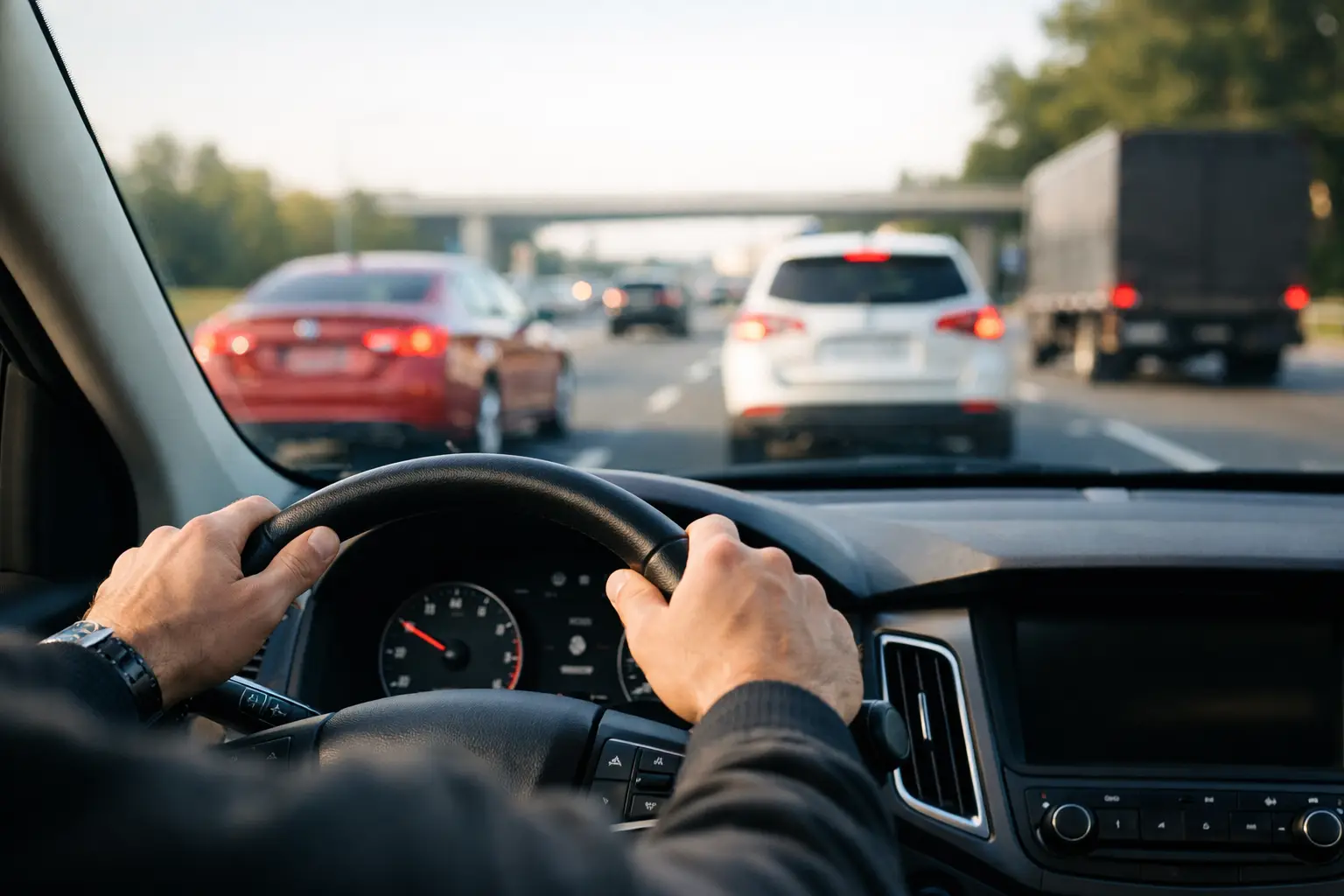
Following too closely is one of the most common problems for inexperienced drivers. When the vehicle ahead brakes unexpectedly, a short gap takes away your choices. A proper following distance gives you time to brake smoothly, check mirrors, and decide whether you need to steer away from danger.
Use the three-second rule in normal conditions. Choose a fixed object, such as a sign or utility pole. When the vehicle ahead passes it, count slowly: one thousand one, one thousand two, one thousand three. If you reach the object before finishing, increase your distance.
Three seconds is a starting point, not a permanent rule for every situation. Leave more room in rain, snow, fog, darkness, heavy traffic, or when following a large truck. If your view is limited, your space cushion should be larger. A wet road can turn a normal stop into a longer slide, even at speeds that usually feel manageable.
Space is also helpful on the sides of your vehicle. Avoid driving beside another car for an extended time when you can safely pass or ease back. If the other driver drifts, merges, or swerves around a road hazard, you want room to respond.
Use speed as a safety tool
Driving the speed limit is a strong starting point, but safe speed depends on conditions. A posted limit assumes reasonably normal weather, visibility, and road conditions. If a residential street is crowded with parked cars, children, delivery vehicles, or pedestrians, a defensive driver reduces speed and prepares for a door opening or a person stepping out.
Practice easing off the accelerator early rather than braking hard late. When you see traffic compressing, a stale green light ahead, or a vehicle approaching a crosswalk, let off the gas and assess the situation. Smooth braking is safer, more comfortable for passengers, and easier to control.
Be especially careful at intersections. Many serious collisions happen because drivers rush a yellow light, turn without checking for pedestrians, or assume oncoming traffic will yield. Approach with a clear plan: know where you are going, reduce speed when needed, and never enter an intersection unless you have a safe path through it.
Expect the mistakes other drivers may make
Defensive driving is not about judging other people. It is about recognizing common risks without letting them surprise you. Assume a driver waiting to turn may not see you. Assume a vehicle in the next lane may merge without signaling. Assume a parked car may open its door.
That mindset changes your position on the road. When passing a line of parked cars, leave room where possible and watch for people inside. When a large truck blocks your view at an intersection, slow down rather than assuming the road beyond it is clear. When a driver is weaving, braking unpredictably, or using a phone, increase your following distance and avoid driving beside them.
If another driver is aggressive, do not compete. Let them go. Avoid eye contact, gestures, sudden braking, or attempts to teach them a lesson. Your job is to get yourself and your passengers home safely, not win an argument on the road.
Practice defensive driving in real situations
The best practice is structured and repeated. Start in lower-pressure areas, then build toward busier routes as your skills improve. A quiet parking lot can help you work on vehicle control, but defensive habits need to be practiced around real traffic, intersections, pedestrians, and changing road conditions.
Choose one focus for each drive. On one trip, work on keeping a proper following distance. On another, focus on early mirror checks and smooth lane changes. Then combine the skills as they begin to feel natural. Trying to correct every habit at once can make a nervous driver feel overwhelmed.
A useful practice routine includes these situations:
- Residential streets with parked cars, pedestrians, and frequent stops
- Multi-lane roads where you can practice lane choice and safe lane changes
- Intersections with turning traffic, crosswalks, and changing signals
- Highway or freeway driving with merging, space management, and higher speeds
- Rainy or low-light conditions once you have a solid foundation in clear weather
After each drive, take two minutes to review what happened. Did you notice hazards early enough? Did you leave enough space? Was there a moment when you felt rushed? Honest reflection helps you identify one skill to practice next time.
Keep distractions out of the driver’s seat
A defensive driver cannot scan effectively while checking messages, adjusting playlists, eating, or trying to manage a stressful conversation. Set up navigation, music, climate controls, and mirrors before moving. Put your phone away or use a do-not-disturb setting before the car is in motion.
Distraction is not limited to phones. Anxiety can be distracting too. If you are nervous, give yourself extra time, choose a familiar route, and talk through your decisions with a qualified instructor or experienced supervising driver. Calm, specific coaching is far more useful than hearing only, “Just relax.”
Professional lessons can be particularly valuable when you are preparing for a road test, returning to driving after a long break, or struggling with a specific skill. A patient instructor can spot habits you may not notice, such as late braking, missed mirror checks, or entering turns too quickly, then help you correct them through focused practice.
Turn every drive into a safer habit
Defensive driving becomes easier when it is no longer a checklist you recite in your head. With repetition, scanning ahead, checking mirrors, leaving space, and slowing early become part of how you drive.
Before your next trip, choose one habit to improve and practice it on purpose. Small, consistent decisions create the kind of confidence that holds up in traffic, in difficult weather, and when it matters most.