Instructor Car Versus Rental Car for Your Road Test
The vehicle you bring to a road test can affect far more than your comfort. When choosing an instructor car versus rental car, you are deciding whether to test in a vehicle you have practiced in with a trained coach or one that may be new to you on one of the most important driving days of your life.
Both options can get you to your G2 or full G road test. The better choice depends on your preparation, budget, driving experience, and the condition of the specific vehicle. For many Ottawa learners, an instructor car provides more confidence and fewer surprises. Still, a rental car can make sense in certain situations.
What Makes an Instructor Car Different?
An instructor car is not simply a car available for test day. It is a training vehicle used for driving lessons and road test preparation. You may already know how the brakes respond, where the controls are, how the mirrors are adjusted, and how the vehicle handles turns, lane changes, and highway speeds.
That familiarity matters when nerves are high. A road test examiner is watching your observations, speed control, lane position, turns, parking, and decisions. You should be focused on those skills, not trying to figure out whether the turn signal is on the left side of the steering wheel or how sensitive the brake pedal feels.
A professional instructor car is also maintained with road-test readiness in mind. The lights, signals, tires, windshield, horn, mirrors, seat belts, and other required equipment should be checked regularly. Many training vehicles have an instructor brake, which supports safe practice before the test. During the actual road test, the examiner will follow the testing center’s rules for the vehicle being used.
When you book road test support with a driving school, you may also receive a warm-up lesson before the appointment. That is a practical advantage. You can review the maneuvers most likely to appear on your test, settle your nerves, and arrive at the testing center already focused.
Instructor Car Versus Rental Car: The Key Differences
The main difference is preparation. A rental car gives you transportation. An instructor car is part of a structured road-test plan.
With an instructor car, you usually have the benefit of practicing in the same or a very similar vehicle beforehand. Your instructor can adjust the seat and mirrors with you, correct habits before test day, and make sure you understand every control. If you have been taking lessons consistently, the vehicle can feel like a familiar workspace rather than another unknown variable.
A rental car may be unfamiliar, even if it is a model you have driven before. Trim levels vary. One vehicle may have a foot-operated parking brake, while another has an electronic button. Mirror adjustments, rear visibility, steering sensitivity, and blind-spot systems can all feel different. None of these differences automatically cause a failed test, but they can distract a nervous driver.
Cost is another consideration. A rental may look less expensive at first, especially if you only need it for a few hours. However, the final price can include insurance, mileage, fuel, deposits, and extra fees. You also need to confirm that the rental company allows the vehicle to be used for a road test and that you meet its age, license, and insurance requirements.
An instructor-car package may cost more than the base rental rate, but it can include test-day use of the vehicle, a final practice session, pickup arrangements, and professional support. The value is not only the car. It is the reduced stress and targeted preparation around it.
When an Instructor Car Is Usually the Better Choice
An instructor car is often the strongest option for first-time test takers, nervous drivers, newcomers adjusting to local driving expectations, and anyone who has had limited practice in another vehicle.
It is especially useful if you are taking your G2 test. At this stage, drivers are still building the habits that examiners notice immediately: checking mirrors before braking, scanning intersections, maintaining a safe following distance, completing smooth stops, and performing parking maneuvers with control. A familiar car lets you concentrate on those habits.
It can also be the smarter choice for test retakers. If your previous test did not go as planned, the answer is not always more practice alone. You may need specific feedback on why points were lost and a calm, organized plan for correcting those issues. Practicing in the test vehicle with an instructor helps turn a frustrating experience into measurable improvement.
For a full G test, vehicle familiarity remains valuable, particularly if highway merging, lane changes, and speed management make you uneasy. You want to know how the vehicle accelerates onto the highway, how quickly it responds when you adjust speed, and where your blind spots are.
When a Rental Car Can Make Sense
A rental car can be a reasonable option if you are already a confident, experienced driver and have enough time to become familiar with the vehicle before your appointment. It may also work if you do not have access to a personal car and do not need a lesson or test-day coaching.
Before relying on a rental, read the agreement carefully. Confirm that the company permits road-test use, that your license status qualifies you to rent or be listed as a driver, and that the insurance coverage is appropriate. Requirements vary by company, and assumptions can create expensive problems on test day.
You should also inspect the car well before the test. Learn the locations of the headlights, defroster, hazard lights, windshield wipers, parking brake, fuel door, and hood release. Adjust the driver’s seat, mirrors, steering wheel, and climate controls. Practice driving it in city traffic, on faster roads, and in a parking lot if possible.
Do not pick up a rental 20 minutes before your test and expect to feel fully prepared. A technically acceptable vehicle is not necessarily a comfortable vehicle.
Road-Test Vehicle Requirements You Cannot Ignore
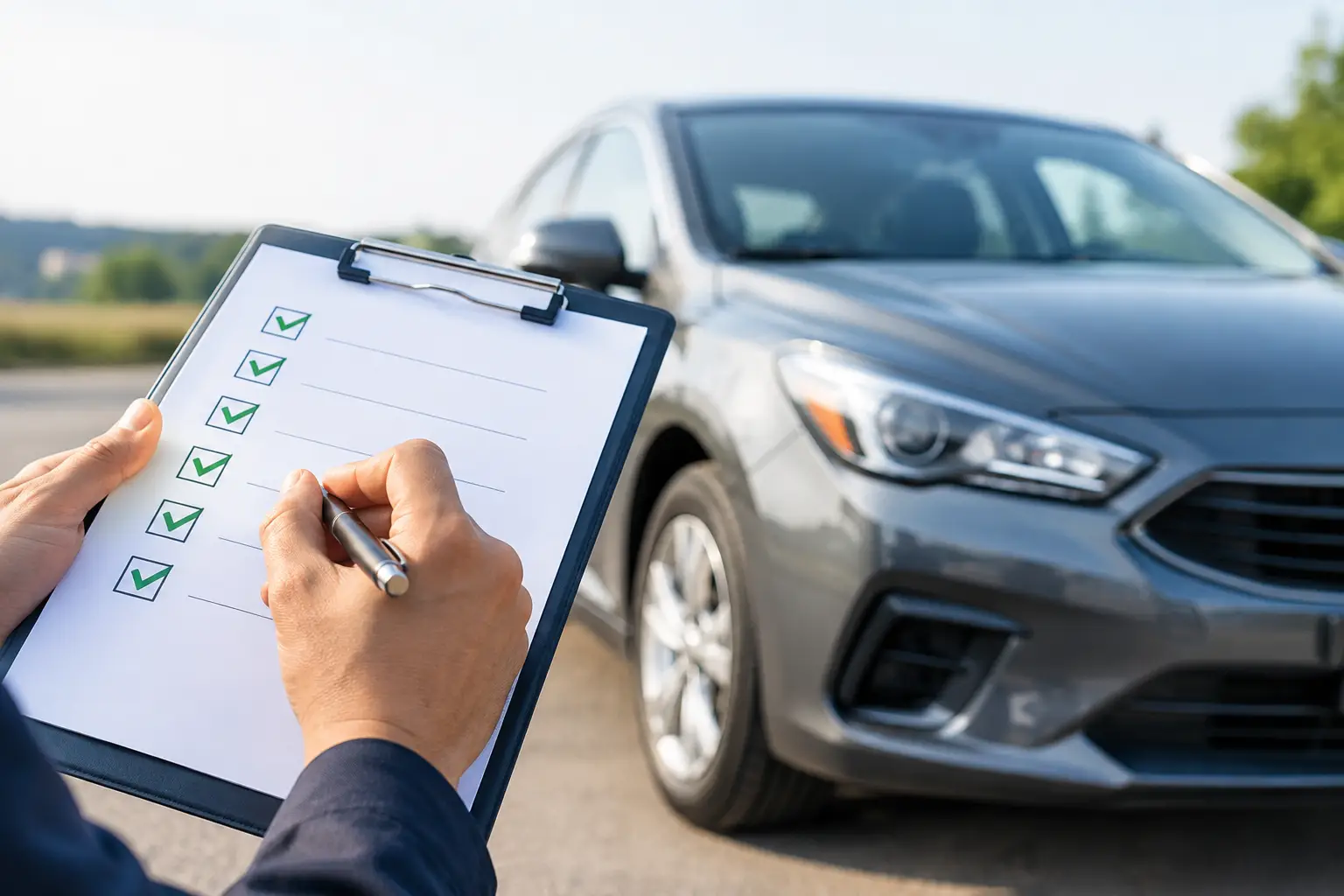
Whether you use an instructor car, rental car, or family vehicle, the vehicle must be safe and legally ready for the road test. Examiners can refuse a test if the vehicle has safety concerns or does not meet testing requirements. That can mean losing valuable time and, depending on the booking terms, potentially losing your test fee.
Before leaving for the testing center, make sure the vehicle has working brake lights, turn signals, headlights, windshield wipers, horn, mirrors, seat belts, and properly inflated tires. The windshield should provide clear visibility, and warning lights should not signal an urgent mechanical issue. Keep enough fuel in the vehicle so there is no concern about running low during the appointment.
The vehicle also needs valid registration and insurance. Do not assume a borrowed car is ready just because it belongs to a friend or relative. Check it yourself in advance. A loose bumper, cracked mirror, damaged tire, or nonworking signal can turn an otherwise well-prepared test day into a cancellation.
How to Choose Without Overthinking It
Ask one honest question: which vehicle gives you the best chance to drive the way you have practiced?
If the answer is a school vehicle you know well, choose the instructor car. If you are comfortable in a rental, have practiced in it sufficiently, and have confirmed every rental and insurance detail, it may be suitable. If you have a reliable family car that you use regularly, that can be an excellent third option.
Avoid choosing based only on the lowest advertised price. A road test is a short appointment, but passing can save you the cost, scheduling stress, and lost momentum of a retest. The right vehicle is the one that lets you show your real skill safely and calmly.
At Autoz Driving School, road test support is designed to give learners that calm. A final lesson, local test preparation, and access to a familiar training vehicle can help you arrive ready to demonstrate what you know instead of worrying about the car.
Your road test does not require perfection. It requires safe, consistent decisions. Choose the vehicle that helps you stay focused on the road, follow the rules, and drive with the confidence you have earned.