The examiner is quiet, the curb suddenly looks closer than usual, and your hands feel a little tighter on the wheel. That is exactly why having solid parallel parking tips for test day matters. Parallel parking is not just about fitting into a space. It is about showing control, observation, and calm decision-making under pressure.
For many drivers, this is one of the most stressful parts of the road test because everything happens slowly and visibly. The good news is that examiners are not looking for perfection. They are looking for safety, awareness, and a method you can repeat reliably.
Why parallel parking on the test feels harder than practice
In practice, you usually know what is coming. On the test, your timing, nerves, and attention all feel different. A move that felt easy in a quiet lesson can feel much more difficult when you know you are being evaluated.
That pressure often causes rushed steering, missed mirror checks, or overcorrecting when the car is not perfectly lined up. Most mistakes happen before the vehicle even starts backing up. If your setup is off, the rest of the maneuver becomes harder than it needs to be.
This is why a simple, repeatable routine matters more than a fancy trick. Good drivers do not guess their way into a spot. They set up carefully, check around the vehicle, and make small corrections without panicking.
Parallel parking tips for test success start with setup
The first part of the maneuver is where you make the parking job easier or harder. Pull up beside the vehicle in front of the space with a controlled, even stop. You want to be close enough to park efficiently, but not so close that you leave yourself no turning room. In most cases, around 2 to 3 feet away is a good target.
Your car should be reasonably parallel to the vehicle beside you. If your front end is angled before you begin, the rest of the move can quickly go off track. Take the extra second to position properly. That second can save you from a major correction later.
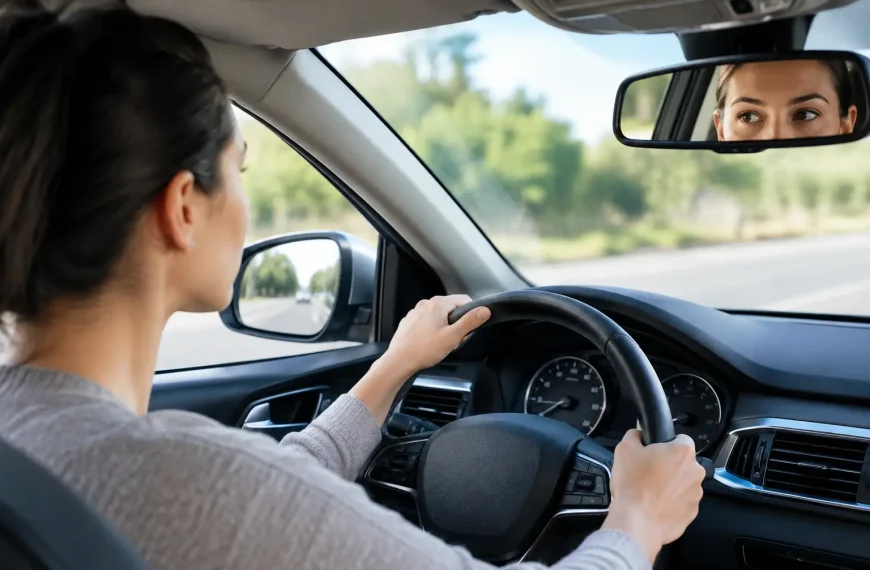
Before you shift into reverse, do your observations clearly. Check your rearview mirror, side mirrors, blind spot, and the area around the car. The examiner wants to see that you are not just parking by memory. You are parking with awareness.
If there is traffic behind you, stay calm. Signal, wait if needed, and proceed when it is safe. Rushing because another driver seems impatient is one of the fastest ways to lose control of the maneuver.
The basic movement to remember
Once your vehicle is set up well, reverse slowly. Speed is a major factor here. If you back up too quickly, your steering corrections come too late and the car can swing in too sharply.
As the rear of your car begins to enter the space, turn the wheel smoothly. The exact timing depends on the size of the space, the shape of the curb, and the vehicle you are driving. That is why memorizing a single magic reference point does not always work. Smaller cars, larger SUVs, and different test conditions can change the feel of the move.
What stays consistent is this: back in slowly, watch your surroundings, and let the car move in stages. First, angle the car into the space. Then, once your front end has enough room to clear the vehicle ahead, straighten and bring the vehicle in parallel to the curb.
If you notice you are getting too close to the curb, stop and adjust. If you are too far out, stop and correct. Examiners generally prefer a safe correction over an uncontrolled attempt to force the car into position.
What examiners usually want to see
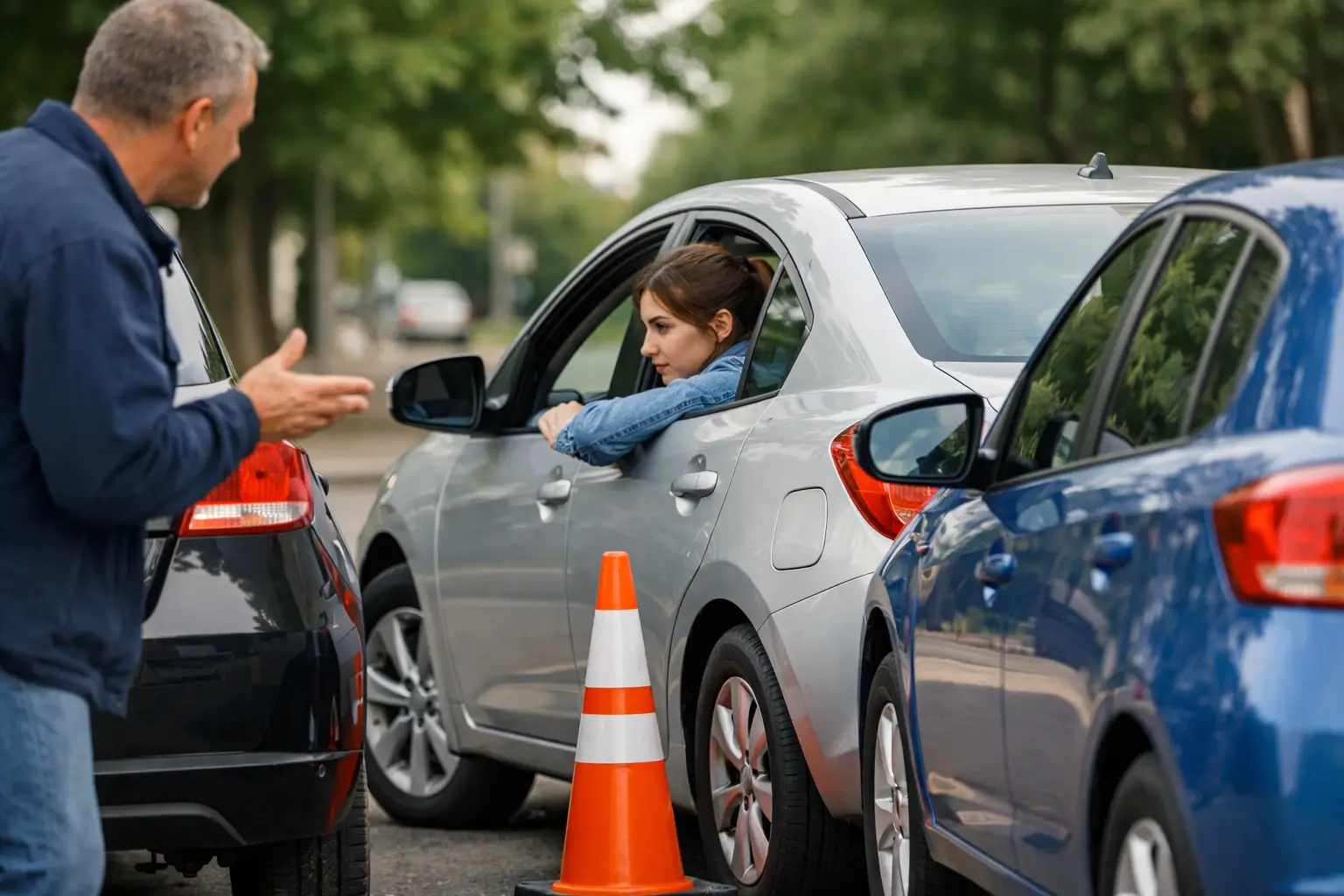
Parallel parking is not graded only on where the car ends up. The process matters. An examiner is typically watching whether you signal properly, check mirrors and blind spots, control your speed, and keep the vehicle safe throughout the maneuver.
They also want to see that you finish in a reasonable position. That means close enough to the curb, generally straight, and not touching the curb hard. A light tire touch may be treated differently depending on local standards and how the maneuver is otherwise performed, but hitting the curb with force is a common problem and can count against you.
You also do not need to park with inches-perfect precision like a professional valet. On a road test, safe and competent is the goal. That means your car is parked legally, under control, and without creating a hazard.
The most common mistakes during parallel parking
Many test-takers assume the biggest mistake is ending up a little far from the curb. In reality, the more common issues are poor observation and loss of control.
One common problem is starting the maneuver before checking blind spots. Another is steering too early or too late because the driver is focused only on the curb instead of the full vehicle position. Some drivers freeze once the car looks crooked and forget they are allowed to fix it.
There is also the issue of rushing. Nervous drivers often back in too fast, then brake suddenly, then oversteer. That creates a chain reaction of corrections that makes the maneuver look less confident than it needs to be.
A better approach is to think slow, smooth, and deliberate. If each step is clear, the whole parking move becomes easier to manage.
How to stay calm if the first attempt is not perfect
This matters more than most learners realize. During the test, a small mistake does not have to become a bigger one. If your angle is off, stop. Breathe. Check around the vehicle again and correct safely.
What examiners do not want to see is panic. They do not want a driver who keeps backing up without knowing where the curb, traffic, or nearby vehicle is. A controlled adjustment usually shows better judgment than trying to salvage a bad position with fast steering.
This is especially true for nervous drivers and test retakers. If you have struggled with parking before, your goal should not be to force a perfect first motion. Your goal should be to show that you can recognize the vehicle position and fix it safely.
Practice the test version, not just the easy version
A lot of learners practice parallel parking in an empty residential area with lots of space and no pressure. That is useful at first, but it does not fully prepare you for the road test.
You should also practice parking behind a real vehicle, near a real curb, with proper signaling and full observations. Practice when you need to pause for traffic. Practice on both quieter streets and more realistic test-style roads. The more familiar the full process feels, the less intimidating it becomes on test day.
If you are preparing for a road test in Ottawa, local practice can make a real difference because road layout, traffic flow, and curb spacing all affect timing. That is one reason many learners improve faster with structured coaching. At Autoz Driving School, we often see that students do not need ten different parking tricks. They need one reliable method, practiced in real conditions, with calm feedback.
A simple mental checklist before you back up
When nerves show up, long instructions are hard to remember. A short mental checklist works better. Think: signal, position, observe, reverse slowly, steer smoothly, adjust if needed.
That short sequence keeps your attention on the right priorities. It also prevents the most common test-day error, which is starting the maneuver before you are fully set up and aware of your surroundings.
If you use reference points, that is fine, but do not depend on them blindly. Lighting, vehicle height, seating position, and the size of the parked car beside you can all change what you see. Reference points should support your judgment, not replace it.
What to do the day before your test
Do not spend the night before trying five new parking methods from random videos. That usually creates confusion. Stick with the technique you have practiced successfully.
A short refresher is better than an exhausting cram session. Focus on setup, observation, speed control, and one or two safe corrections. If you can do those consistently, you are in a strong position.
On test day, adjust your seat and mirrors before you start driving. Make sure your posture gives you a clear view and easy pedal control. A poor seating position can throw off your steering judgment more than people realize.
Confidence comes from repetition, not luck
Parallel parking gets easier when your body knows the rhythm of the move. That rhythm comes from repetition with feedback, not from hoping the examiner gives you an easy space.
If this part of the test makes you anxious, that does not mean you are a bad driver. It usually means you need a clearer method and more realistic practice. With the right coaching and enough repetition, parallel parking can go from your biggest worry to a routine part of the drive.
When test day comes, do not aim to impress anyone. Aim to be safe, observant, and steady. That is what passes road tests, and it is what builds real driving confidence after the test is over.