A green light does not always mean it is safe to go. A car may still be finishing a left turn, a pedestrian may step into the crosswalk, or a driver may run the red light. That is why defensive driving tips for beginners are about much more than knowing the rules. They teach you how to spot trouble early, make calm decisions, and give yourself room to respond.
For new drivers, confidence does not come from driving aggressively or assuming everyone else will do the right thing. It comes from building repeatable habits that protect you when traffic gets busy, weather changes, or another driver makes an unexpected move.
What Defensive Driving Really Means
Defensive driving means staying alert, expecting the unexpected, and choosing the safest option before a situation becomes urgent. You still follow signs, signals, and speed limits. The difference is that you also watch what other road users are likely to do, not just what they should do.
Think of it as creating a safety cushion around your vehicle. You manage your speed, following distance, lane position, and attention so one mistake by someone else does not automatically become your emergency. This approach is especially valuable during the first months of driving, when it is easy to focus so closely on your own steering and turns that you miss the bigger picture.
1. Look Farther Ahead Than the Car in Front
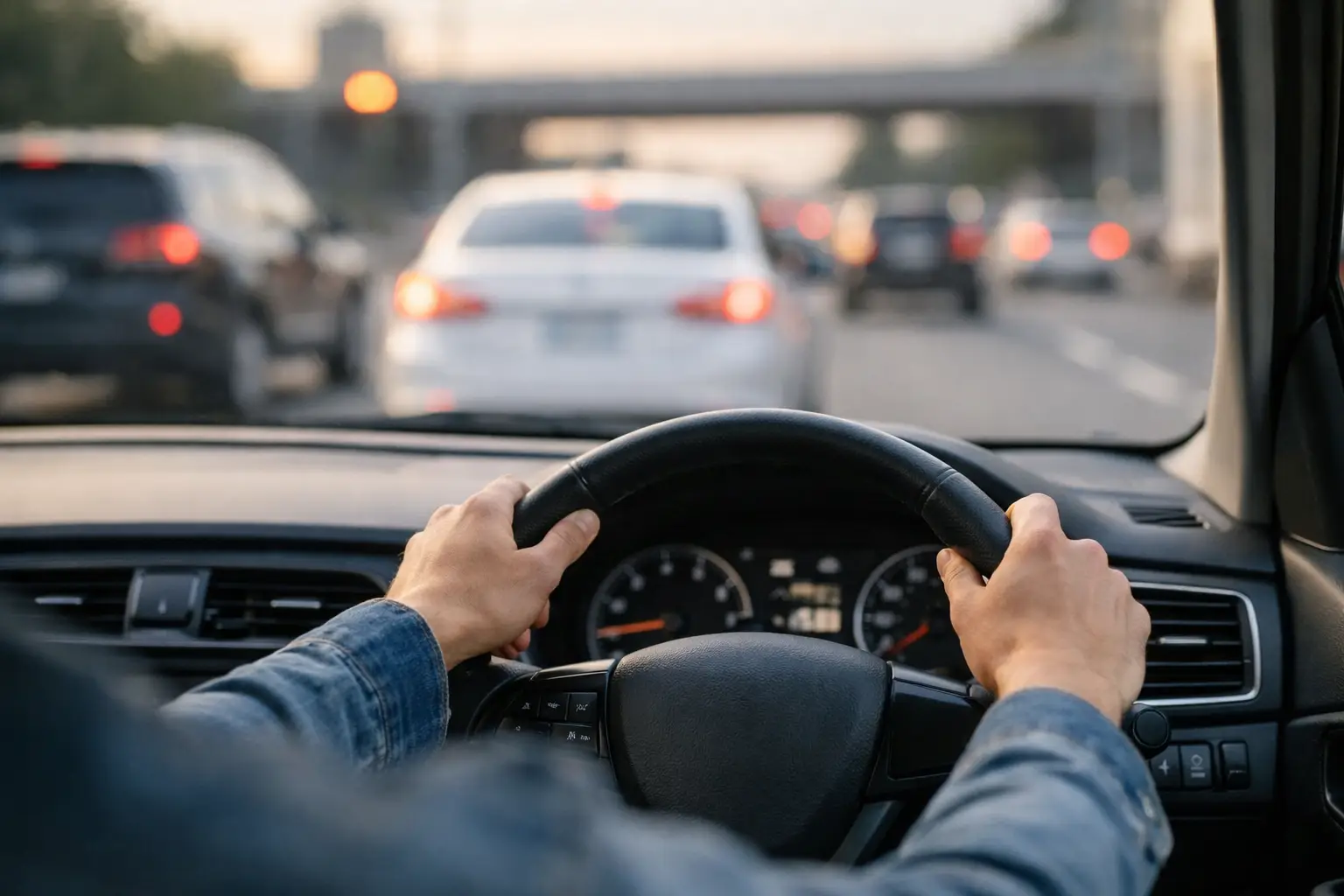
New drivers often fixate on the bumper directly ahead. Instead, scan 12 to 15 seconds down the road. In city traffic, that may mean looking past several vehicles to the next intersection. On a highway, it means watching far enough ahead to notice brake lights, congestion, work zones, or merging traffic before you reach them.
Looking ahead gives you time to ease off the accelerator rather than brake hard at the last second. It also helps you recognize patterns, such as a vehicle drifting within its lane or traffic slowing near an exit. Check your mirrors regularly, but keep your primary attention moving between the road ahead, your mirrors, and the areas beside your vehicle.
2. Leave Space You Can Actually Use
Following too closely is one of the fastest ways to lose your options. Use at least a three-second following distance in good conditions. Choose a fixed object ahead, such as a sign or pole. When the vehicle in front passes it, count slowly: one thousand one, one thousand two, one thousand three. If you reach the object before you finish, increase the gap.
Three seconds is a starting point, not a rule for every situation. Add more space at night, in rain or snow, on slippery roads, behind motorcycles, and when following large trucks that block your view. If another driver pulls into your space, do not react by crowding them. Ease back and rebuild your cushion.
3. Keep an Escape Route in Mind
A defensive driver does not assume the lane ahead will always stay open. Ask yourself a simple question as you drive: if the car ahead brakes suddenly, where can I go?
Your best answer may be to slow down because you have left enough room. In other situations, it may be a clear lane beside you or an open shoulder, where legal and safe. Avoid driving for long periods boxed in by vehicles on all sides. If possible, adjust your speed to create room beside or behind your car.
This does not mean swerving whenever something surprises you. Sudden steering can create a worse crash. The goal is to see hazards early enough that your first response can be smooth braking and controlled steering.
4. Treat Intersections as High-Risk Areas
Intersections require full attention because vehicles, cyclists, and pedestrians all make decisions at once. Before entering on a green light, look left, right, and left again. Check for late cross traffic, turning vehicles, and people who may still be crossing.
When waiting to turn left, keep your wheels pointed straight until you begin the turn. If you are hit from behind with your wheels already turned, your vehicle could be pushed into oncoming traffic. Also, do not pull into an intersection unless you can complete the turn safely. Patience at a busy light is always better than being stranded in the path of cross traffic.
5. Watch for Clues, Not Just Signals
Turn signals help, but they are not guarantees. A driver may signal too late, forget to cancel a signal, or change lanes without using one at all. Look for clues: a vehicle slowing near an entrance, front wheels beginning to angle, brake lights, a driver looking toward a side street, or a car edging over a lane line.
The same applies to pedestrians and cyclists. Someone standing near a crosswalk may step forward even if they have not made eye contact. A cyclist may need to move outward to avoid a parked car door or rough pavement. Give them space and avoid passing closely when conditions are tight.
6. Make Lane Changes Deliberate
A proper lane change is not a quick glance followed by a sharp move. Check your rearview mirror, signal early, check the side mirror, and do a brief shoulder check for the blind spot. Then move smoothly when the lane is clear.
Do not rely on mirrors alone. A vehicle can disappear in your blind spot, especially on multi-lane roads. If traffic is heavy, it may be safer to stay in your lane and miss a turn than force a last-second lane change. You can always take the next exit or safely turn around. A missed turn is an inconvenience, not a failure.
7. Match Your Speed to Conditions
The posted speed limit is the maximum allowed under ideal conditions. It is not a promise that every road is safe at that speed. Reduce speed when visibility is limited, pavement is wet, traffic is dense, or you are approaching a curve, school zone, or area with frequent pedestrian activity.
Driving too slowly can also create risk if it disrupts traffic flow without a reason. The right approach depends on conditions. Stay predictable, maintain a safe speed, and avoid rushing to keep up with an aggressive driver behind you. If someone is tailgating, increase the space ahead and let them pass when it is safe.
8. Put the Phone Away Before You Shift Into Drive
A notification can wait. Even a few seconds of looking down at a phone means traveling a surprising distance without watching the road. Set navigation, music, and climate controls before moving whenever possible. If you need to make a change, pull over somewhere safe.
Distraction is not limited to phones. Eating, searching for an item, adjusting a complicated screen, or talking with passengers can pull attention away from the road. As a beginner, protect your focus. Quiet drives are often the best drives for practicing new skills.
9. Give Large Vehicles and Parked Cars Extra Room
Trucks, buses, and other large vehicles have bigger blind spots and need more room to turn and stop. Avoid lingering beside them. If you cannot see the truck driver’s mirrors, assume the driver cannot see you. When passing, do so efficiently and only when it is legal and safe.
Parked cars deserve attention too. Drive far enough away to reduce the risk of a door opening into your path. Watch for occupied vehicles, brake lights, and front wheels turning outward from a parking space. In busy neighborhoods, slow down and expect someone to step out from between cars.
10. Practice Calm Recovery, Not Perfection
Every new driver makes small mistakes: braking a little late, taking a turn too wide, or realizing too late that an exit is approaching. Defensive driving is not about never making an error. It is about recovering safely.
If you miss a turn, keep going. If you feel overwhelmed, find a legal, safe place to pull over and reset. Take a breath, check your surroundings, and continue when you are ready. A patient instructor can help you practice these moments until the right response feels natural, whether you are preparing for a road test or simply building everyday confidence.
Defensive Driving Habits Get Stronger With Practice
The best defensive driving tips for beginners become useful only when they turn into habits. Start each drive by giving yourself time. Adjust your seat and mirrors, put distractions away, and decide that arriving safely matters more than arriving a minute sooner.
With steady practice, you will start seeing hazards earlier, leaving space without thinking about it, and handling busy roads with more control. That is the kind of confidence that lasts long after the road test is over.