A driving course should do more than help you check off a requirement. It should make your first solo drive feel less intimidating, help you recognize risks before they become problems, and give you a clear plan for getting test-ready. So, is online BDE worth it? For many new Ontario drivers, yes – if the course is approved, fits their learning style, and is paired with real in-car practice.
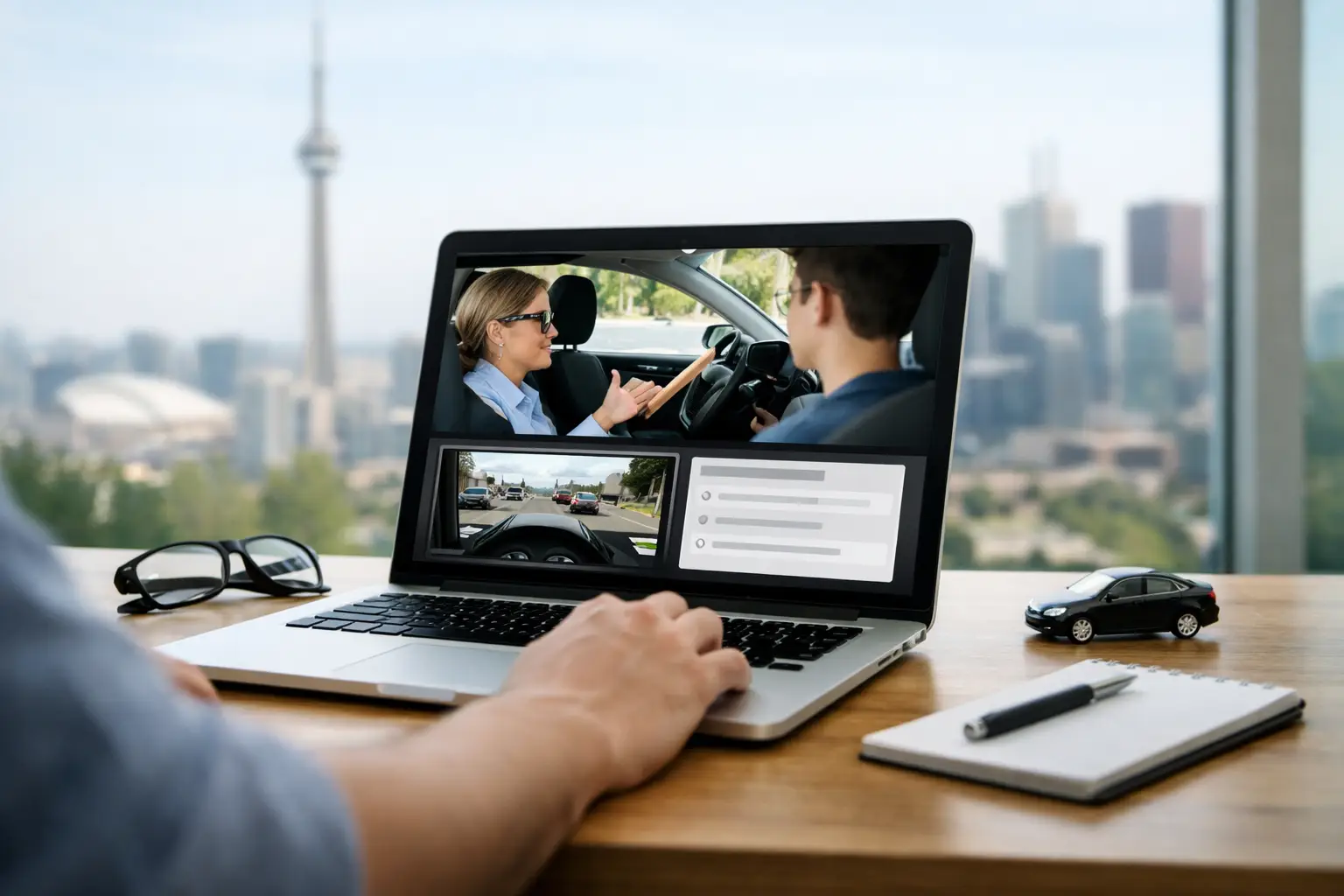
Online Beginner Driver Education, often called BDE, gives students the classroom portion of driver training in a flexible digital format. Instead of arranging your week around an in-person class, you can complete lessons from home on a schedule that works around school, work, or family commitments. But flexibility alone is not the reason to enroll. The real value is in what a quality online BDE course can do for your safety, confidence, licensing timeline, and potential insurance savings.
What Online BDE Actually Covers
A proper online BDE course is not simply a set of videos to click through. It should teach the decision-making skills that drivers need before they start dealing with Ottawa traffic, busy intersections, highway merges, poor weather, and unexpected mistakes from other road users.
Students learn the rules of the road, but the stronger courses also explain the reasons behind them. You should come away understanding space management, hazard perception, defensive driving, sharing the road with cyclists and pedestrians, distracted driving, impaired driving, and how speed affects stopping distance. These lessons create the foundation for your in-car training.
That distinction matters. Passing a written knowledge test shows that you can recall rules. Becoming a safe driver requires you to spot developing risks, stay calm, and make good choices with limited time. Online BDE can help you build that awareness before you are asked to apply it behind the wheel.
Is Online BDE Worth It for Your Goals?
The answer depends on what you need from driver education. If your main goal is a lower upfront cost and you are comfortable learning independently, an online format can be a smart choice. If you need constant live instruction to stay focused, you may prefer a classroom setting or need more support from your driving instructor.
For busy students, working adults, newcomers, and parents coordinating several schedules, online learning removes a major obstacle. You can complete modules in manageable sessions rather than losing entire evenings or weekends to classroom attendance. That makes it easier to keep moving forward instead of putting driver training off for months.
Online BDE may also help eligible drivers reduce the wait time to take their G2 road test after getting a G1. Requirements can change, so always confirm current rules before planning your test date. Completing an approved BDE program may also make you eligible for a driver education certificate that some insurance providers recognize. Savings vary by insurer, location, age, vehicle, and driving history, so treat this as a possible benefit rather than a guaranteed discount.
The biggest return is often confidence. Many anxious learners arrive for their first driving lesson worried that they will forget every rule the moment they sit in the driver’s seat. Completing the theory portion first gives you useful language and basic awareness. You already know why mirror checks matter, what a blind spot is, and how to approach a controlled intersection. That lets in-car lessons focus more quickly on execution.
The Trade-Off: Online Learning Does Not Replace Driving
There is one point every new driver should understand clearly: online BDE is not a shortcut to becoming road-ready. You cannot learn steering control, smooth braking, parking, lane changes, or real-time observation from a screen alone.
A digital course works best when it is part of a complete training plan. The online component gives you knowledge. Private driving lessons turn that knowledge into habits. Practice with a qualified instructor gives you feedback that a module cannot provide, such as whether you are checking mirrors early enough, braking too late, drifting in your lane, or missing a pedestrian at a right turn.
This is especially important for students preparing for the G2 road test. Road tests measure what you do, not what you watched. Examiners look for safe observation, appropriate speed, controlled turns, proper lane position, decision-making, and awareness of the driving environment. A student who finishes online BDE but delays hands-on practice will still need time to develop those skills.
Think of it this way: the course explains the playbook. Driving lessons help you run the plays correctly when traffic is moving around you.
How to Tell Whether an Online BDE Course Is a Good Value
Not every online course delivers the same experience. Before you enroll, look beyond the price. A cheaper course is not a better deal if it leaves you confused, unsupported, or unprepared for your next steps.
First, confirm that the program is approved and that you understand what is included. Ask whether the price covers only the digital classroom portion or also includes in-car instruction. Some students assume BDE means all training is included, then discover they still need to arrange and budget for driving lessons separately.
Next, consider how the course teaches. Clear explanations, realistic scenarios, knowledge checks, and organized modules are more useful than long blocks of text. You should be able to work at a reasonable pace while still absorbing the material. Rushing through lessons only to finish faster defeats the purpose.
Finally, look for a school that can support the full path to your license. The transition from online learning to on-road practice should feel straightforward. You may need beginner lessons, refresher sessions, G2 preparation, full G test practice, or a vehicle for your road test. Choosing a provider that understands your goals can save time and reduce the stress of coordinating different services.
Who Benefits Most From Online BDE?
Online BDE is often an excellent fit for self-motivated learners who want more control over their schedule. It can work particularly well for high school students balancing classes, college students with changing timetables, adults with full-time jobs, and newcomers who want time to review Ontario driving concepts at their own pace.
It can also be helpful for learners who feel nervous in a traditional classroom. Studying privately gives you room to pause, reread, and process information without worrying about keeping up with other students. That can make the first in-car lesson feel more manageable.
However, if you know you struggle to complete online work without deadlines or direct accountability, be honest about that before enrolling. The flexibility of online learning can become a disadvantage when there is no routine. Set aside specific study times, complete the course in stages, and schedule your first driving lesson early so you have momentum.
Turn Your Course Into Real Confidence
The most effective driver training is consistent. Do not wait until the week before your road test to begin practicing the skills you learned online. Start your in-car lessons while the material is fresh, then keep practicing between sessions with a qualified accompanying driver when possible.
Ask your instructor to focus on the areas that concern you most. Maybe highway driving makes you tense. Maybe parallel parking feels impossible, or you have trouble judging turns at busy intersections. Patient coaching can break those challenges into repeatable steps instead of letting one bad experience convince you that you are not ready.
Local practice matters, too. Ottawa-area drivers face a mix of residential streets, multilane roads, roundabouts, construction zones, changing weather, and busy test-day conditions. Familiarity with local driving situations helps you develop calm, practical judgment rather than relying on memorized moves.
At Autoz Driving School, online BDE can be paired with personalized in-car instruction so students can move from theory to confident driving with a clear plan. The goal is not just to finish a course. It is to build safe habits that hold up when you are driving independently.
Online BDE is worth it when you use it as the starting point, not the finish line. Give yourself the time to learn the rules, practice the skills, ask for feedback, and improve steadily. That is how a new driver turns uncertainty into the kind of confidence that lasts well beyond test day.