A road test appointment can take weeks to secure, yet some drivers lose it before the examiner even gets in the car. The question of what documents for road test day may sound simple, but missing one required item can mean a canceled test, a lost fee, and another long wait. The good news is that a calm, organized check the day before makes this completely avoidable.
For Ottawa drivers, requirements are generally handled through Ontario’s licensing system. Still, rules can change and individual situations vary, especially for newcomers, drivers with expired cards, or people using a rental vehicle. Treat this as your practical checklist, then confirm any unusual circumstances before your appointment.
What documents for road test day should you bring?
Start with the one item that matters most: your valid driver’s license. For a G2 road test, that is your valid G1 license. For a full G road test, it is your valid G2 license. Bring the physical card, not a photo of it on your phone, an expired card, or a temporary document unless the licensing office has specifically confirmed it is accepted.
Your license proves both your identity and your eligibility for the test. Check it early. Make sure the card is not expired, damaged beyond recognition, or missing. If you have changed your address or name recently, resolve any issue well before test day rather than hoping it will be handled at the counter.
You should also bring your road test appointment confirmation. You may not always be asked to show it, but having the confirmation number, time, and test center location available prevents confusion. Keep a screenshot on your phone and write the confirmation number down somewhere else as a backup. Phones run out of battery at the worst possible time.
If there is any unpaid test balance or administrative fee connected to your booking, bring an accepted form of payment. Most drivers have already paid when booking, but it is worth checking your confirmation carefully. Showing up without the right payment method can create a stressful problem minutes before the test.
Your vehicle paperwork matters too
The examiner is testing you, but they also need to know that the vehicle is legal and safe to use. If you are bringing your own car, have the required vehicle documents ready and easy to reach. Do not bury them under gym bags, fast-food receipts, or items in a crowded glove box.
For most road tests, you should have the following available:
- Proof that the vehicle is registered to operate legally
- Valid proof of auto insurance for that vehicle
- A current license plate and any required registration stickers or documentation
- Rental authorization if the vehicle is rented or borrowed under special conditions
In Ontario, this often means having the vehicle permit and proof of insurance with you. The exact documents can depend on the vehicle and who owns it. If you are borrowing a family member’s car, ask for the paperwork several days ahead of time. Do not assume they keep it in the vehicle.
Insurance is a common last-minute issue. A driver may have an insurance app on their phone but no login information, an outdated paper card, or a policy that does not clearly cover the vehicle being used. Confirm that the proof of insurance is current, readable, and matches the car’s details. If you are using digital proof, charge your phone fully and save a screenshot in case reception is poor.
Using a school or rental vehicle
Using a driving school vehicle can take a lot of pressure off test day. The school should provide a properly maintained car with the required paperwork, allowing you to focus on your driving rather than searching for documents. At Autoz Driving School, road test support is designed to give Ottawa students a familiar, prepared vehicle and the calm structure they need before the exam.
That said, ask exactly what is included. A rental vehicle may come with insurance and registration documents, but you still need your own valid license and appointment details. You are responsible for arriving on time and being legally eligible to drive.
Do not forget required vision aids
If your license has a corrective-lens condition, bring your glasses or contact lenses. This is not a minor detail. If you are required to wear corrective lenses and arrive without them, you may not be allowed to complete the road test.
Pack a spare pair of glasses if you have one. Contact lens wearers should bring solution or backup glasses, particularly if dry eyes or seasonal allergies can make driving uncomfortable. You need to see signs, pedestrians, cyclists, lane markings, and hazards clearly. A road test is not the day to push through blurred vision.
Hearing aids and other necessary medical devices should also be worn or available if they help you drive safely. The goal is simple: arrive in the same condition you would want to be in for any demanding drive.
Documents are only half the check-in process
A complete folder does not guarantee that your car will be accepted. Before the examiner starts the test, the vehicle may be checked for basic safety and legal requirements. A burned-out brake light, cracked windshield that blocks your view, warning light, bald tire, or non-working horn can stop the test before it begins.
Give the vehicle a quick inspection the day before. Test the headlights, brake lights, turn signals, hazard lights, horn, windshield wipers, defroster, and parking brake. Check that the fuel level is comfortably above empty. Clean the windshield and clear snow, ice, or fog completely. A dirty backup camera is not a substitute for proper shoulder checks, but poor visibility can make every maneuver harder.
If you are taking a G road test, make sure you have practiced in the actual vehicle you will use. Highway merging, braking distance, mirror placement, and blind spots can feel very different in an unfamiliar SUV, pickup, or electric vehicle. The paperwork may be perfect, but confidence comes from knowing the car.
A simple night-before road test folder
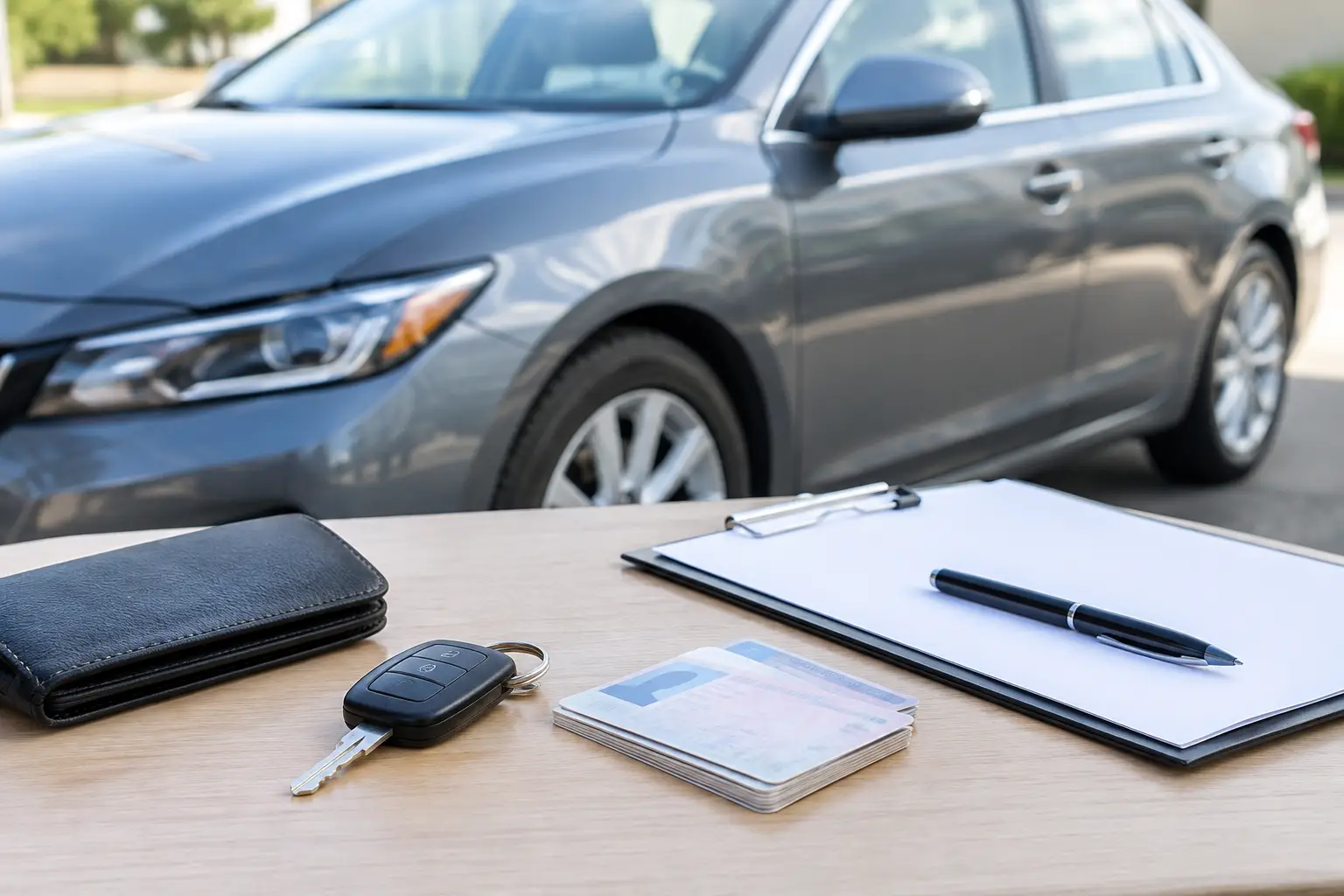
Create one small folder or envelope rather than gathering items in the morning rush. Put your physical driver’s license, appointment confirmation, vehicle permit or registration, current insurance proof, and payment method together. Add your glasses or contacts case if needed.
Then place the folder somewhere you cannot miss it, such as beside your keys or inside the bag you will carry. Avoid leaving original documents loose in the car overnight, especially if the car is parked outside. Keeping them with you reduces the chance of theft, water damage, or a family member moving them.
It also helps to take a photo of the paperwork for backup reference. A photo will not replace an original required document, but it can help you identify policy numbers, plate details, or contact information if something goes missing.
When your situation needs extra confirmation
Some drivers should check directly with the licensing authority before assuming the standard checklist applies. This includes drivers with a temporary license, a recently renewed card that has not arrived, a medical restriction, a name mismatch, a foreign license history, or a vehicle registered to a company.
Newcomers should be especially careful about eligibility timelines and license-exchange rules. Your experience may qualify you for certain steps, but it does not automatically mean every document or test requirement is the same. Bring original documents when requested and get clarification before test day, not while the examiner is waiting.
If you are retaking a test after a previous attempt, check whether your license, vehicle paperwork, or appointment requirements have changed since the last visit. Use the earlier experience as useful information, not as a reason to skip preparation.
Arrive early enough to stay calm
Plan to arrive early, ideally with time to park, use the restroom, review your documents, and settle your nerves. Rushing into the test center at the appointment time creates avoidable stress and makes it easier to misplace a license or forget where you put the insurance card.
Keep your focus narrow: bring valid identification, have legal vehicle paperwork, wear any required vision correction, and use a safe, test-ready vehicle. Once those basics are handled, you can put your energy where it belongs – checking mirrors, making safe decisions, and showing the examiner the confident driving you have practiced.