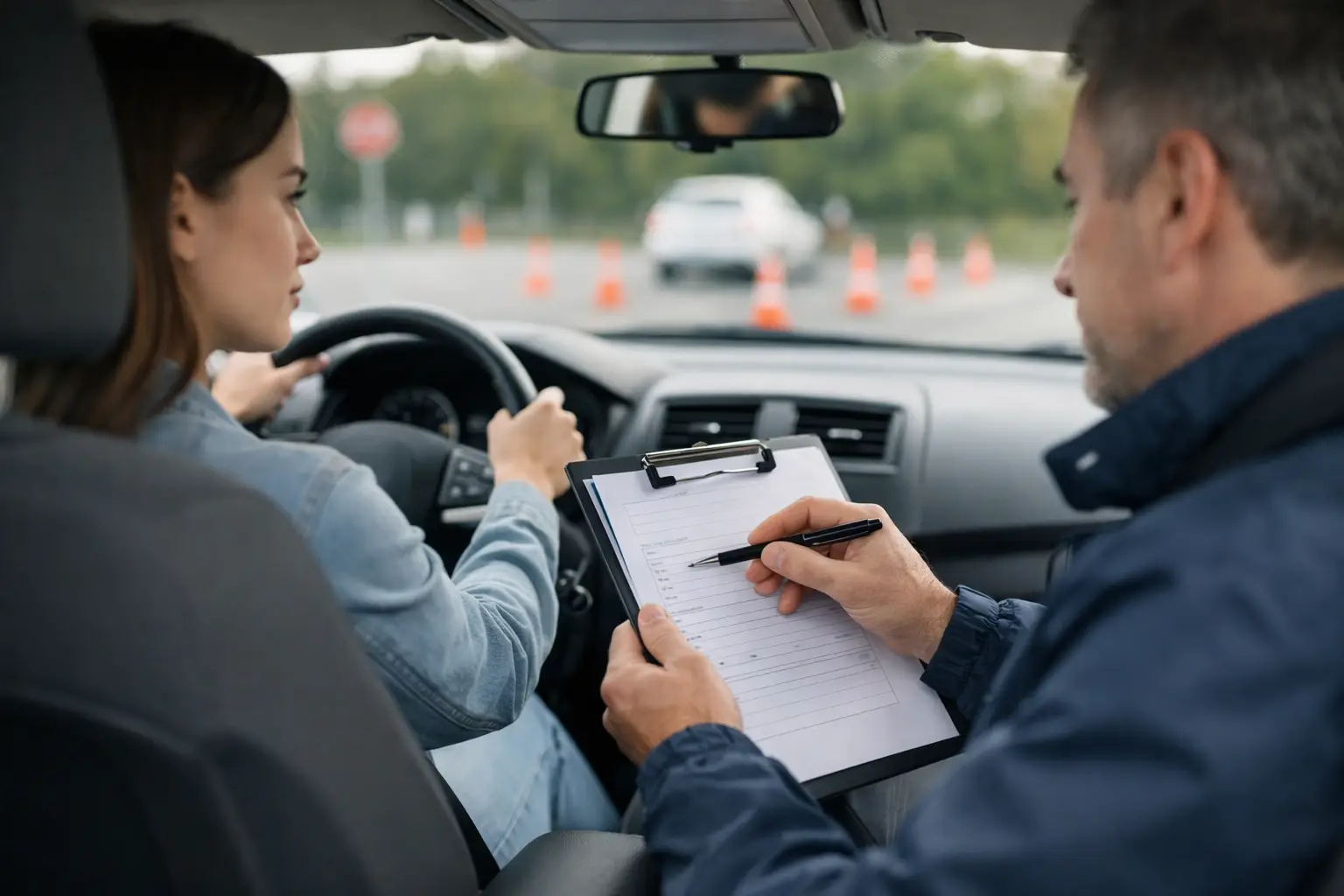
The worst time to find out you still miss shoulder checks or hesitate at busy intersections is during your actual road test. A mock road test session gives you that reality check earlier, when mistakes are still useful. Instead of guessing whether you are ready, you get a clear picture of how you drive under test conditions and what needs work before exam day.
For many learners, that alone lowers stress. Nerves usually get worse when the process feels unclear. When you know what a road test feels like, what an examiner may watch for, and where your weak spots are, the test becomes more manageable. You are not walking in blind. You are showing up prepared.
Why a mock road test session matters
Practice driving and test-ready driving are not always the same thing. A student can feel comfortable behind the wheel and still lose points for small habits that add up fast. Rolling stops, late mirror checks, weak lane positioning, and inconsistent speed control are common examples. These issues often show up more clearly when someone is evaluating your driving the way an examiner would.
That is why a mock road test session is so valuable. It creates pressure similar to the real thing, but in a setting where feedback is immediate and constructive. You are not just driving around. You are learning how your decisions look from the examiner’s point of view.
This matters even more for test retakers, adult learners, and newcomers who may already know how to drive but are unfamiliar with local testing standards. Being a safe driver is essential, but road tests also measure whether you demonstrate safety in the exact way examiners expect.
What should happen during a mock road test session
A strong session should feel structured from the start. It should not be a casual lesson with a few comments at the end. The goal is to simulate the real test closely enough that your performance tells the truth.
A pre-drive vehicle check and briefing
Before the car starts moving, your instructor should explain how the session will run. That includes whether they will stay silent during the mock test, how they will score common errors, and what parts of the G2 or G exam are being simulated.
You may also review basic vehicle readiness, such as seat position, mirrors, signals, and overall control setup. This sounds simple, but students often begin a test already tense and slightly disorganized. A proper setup helps you start calmly and drive more consistently.
Realistic test-style driving conditions
The session should mirror actual road test conditions as much as possible. That means clear directions, no coaching during the drive unless safety requires it, and a route that includes the types of roads, maneuvers, and traffic situations you are likely to face.
For Ottawa-area drivers, local route familiarity can make a real difference. Certain intersections, lane changes, merging areas, and school or community safety zones can expose hesitation or poor timing. Practicing in the same traffic environment where you will be tested gives your preparation more value than random driving on easy streets.
The core maneuvers examiners watch closely
A good mock test should cover the skills that most often affect pass or fail results. For G2 drivers, this usually includes proper stops, turns, lane changes, parallel parking, roadside stops, three-point turns, and intersection scanning. For G drivers, the session should also assess higher-speed driving, highway merging, lane discipline, and exit planning.
What matters is not just whether you complete the maneuver. It is how you complete it. Examiners notice observation habits, timing, smooth control, legal compliance, and whether your actions show confidence without becoming careless.
A scoring-style evaluation
At the end of the drive, you should get direct feedback that reflects how a real examiner might judge your performance. General comments like “not bad” or “just relax” are not enough. You need specifics.
You should know where you lost points, which errors were minor, which ones could lead to failure, and what patterns need correction first. The most useful feedback connects every issue to a clear action. If your turns are too wide, what should change? If your lane changes feel rushed, what sequence should you follow every time? That clarity is what turns practice into progress.
What most students learn from a mock road test session
The biggest surprise for many learners is that the problem is not always a lack of skill. Often, it is inconsistency. You may perform a maneuver correctly three times, then skip a mirror check once because traffic feels busy. On a road test, that one lapse can matter.
Mock testing helps uncover patterns like these. Some students drive too cautiously and create new risks by hesitating too long. Others rush decisions because they are afraid of seeming unsure. Some know the rules well but do not make their observations visible enough for an examiner to credit them. These are fixable issues, but only if someone identifies them clearly.
Another common lesson is that anxiety changes driving behavior. Students who look solid in regular lessons may tighten up under evaluation. Speed control becomes uneven. Scanning narrows. Parking accuracy drops. A mock test is useful because it lets you experience that pressure before the real exam, then practice managing it.
Who benefits most from a mock road test session
This kind of preparation is helpful for almost anyone taking a road test, but it is especially valuable for a few groups.
First-time test takers often need reassurance as much as instruction. They want to know what the examiner experience feels like and whether they are actually ready. A mock test answers both questions.
Test retakers benefit because they usually need more than extra seat time. They need to understand why they did not pass and what must change this time. A realistic evaluation can quickly expose the habits that cost them before.
Adult learners and newcomers often appreciate the structure. They may have driving experience already, but local testing standards, road design, and examiner expectations can still feel unfamiliar. A focused session bridges that gap faster than general practice alone.
Busy students benefit too. If your schedule is tight, you do not want to spend money on lessons that repeat what you already know. A mock session helps identify the shortest path to readiness by showing exactly where your attention should go.
How to tell if the session is actually useful
Not every mock test offers the same value. A useful one should leave you with more than a confidence boost. It should give you a realistic benchmark and a practical next step.
Look for instruction that is calm but honest. If the evaluator softens every mistake, you may feel better in the moment but less prepared on test day. On the other hand, overly harsh feedback can damage confidence without improving technique. The right approach is supportive, specific, and focused on correction.
It also helps when the instructor understands local test expectations, not just general driving skills. That local knowledge can shape better route practice, better timing advice, and better preparation for the situations that commonly challenge students in your area.
At Autoz Driving School, that balance of patient coaching and test-focused instruction is a big part of what helps learners move from nervous to road-ready. The goal is not to scare students with a pretend exam. The goal is to show them exactly how to improve, then help them do it.
When to book a mock road test session
Timing matters. If you book too early, the session may reveal gaps that are still too basic to judge meaningfully. If you book too late, you may not leave enough time to fix what comes up.
For most students, the best time is when you can already drive independently through common situations but still want an honest readiness check. That usually means you have practiced the required maneuvers, understand the rules, and can handle traffic without constant prompting. At that stage, a mock test becomes a strong final checkpoint.
If your real road test is close, even one session can help sharpen focus. If it uncovers several recurring issues, that is still useful. It is far better to discover those problems while training than during the exam itself.
A mock road test session should do one simple thing well. It should replace uncertainty with clarity. When you know how you drive under pressure, what examiners are likely to notice, and what to improve before test day, confidence stops being guesswork and starts being earned.