BOOK NOW

G Road Test Study Guide That Helps You Pass

G Road Test Study Guide That Helps You Pass

You do not fail the G test because you are a bad driver. Most people lose points because they miss small habits under pressure – mirror checks that are too quick, lane changes that are poorly timed, or speed control that slips when nerves take over. A good g road test study guide should help you focus on the exact skills the examiner is watching, not bury you in vague advice.

If you are preparing for your full G license, the goal is simple: show that you can drive safely, confidently, and independently in real traffic. That means clean observation, smart decisions, proper highway driving, and steady control from start to finish. The best preparation is structured, realistic, and tied to what happens on the actual test.

What a g road test study guide should actually cover

A lot of drivers spend too much time reviewing basic rules and not enough time practicing test-level habits. The G road test is not just a longer version of beginner driving. It is designed to confirm that you can handle higher-speed roads, merge properly, change lanes with judgment, and respond calmly to traffic conditions.

That is why your study guide should center on performance, not memorization. You need to know what the examiner expects to see every minute you are in the car. Smooth steering matters, but so does whether you check mirrors before slowing. Following the speed limit matters, but so does whether you adjust for traffic flow and road conditions without hesitating.

A practical guide should also reflect real trade-offs. For example, drivers often hear that they should be cautious, but being too cautious can create problems. If you wait too long to merge, drive far under the speed limit, or stop when you do not need to, the examiner may see that as poor judgment rather than safety.

The key skills examiners watch on the G test

The G test is built around road awareness and decision-making. You are being evaluated on whether you notice what is happening around you and respond in a timely, safe way. That starts with observation.

Observation and mirror checks

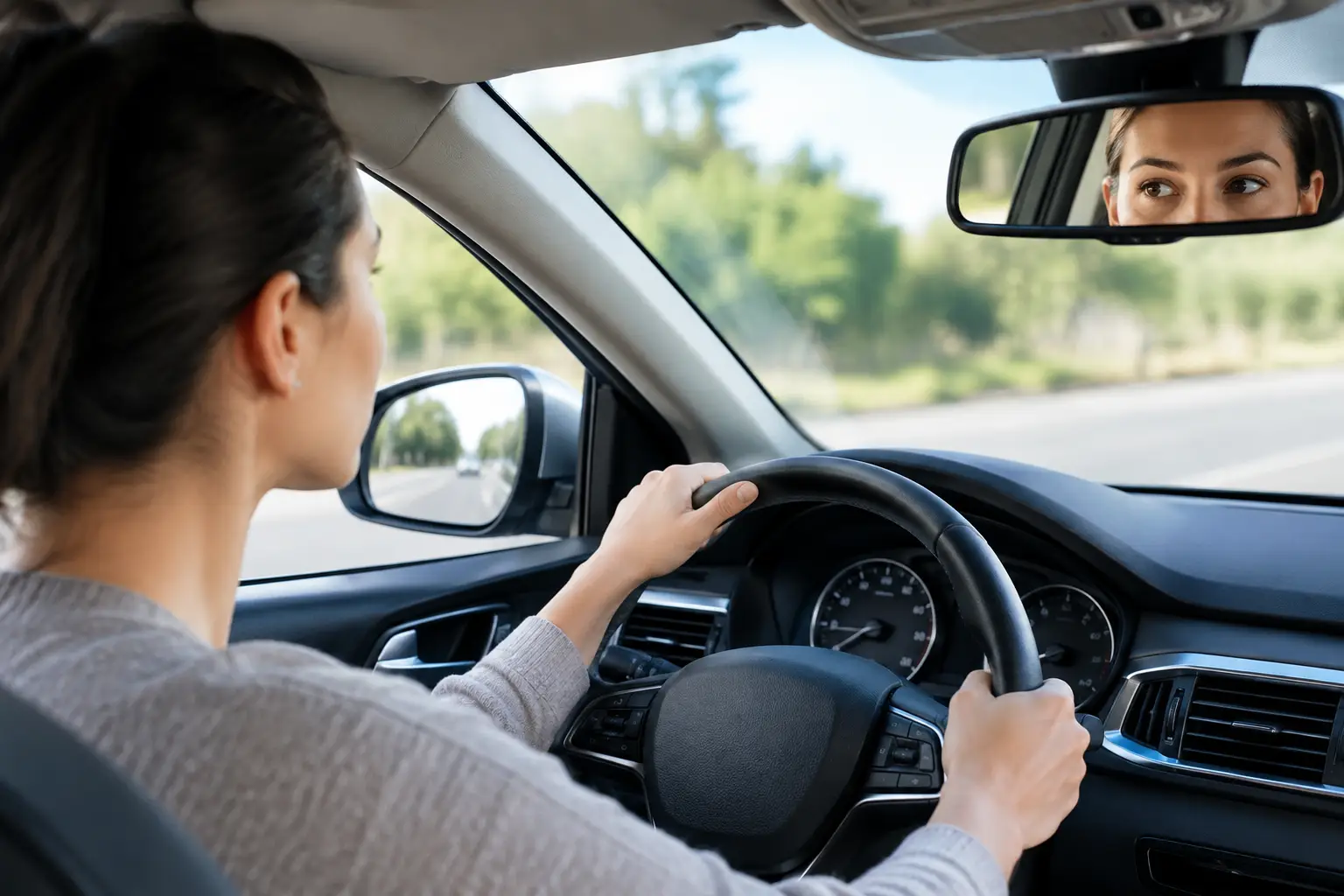
Examiners want to see active scanning, not frozen focus straight ahead. You should check mirrors regularly, especially before slowing, turning, changing lanes, and merging. Blind spot checks must be clear and timed correctly. A quick shoulder glance after you have already started moving is not enough.

This is one of the most common areas where nervous drivers lose marks. They know they should check, but the checks become rushed or inconsistent. During practice, make your observation habits obvious and repeatable so they hold up on test day.

Speed control and following distance

Many drivers worry about going too fast, but driving too slowly can hurt you too. On the G test, steady speed matters. You should match the posted limit when conditions allow and avoid random fluctuations. On highway sections, confidence is especially important. Merging far below traffic speed creates risk and shows hesitation.

Following distance is just as important. Leave enough space to react, especially in heavier traffic or poor weather. Tailgating, even briefly, can lead to major deductions because it signals weak risk management.

Lane changes and highway merging

This is where the G test feels different from lower-level tests. Examiners want to see that you can enter faster roads smoothly and change lanes with control. That means checking mirrors, signaling early, checking your blind spot, and moving when the gap is safe – not too early, not too late.

The timing matters. If you signal but sit beside the same vehicle too long, the opportunity can disappear. If you move too quickly without enough space, that is a safety issue. Good lane changes look calm and planned.

Intersections, turns, and general control

Even though the G test emphasizes advanced driving, basic control still matters. Rolling stops, wide turns, poor lane position, and late braking can still cost you. The examiner is looking for consistency. One strong highway merge does not cancel out sloppy city driving.

How to use this G road test study guide in the week before your exam

Cramming does not work well for road tests. The goal is not to fill your head with more information. It is to sharpen a few repeatable habits until they feel natural.

Start by identifying your weak areas honestly. Some drivers are comfortable on the highway but inconsistent at intersections. Others are fine in city traffic but tense during merges and lane changes. Your practice should spend more time where your confidence drops.

A good plan for the final week is to do short, focused drives with a clear purpose. One session might focus on highway entry and lane changes. Another might focus on speed control, mirror use, and clean stops. If everything gets practiced at once without structure, weak habits tend to hide.

It also helps to practice under normal conditions, not perfect ones. Light traffic is useful when learning, but if possible, you should also drive in moderate traffic so you can get comfortable with timing, judgment, and pressure. Real confidence comes from seeing that you can stay calm when the road is busy.

Common reasons drivers fail – and how to avoid them

Most failed tests come down to patterns, not one random mistake. The first pattern is weak observation. Drivers forget mirror checks, miss blind spots, or focus only on the car in front of them. The fix is simple but not always easy: build a rhythm. Check mirrors often enough that it becomes automatic.

The second pattern is hesitation. This often shows up at merges, turns, and lane changes. Some hesitation is normal, especially if you are nervous, but too much can signal that you are not ready to drive independently. The answer is not to rush. It is to practice decision-making until you trust your timing.

The third pattern is poor speed management. Drivers may speed slightly downhill, slow too much before lane changes, or enter highways under the pace of traffic. These are often confidence issues more than knowledge issues. Repetition helps, especially with an instructor who can correct small errors before they become test-day habits.

The fourth pattern is letting one mistake ruin the rest of the drive. If you take a turn a little wide or brake later than you wanted, do not mentally give up. Examiners are watching your overall performance. One imperfect moment does not always mean failure. Staying composed can protect the rest of your test.

Why guided practice often works better than studying alone

A written guide can tell you what to do, but it cannot always tell you what you are actually doing. That gap matters. Many drivers think they are checking mirrors enough or maintaining proper lane position until someone trained points out where the habit breaks down.

This is especially true for test retakers, newcomers, and adults returning to driving after a long break. They usually do not need more generic advice. They need feedback that is specific, calm, and based on the local road environment. In Ottawa, for example, route familiarity and highway confidence can make a major difference in how prepared you feel.

That is where a focused lesson before the test can save time and money. A patient instructor can spot the habits most likely to cost points and help you correct them quickly. For many students, that turns anxiety into a clear plan. Autoz Driving School takes that approach by combining structured coaching with practical test preparation, so students know what to practice and why.

Test-day mindset matters more than most drivers expect

The night before your test, stop trying to learn brand-new skills. You want to arrive rested, alert, and steady. Give yourself time in the morning so you are not rushing. Make sure you know where you are going, and if possible, warm up with a short drive beforehand.

During the test, think one task at a time. Do not grade yourself while you are still driving. Listen carefully, ask for clarification if needed, and keep your attention on the road instead of the examiner’s clipboard. You are not trying to drive perfectly. You are trying to drive safely, consistently, and with good judgment.

That is what the G test is really measuring. If your preparation has focused on observation, speed control, lane changes, and calm decision-making, you are already much closer than you think. The right study guide does not just help you remember the rules. It helps you trust your driving when it counts most.

A strong result usually comes from simple things done well, again and again. Keep your practice focused, stay patient with yourself, and let confidence grow from skill – not guesswork.

How Much Do Driving Lessons Cost in Ontario?

How Much Do Driving Lessons Cost in Ontario?

Sticker shock usually hits before the engine even starts. If you’re asking how much do driving lessons cost in Ontario, the short answer is that prices can range from about $50 to $90 per hour for private in-car lessons, while full beginner packages often land between $600 and $1,200 depending on what is included.

That range is wide for a reason. Not every student needs the same amount of training, and not every driving school offers the same level of support. Some programs are built for first-time drivers who want a complete path to their G2, while others are designed for road test retakers, nervous drivers, or adults who only need a few focused refresher sessions.

How much do driving lessons cost in Ontario on average?

In most Ontario cities, private driving lessons are priced by the hour or sold as part of a package. A single lesson often costs less upfront, but packages usually bring the per-hour rate down and include useful extras like pickup and drop-off, progress tracking, or road test preparation.

If you are comparing prices, you will usually see three common options. Individual in-car lessons often cost around $50 to $90 per hour. Beginner driver education packages, which combine online or classroom theory with in-car training, often cost between $700 and $1,200. Road test packages, including a warm-up lesson and use of the instructor’s car, can add another $150 to $300 depending on location and timing.

Ottawa pricing often falls in the middle of that range, although local demand, scheduling flexibility, and vehicle type can push rates up. A school that offers newer vehicles, one-on-one coaching, and test-route familiarity may not be the cheapest option, but it can be better value if it helps you pass sooner and avoid repeat test fees.

What affects the cost of driving lessons?

The biggest factor is the type of training you need. A complete beginner usually needs more structure than someone who already drives comfortably and just wants to polish parallel parking, lane changes, or highway merging before the road test.

Lesson length also matters. Some schools offer 60-minute sessions, while others focus on 90-minute or 2-hour blocks. Longer sessions can be more productive because you spend less time settling in and more time practicing, but they can feel intense for anxious learners. It depends on your confidence level and attention span.

Location plays a role too. In larger urban areas, rates may be slightly higher because of demand, traffic, instructor availability, and operating costs. On the other hand, busy city driving can give you more real-world practice in a shorter time, which has its own value.

Then there is the quality of instruction. A patient, experienced instructor who knows the local test routes and common mistakes can save you money in the long run. Lower-priced lessons are not always a bargain if they leave you underprepared, frustrated, or paying for extra sessions later.

Package lessons vs hourly lessons

For many students, this is the real pricing question. Hourly lessons seem simple because you only pay for what you book, but the total can add up quickly if you do not have a clear plan.

Packages work better for students who want structure. They often combine the required elements for beginner driver education with practical road training, and they can create a more consistent learning experience. If your goal is to move efficiently toward your G2 or G road test, a package often gives you better value than booking random one-off sessions.

That said, hourly lessons make sense for some drivers. If you already have experience, recently moved to Ontario, or failed a road test by a small margin, you may only need a few targeted sessions. In that case, paying for a full package may not be necessary.

A good school should be honest about that. The right recommendation is not always the biggest package. It is the training that matches your current skill level and your actual goal.

What is usually included in the price?

This is where pricing can look similar on the surface but feel very different once you book. One school may advertise a lower package price, but that package might not include road test car rental, pickup and drop-off, online course access, or enough in-car practice.

A standard beginner package often includes a digital or classroom BDE course, a set number of in-car hours, and a certificate once requirements are completed. Some schools also include progress updates, flexible scheduling, or one-on-one coaching tailored to your weak spots.

Road test support is often priced separately. That may include a pre-test warm-up lesson, use of the instructor’s car for the exam, and guidance at the test center. For many students, that support is worth paying for because it reduces stress and makes test day more predictable.

Is the cheapest driving school the best deal?

Usually not. Price matters, but so does what you get for it.

A cheaper lesson can cost more if it is rushed, inconsistent, or taught by someone who does not adjust to your learning style. New drivers and nervous students especially benefit from calm, clear instruction. If you spend each lesson confused or overwhelmed, you are not saving money. You are delaying progress.

The better question is whether the school helps you improve quickly and safely. Good instruction should build confidence, correct mistakes early, and prepare you for the actual road test environment. That is what makes the investment worthwhile.

How many lessons do most students need?

There is no one number that fits everyone. Some students with regular family practice only need a few professional sessions to tighten up their skills. Others need a full beginner program plus extra hours to feel test-ready.

A first-time teen driver may need a complete package with consistent in-car coaching. An adult learner who feels anxious might need more repetition and a slower pace. A newcomer with driving experience from another country may only need lessons focused on Ontario rules, lane discipline, and local test expectations.

This is why fixed price comparisons can be misleading. Two students may each pay a different total, and both can still get good value if the training is matched to their needs.

How to compare driving lesson prices the smart way

When you compare schools, look beyond the headline rate. Ask how many in-car hours are included, whether the lessons are private, whether the instructor knows the local test routes, and whether road test support is available.

You should also check scheduling. A lower price does not help much if you cannot get lesson times that fit your work, school, or test date. Flexibility matters, especially if you are trying to prepare quickly.

Vehicle quality can matter as well. Learning in a clean, modern, easy-to-handle car can make lessons feel less stressful. Some students also prefer schools that offer newer technology or specific vehicle types because it helps them feel more comfortable behind the wheel.

If you are in Ottawa, working with a school like Autoz Driving School can make the process feel more straightforward because the focus is not just on logging hours. It is on building confidence, practicing with purpose, and getting ready for the test with local insight.

When paying more actually saves money

This is the trade-off many learners miss. A stronger lesson program can cost more upfront, but it may reduce the chances of failing your road test, rebooking, and paying for extra practice later.

Failing a test is expensive in more ways than one. There is the test fee, the cost of additional lessons, and the lost time and confidence that come with starting over. If better instruction helps you pass on the first try, the higher initial price often turns out to be the lower total cost.

That is especially true for nervous drivers and test retakers. Personalized coaching, local route practice, and patient feedback can make a major difference in how quickly you improve.

So, what should you expect to pay?

For most learners in Ontario, a reasonable budget is around $50 to $90 per hour for private lessons, $700 to $1,200 for a full beginner package, and $150 to $300 for road test support if needed. Some students will spend less. Others will spend more because they need extra practice or want premium scheduling and added convenience.

The right price is not just the lowest number. It is the amount that gets you properly prepared without wasting time, money, or confidence on lessons that do not move you forward.

If you are choosing a driving school, look for transparent pricing, patient instruction, and a clear plan based on your goals. The best lessons should leave you feeling calmer, more capable, and closer to passing every time you get in the car.

A good driving lesson is not just a cost on paper. It is a faster path to confidence, safety, and real independence on the road.

Ottawa G2 Test Route Guide for First-Time Pass

Ottawa G2 Test Route Guide for First-Time Pass

The biggest surprise on test day is usually not the route. It is how quickly small habits show up under pressure. A solid Ottawa G2 test route guide helps, but the real advantage comes from knowing why certain spots are used and what the examiner is trying to see from you in each section.

If you are preparing for your G2 road test in Ottawa, think of the route as a skill check, not a memory game. Examiners are not looking for perfect local knowledge or robotic driving. They want to see safe decisions, steady control, and good awareness in real traffic. That is why students who only memorize turns often get caught off guard, while students who understand the patterns behind the route usually perform better.

How to use this Ottawa G2 test route guide

Most Ottawa G2 test routes are designed to cover the basics in a short time. You can expect a mix of quiet residential streets, busier roads, intersections, lane changes, and parking lot movement at the beginning or end. The exact route may change depending on traffic, construction, weather, or examiner choice, so no guide should be treated like a script.

What you should expect is repetition in the skills being tested. You will likely need to show clean right and left turns, proper stopping at signs and lights, speed control, mirror checks, blind spot checks, lane changes, and parking. In some cases, you may also be asked to do a roadside stop, a three-point turn, parallel parking, or reverse parking. Not every examiner uses the same sequence, but the scoring focus stays consistent.

A route guide is most useful when it helps you practice the pressure points. That means identifying where students tend to roll stops, speed up too early, drift wide on turns, or miss school zone and community safety signs. Ottawa has plenty of roads where the test feels easy until one rushed decision costs valuable marks.

What examiners usually look for on Ottawa G2 routes

The examiner is not trying to trick you. They are watching whether your habits are safe enough for independent driving. That starts before you even leave the parking area. If you forget to adjust your seat, miss a mirror check, or move without proper observation, the test starts on weak footing.

Once you are on the road, your observation matters as much as your control. A smooth turn means less if you did not scan the intersection properly. A clean lane change means less if you signaled late or missed a blind spot check. Many students focus hard on steering and speed, but the test is really about decision-making. Your examiner wants to see that you notice hazards early and react calmly.

Consistency also matters. One strong turn does not cancel out three weak stops. One perfect lane change does not make up for rushing through a school area. The strongest test drives look steady from start to finish. They are not flashy. They are predictable, safe, and calm.

Common road features that appear on a G2 test route

In Ottawa, many G2 routes include residential areas because they reveal a lot about a driver’s habits. These roads test your ability to manage lower speed limits, parked cars, hidden driveways, pedestrians, and all-way stops. Students often underestimate residential driving because it feels simple. In reality, this is where rushed observation and poor speed control stand out the most.

You may also be taken onto larger collector roads or multi-lane streets. This part of the route usually tests lane discipline, awareness of surrounding traffic, and confidence at busier intersections. The challenge here is balancing caution with flow. If you hesitate too much, you can create confusion. If you force decisions too early, you can make unsafe ones. It depends on traffic, but the goal is always the same – be decisive without being aggressive.

Parking lots and test center exits are another area students overlook. Examiners notice whether you yield properly, control your speed, and stay organized in tighter spaces. A lot of mistakes happen before the student even reaches the main road because nerves kick in early.

The mistakes that cause the most trouble

The most common issue is incomplete observation. That includes missing blind spot checks, checking mirrors too late, or giving quick head movements that do not clearly show awareness. On a G2 test, your checks need to be real and timed properly. If the examiner cannot see them, they may assume they did not happen.

The second major issue is rolling stops. Many students slow down and think that is enough. It is not. At stop signs, your wheels need to fully stop. You should then scan carefully before moving. In residential Ottawa routes, this comes up often, and repeated rolling stops can sink an otherwise decent test.

Another frequent problem is speed management. Some drivers stay too slow because they are nervous. Others go just a little too fast because they are trying to keep up with traffic. Neither works well. You need to show that you can recognize the posted limit, adjust for road conditions, and maintain a stable pace. In school zones, near parked cars, or on narrower streets, that judgment becomes even more important.

Wide turns and lane positioning errors are also common. Left turns that cut too tight or right turns that swing too wide tell the examiner that your control is not fully developed yet. These are fixable issues, but they need focused practice, not just more driving time.

How to practice the route the smart way

The best way to prepare is to practice by category, not just by geography. Yes, it helps to know the local area around the test center. But if you only rehearse one exact route, you can feel lost the moment the examiner chooses a different road.

Start with parking lot exits and entrances. Then move to quiet residential streets where you can build strong stop habits, scanning routines, and smooth turns. After that, practice lane changes and busier intersections. Finish with the specific skills that make you most nervous, whether that is parallel parking, reverse parking, or three-point turns.

A useful session should include correction, not just repetition. If you keep making the same mistake on right turns, doing ten more right turns without feedback will not help much. This is where a trained instructor can save you time and frustration. A local coach who knows Ottawa testing patterns can point out the small habits that students often miss on their own.

That is one reason many learners choose Autoz Driving School before a road test. Patient coaching and local route familiarity can make practice feel much more focused, especially if you are a retaker or a nervous first-time driver.

What to do the day before your G2 test

Do not turn the day before into a marathon practice session. A short, purposeful drive is usually better than hours of stressed repetition. Focus on the basics you control every time: mirror use, blind spot checks, full stops, smooth steering, and speed discipline.

Make sure you know your documents, test time, and vehicle details. Check that the car is clean and road-ready, with working lights, signals, brakes, and enough fuel. If you are borrowing a car, do not wait until the last minute to get comfortable with it. A test is hard enough without learning a different brake feel on the same morning.

Sleep matters more than people think. A tired driver misses signs, rushes decisions, and overreacts to small mistakes. If you want a better result, show up rested and early.

How to stay calm during the test

Nerves are normal. Even good drivers get tense when someone is scoring every move. The key is not trying to eliminate nerves completely. The key is keeping them from changing your habits.

Use a simple routine before you move the car. Adjust your seat. Check mirrors. Take a breath. When instructions come, do not rush to respond before you fully understand them. If the examiner asks for a turn and it is not safe to move over immediately, keep driving safely and wait for the next legal opportunity. A safe delay is usually better than a sudden mistake.

If you make one small error, let it go. Many students assume they have already failed, then turn one mistake into five. Examiners are looking at the full drive. Stay focused on the next decision.

Why route knowledge helps, but only to a point

There is real value in local familiarity. Knowing where traffic tends to build, where signs are easy to miss, or where lane changes come quickly can reduce stress. That said, route knowledge should support your skills, not replace them.

The strongest Ottawa G2 test route guide is one that trains you to recognize patterns: residential caution zones, stop control, lane change timing, and intersection judgment. Once those habits are solid, a different route is no longer a problem. You are not guessing your way through the test. You are driving with a system.

That is the mindset that gives you the best chance of passing on the first attempt. Learn the local roads, practice the tested skills until they feel natural, and aim for calm, consistent driving. On test day, you do not need to be perfect. You need to show that you are safe, prepared, and ready to drive on your own.

BDE Course Ottawa: How to Choose Well

BDE Course Ottawa: How to Choose Well

If you are searching for a bde course ottawa learners can actually use in real life, you are probably not just looking for a certificate. You want clear instruction, a smoother path to your G2, and a driving school that helps you feel calm behind the wheel instead of more stressed. That is exactly where the right course makes a difference.

A lot of students start at the same point. They are nervous, unsure what the process looks like, and worried about wasting money on lessons that do not prepare them for the test or for everyday driving. A good BDE course should solve that. It should give you structure, patient coaching, and practical training that helps you drive safely in Ottawa traffic, not just memorize rules for a quiz.

What a BDE course in Ottawa should actually do

BDE stands for Beginner Driver Education, but the real value goes beyond the name. A strong program gives new drivers a foundation. That means understanding traffic laws, hazard awareness, defensive driving habits, and the decision-making skills that matter when the road gets busy, weather changes, or another driver does something unpredictable.

In Ottawa, that practical side matters a lot. Driving here means dealing with downtown traffic, suburban intersections, school zones, winter conditions, and different road layouts depending on where you practice. A course that only covers the basics in a generic way may check a box, but it may not leave you ready.

The best programs combine classroom or online learning with in-car lessons that connect theory to real situations. You learn why a rule matters, then practice it with an instructor who can correct mistakes early. That combination builds better habits and more confidence.

Why many students choose a digital BDE course Ottawa offers

For many learners, flexibility is not a bonus. It is the reason they can start at all. Students are balancing school, work, family schedules, and road test timelines. That is why a digital BDE course Ottawa students can complete on their own schedule has become such a practical option.

Online learning works well when it is organized clearly and supported by real instruction. You can move through the knowledge portion at a steady pace, review material when you need to, and avoid the scheduling problems that come with fixed classroom times. For busy adults and newcomers, that can make driver education much more realistic.

That said, online does not automatically mean better. The trade-off is that some learners need more accountability or learn faster when they can ask questions in person. The strongest online programs keep the material simple, structured, and easy to follow, then pair it with in-car sessions where those concepts become real driving skills.

How to tell if a BDE course is worth your time

Not every course is built the same. Some focus on volume. Some focus on speed. The better ones focus on results.

When evaluating a BDE course, start with the instruction style. Patient teaching matters more than many people realize. New drivers often make mistakes because they are overwhelmed, not because they are careless. An instructor who stays calm, explains clearly, and gives practical feedback can change the whole experience.

Local knowledge matters too. Ottawa is not one single driving environment. A student preparing for a road test needs exposure to the kinds of roads, intersections, and traffic patterns they are likely to face. In-car training should feel relevant, not random.

Pricing should also be easy to understand. If a school is vague about what is included, that usually creates frustration later. A solid package should explain how many in-car hours you get, what the online portion includes, and whether add-ons like extra practice or road test car rental are available.

Then there is the biggest question most students have: will this help me pass? That is a fair question, but it should not be the only one. Passing on the first try is a great goal, but good training should also leave you safer, more aware, and more independent once the test is over.

What students often need beyond the course itself

Many learners assume a BDE course is a complete solution by itself. Sometimes it is. Often, it is the starting point.

Some students pick up driving skills quickly and just need a strong foundation plus enough practice to feel ready. Others need a little more time with lane changes, parking, left turns, or highway driving. There is nothing wrong with that. Driver training is not one-size-fits-all, and the right school should treat it that way.

That is why personalized in-car coaching can matter so much. If you are an anxious driver, a newcomer adapting to local traffic rules, or someone retaking a test after a bad experience, you may need targeted help rather than a standard lesson plan. The right support saves time because it works on the specific skills holding you back.

A school like Autoz Driving School appeals to many Ottawa learners for that reason. The approach is structured, but it is also personal. Students are not just pushed through a package. They get practical coaching designed to build confidence and road test readiness together.

The real benefits of a good BDE course Ottawa students notice

The first benefit is confidence, but not the fake kind. Real confidence comes from repetition, correction, and knowing what to do before a situation becomes stressful. When students have that, they make better decisions and feel less panic during lessons and on test day.

The second benefit is efficiency. A well-designed course shortens the learning curve because it teaches the right things in the right order. Instead of guessing what to practice, you move through a proven process. That can reduce wasted lessons and help you get ready faster.

The third benefit is safer long-term driving. This is easy to overlook when the road test feels urgent, but it matters most. A driver who learns proper scanning, speed control, defensive habits, and risk awareness is better prepared long after the examiner steps out of the car.

There is also a financial benefit when the training is done well. Paying for quality instruction upfront is often cheaper than paying for repeated tests, extra lessons to fix bad habits, or preventable mistakes caused by weak preparation.

Questions to ask before you enroll

Before choosing a course, ask how the online portion is delivered and whether it is easy to complete around your schedule. Ask how the in-car lessons are structured and whether instructors adjust based on your experience level. Ask if the school has experience helping nervous drivers, adult beginners, and test retakers.

You should also ask what happens if you need more practice after the core package. A school that offers refresher lessons, test preparation, and road test support gives you more options if your timeline or confidence level changes.

Another smart question is what kind of vehicles are used for training. Comfort matters. Some students feel more at ease in modern, well-maintained cars with features that support a smoother learning experience. That does not replace skill, but it can make early lessons less intimidating.

Who benefits most from a BDE course

Teen drivers often benefit because they are building habits from scratch. A strong course helps them start correctly instead of learning by trial and error.

Young adults and busy professionals benefit because they need flexibility and a clear process. If your schedule is packed, you do not want a confusing training experience. You want something organized, practical, and efficient.

Newcomers often benefit in a different way. Even if you have driving experience from another country, Ottawa roads and testing expectations may be different. A local BDE course can help bridge that gap quickly.

Adult learners and test retakers may benefit the most emotionally. If driving has become tied to stress or embarrassment, patient instruction can reset the experience. Progress becomes possible again when the pressure is lower and the coaching is specific.

Choosing the right path forward

The best bde course ottawa has to offer is not always the one with the loudest promise. It is the one that gives you real instruction, flexible learning, local road insight, and support that matches your pace. That combination is what turns nervous beginners into capable drivers.

If you are comparing options right now, look past the sales language and focus on what will actually help you improve. The right course should leave you feeling more prepared after every lesson, not more confused. When training is clear, patient, and built around real Ottawa driving, progress starts to feel a lot more manageable.

Getting your license is a milestone, but feeling steady and confident on the road is the part that stays with you. Choose the training that helps you build both.

G Road Preparation Ottawa Drivers Can Trust

G Road Preparation Ottawa Drivers Can Trust

The full G test in Ottawa often feels harder than it should – not because the rules are confusing, but because small mistakes add up fast when you’re nervous. That is exactly why g road preparation Ottawa drivers choose should focus on more than a quick warm-up before the test. It should build real confidence, sharpen decision-making, and prepare you for the routes, traffic patterns, and examiner expectations you are likely to face.

For many drivers, the challenge is not basic car control anymore. By the time you are ready for the G test, you already know how to steer, brake, and park. What the examiner is really looking for is whether you can drive independently, safely, and consistently in faster, more complex traffic. That includes lane changes at the right time, highway merging with confidence, maintaining space, scanning properly, and responding calmly when conditions change.

What good G road preparation in Ottawa actually covers

A lot of people assume the G test is just a longer version of the G2. It is not. The full G road test is meant to confirm that you can handle higher-speed roads and make safe decisions without coaching. In Ottawa, that means your preparation should include city driving, highway practice, speed management, mirror checks, shoulder checks, lane discipline, and defensive habits that hold up under pressure.

The best preparation is specific. It should not feel random or overly general. If your lesson spends too much time on things you already do well, you are wasting time and money. Strong preparation starts by identifying where you lose marks most often. For one driver, that may be hesitant highway merges. For another, it may be inconsistent observation at intersections or late lane changes before turns and exits.

That is where personalized coaching matters. A patient instructor can spot patterns you may not notice on your own, then help you fix them through repetition and clear feedback. This is especially helpful for nervous drivers, test retakers, newcomers adjusting to Ontario road rules, and busy adults who want focused sessions instead of drawn-out lessons.

Why Ottawa drivers benefit from local test-focused practice

Ottawa is not one-size-fits-all for road test prep. Local roads, traffic flow, and highway entry points matter. If you practice only in quiet neighborhoods, the test can feel overwhelming the moment you need to merge, change lanes, or manage faster traffic. If you only practice with family, you may not get feedback that matches what an examiner will actually score.

Local preparation helps close that gap. You get used to the pace of Ottawa driving, the kinds of lane changes that happen near highway ramps, and the need to stay calm when traffic gets tight. You also learn how to avoid common mistakes that show up during road tests, like slowing too much before merging, waiting too long to change lanes, or checking mirrors without a proper shoulder check.

There is also a practical advantage to training with someone who understands local test routes and patterns. No instructor can promise the exact route on test day, and anyone who suggests otherwise is overselling. But familiarity still helps. When you have practiced the types of roads and decisions that commonly appear during Ottawa tests, the drive feels more manageable and less like a surprise.

The mistakes that cause most G test failures

Most G failures do not come from one dramatic error. They come from a series of smaller issues that tell the examiner you are not fully ready to drive without supervision.

One of the biggest problems is observation. Drivers often think they are checking enough, but the checks are too quick, too subtle, or poorly timed. Examiners want to see active scanning, visible mirror use, and clear shoulder checks before lane changes, turns, and merges.

Highway driving is another major pressure point. Some drivers merge too slowly and force traffic to react. Others speed up too aggressively and lose control of their spacing. Good G prep teaches the balance – match traffic, choose your gap early, commit confidently, and keep scanning.

Lane changes are also more difficult than many people expect. On a lesson, it is common to see drivers signal but delay too long, drift while checking, or move without enough space. These are fixable issues, but they need real practice. A calm instructor can break the sequence down until it becomes consistent.

Then there is speed management. Driving too fast is an obvious risk, but driving too slowly can also cost marks. Hesitation creates problems, especially on higher-speed roads. The goal is not to drive cautiously in a way that interrupts traffic. The goal is to drive safely, smoothly, and predictably.

Who benefits most from g road preparation Ottawa lessons

If you passed your G2 a while ago and have not driven much on highways, a focused refresher can make a big difference. The same is true if you are comfortable in the city but feel tense at higher speeds. Many capable drivers do not need dozens of lessons. They need a structured review, practice in weak areas, and a professional eye on the habits that could cost them the test.

Test retakers often benefit even more. Failing once can shake your confidence, but it also gives you useful information. With the right coaching, you can turn that experience into a better plan instead of repeating the same mistakes. A strong instructor will look at what happened, correct the underlying issues, and help you rebuild confidence before your next attempt.

Newcomers and adult learners are another group that often sees fast improvement with targeted support. Even experienced drivers from other countries may need help adapting to local testing standards, lane discipline, and examiner expectations in Ontario. Patient coaching matters here because the goal is not just passing. It is building habits that feel natural and safe long after the test is over.

What to expect from a strong preparation session

A useful G prep lesson should feel organized from the start. You should know what skills are being assessed, what the instructor is watching for, and what needs to improve before test day. If the session feels vague, you are probably not getting the value you need.

Most strong sessions begin with a quick review of your experience level and current concerns. From there, the drive should cover the major test areas while paying close attention to your specific weaknesses. That often includes urban driving, lane changes, highway merging, speed control, turns, and overall observation.

Good feedback is direct but supportive. You should leave knowing what you did well, where you lost consistency, and what to practice next. The right instructor does not just point out errors. They show you how to correct them in a way that feels clear and repeatable.

This is where a school like Autoz Driving School fits well for many Ottawa learners. Drivers who want patient, local, results-focused coaching usually do best with structured in-car instruction that matches their actual test goals rather than generic driving practice.

How many lessons do you really need?

It depends on your starting point. Someone who drives regularly and just needs test-specific polish may only need a refresher or two. Someone with highway anxiety, long gaps in driving, or a recent failed attempt may need more time.

The smart approach is not to guess. Start with an assessment lesson and let your performance guide the plan. That keeps things efficient and avoids overbooking lessons you do not need. It also prevents the opposite problem – going into the test underprepared because you assumed your everyday driving habits were enough.

Cost matters, and so does value. Cheaper lessons are not always cheaper if they are unfocused or rushed. On the other hand, more lessons are not automatically better. The best preparation is targeted, honest, and built around measurable progress.

Choosing the right instructor for G road prep

Look for an instructor who stays calm, explains clearly, and understands Ottawa road testing standards. You want someone who can give professional feedback without making you more nervous. That balance matters, especially if anxiety is part of the problem.

It also helps to choose a service that offers flexible scheduling, road test support, and a car you can use on test day if needed. Convenience is not a small thing. When the process feels organized, it is easier to focus on improving your driving instead of juggling logistics.

Most of all, choose preparation that treats passing the test as the result of real skill, not luck. Good instruction should leave you more confident on regular roads, not just more familiar with a checklist.

If your G test is coming up, now is the right time to get clear, local, practical support. The goal is simple – walk into test day knowing you have practiced the right skills, fixed the habits that cost marks, and built the confidence to drive well when it counts.