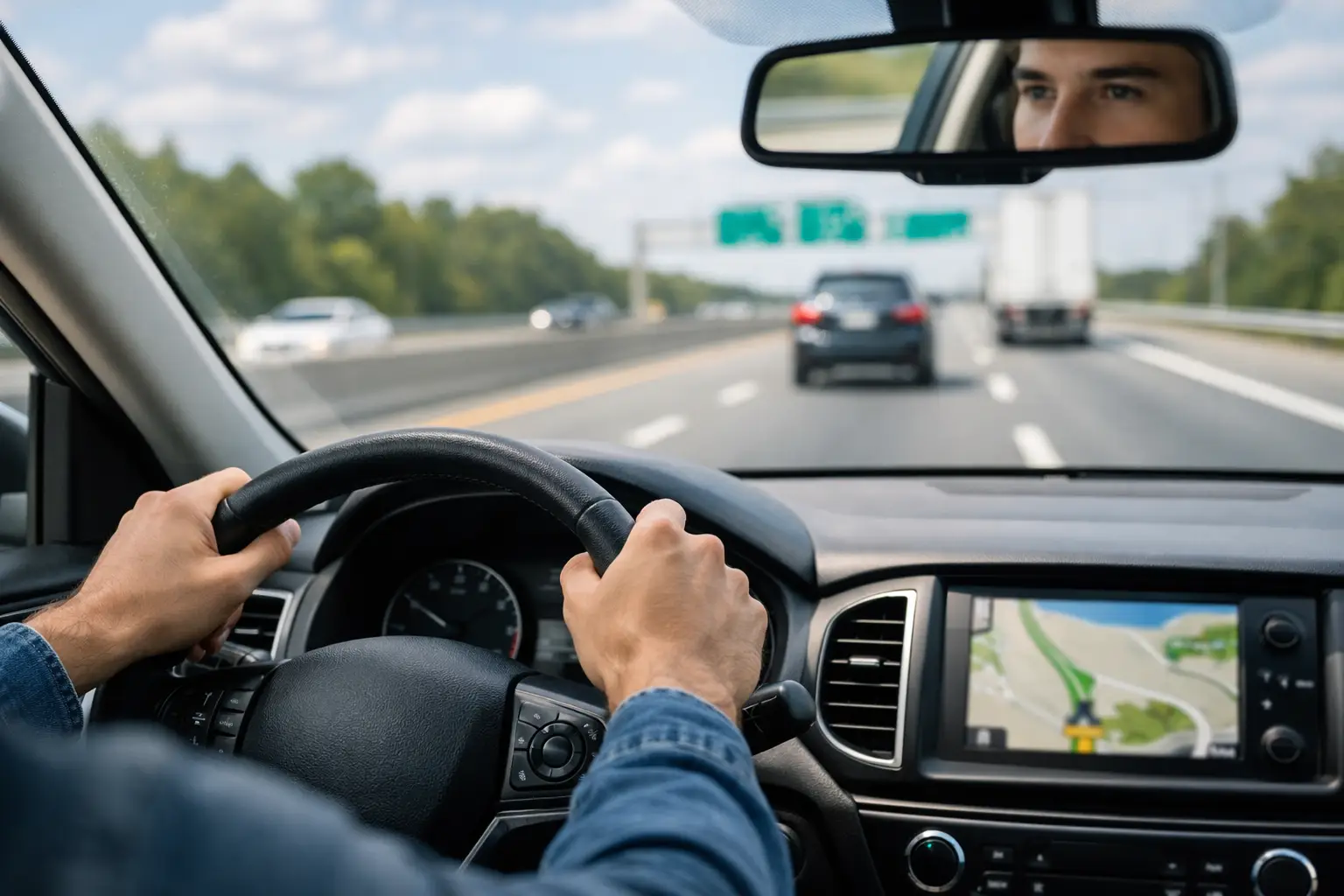
The highway portion of your G test is where many drivers get tense fast. That is exactly why solid g road test highway tips matter so much. You are not expected to drive perfectly like a robot. You are expected to show that you can make safe, confident decisions at highway speed while staying aware of traffic, signs, and space around your vehicle.
For many drivers, the issue is not basic skill. It is timing, nerves, and hesitation. A rushed merge, a late mirror check, or slowing down too much on the ramp can turn a manageable test into a stressful one. The good news is that highway driving gets much easier when you know what the examiner is actually looking for.
What the examiner wants to see on the highway
Your examiner is watching for control, awareness, and judgment. That means you need to enter the highway at a proper speed, merge without forcing other drivers to brake, keep a steady lane position, maintain safe following distance, and respond calmly when asked to change lanes or exit.
They are also watching for habits that show you are checking your surroundings consistently. Mirror use matters. Blind spot checks matter. Signal timing matters. On a G test, highway driving is not about being aggressive, and it is not about being overly cautious either. It is about showing that you can match the flow of traffic and make decisions early.
G road test highway tips that make the biggest difference
1. Build speed on the ramp
One of the most common mistakes is entering the highway too slowly. The ramp is there to help you reach a speed close to highway traffic before you merge. If traffic is moving at highway speed and you are still far below it, merging becomes harder and less safe.
This does not mean flooring the gas pedal. It means accelerating smoothly and confidently so you are ready to fit into traffic. If the lane is short, you need to judge earlier. If traffic is heavier, you may need a firmer acceleration. It depends on the situation, but hesitation on the ramp usually creates more problems than controlled acceleration.
2. Check mirrors first, then blind spot
A clean lane change or merge starts before you move the wheel. Check your rearview mirror and side mirror to understand traffic around you. Then signal. Then do a blind spot check just before moving.
A lot of test takers either skip the blind spot or do it too early. If you check too early, the information is already outdated by the time you move. Keep the sequence tight and intentional. The examiner should be able to see that you are actively scanning, not guessing.
3. Do not stop unless traffic leaves you no choice
On most highway entrance ramps, stopping is a last resort. If the lane is moving and the merge area is open, keep rolling and adjust your speed to find a gap. Stopping unnecessarily can make the merge more difficult and can create confusion for drivers behind you.
Of course, there are exceptions. If traffic is fully blocked or there is no safe space at all, you may need to slow dramatically or stop. Safety always comes first. But on a normal test route, the better habit is to plan early and merge smoothly instead of freezing at the end of the ramp.
4. Match traffic, not just the posted number
This is where many nervous drivers get caught. They focus so hard on the speed limit that they forget the real task is to merge safely with moving traffic. If traffic is flowing near the posted speed, match it. If traffic is slower because of congestion, adjust to that instead.
The key is reasonable speed for real conditions. Driving too fast is a problem, but driving much slower than surrounding traffic can also be unsafe. Examiners want to see that you understand the difference.
How to handle lane changes during the G test
Once you are on the highway, the examiner may ask you to move left or right. This is not just a steering task. It is a decision-making task.
Start by maintaining your speed. Many drivers slow down the moment they think about changing lanes, which can confuse traffic and create unnecessary risk. Check mirrors, signal, check your blind spot, and then move when you have enough space. After the lane change, cancel the signal if needed and keep your speed steady.
Leave enough room before moving over
Do not cut in too closely. If there is a vehicle behind you in the target lane, ask yourself whether that driver would need to brake because of your move. If the answer is yes, wait for a better gap.
At the same time, do not wait forever for a perfect empty highway. On a road test, you need to show reasonable judgment. A safe gap with good timing is enough. Overthinking often leads to missed opportunities and last-second moves.
Keep both hands steady and avoid drifting
Examiners notice lane position. During a lane change, move smoothly and return to a centered position in the lane. Drifting, weaving, or correcting too much can make you look uncertain.
This is often a confidence issue, not a knowledge issue. Drivers who practice highway lane changes enough times usually become much smoother because they stop treating every move like an emergency.
Common mistakes that cost points
The biggest highway test mistakes are usually simple. Drivers merge too slowly, fail to check the blind spot clearly, change lanes without enough space, or forget to cancel a signal. Some also follow too closely once they are on the highway, especially when nerves make them fixate on the car ahead.
Another common issue is braking when it is not needed. If traffic is flowing normally and you have room, sudden or unnecessary braking can show poor judgment. The same goes for waiting too long to make an exit move. If the examiner tells you to exit, stay calm and prepare early. Last-second lane changes near an exit are risky and can lead to serious errors.
G road test highway tips for staying calm under pressure
Nerves change how people drive. They make mirror checks rushed, lane changes delayed, and steering less smooth. That is why calm habits matter just as much as technical skill.
One useful approach is to keep your attention on the next decision only. On the ramp, think about speed and gap. Once merged, think about lane position and following distance. If asked to change lanes, go back to the same sequence you practiced. Mirror, signal, blind spot, move. Keeping that rhythm helps prevent panic.
It also helps to expect normal traffic. Some drivers hope for an empty highway, but that is not always realistic. A passing result does not require perfect road conditions. It requires safe choices in the conditions you get.
Practice the highway the right way before test day
Not all practice is equal. Doing the same easy drive repeatedly may feel comfortable, but it will not prepare you for the pressure of a real highway test. You need practice that includes entering at speed, reading gaps, changing lanes in real traffic, and exiting without rushing.
Try to practice at the same time of day as your test if possible. Traffic patterns matter. A route that feels simple in the afternoon may feel very different in the morning. If your test is in Ottawa, local route familiarity can make a big difference because you will spend less mental energy wondering what comes next.
A structured lesson before the test can also help you catch small habits you may not notice on your own. Many drivers are surprised by how often they miss a full blind spot check or slow down too much before a lane change. A patient instructor can correct those details quickly and help turn uncertainty into a repeatable routine.
What to do if something goes wrong
Even strong drivers have imperfect moments. Maybe you misjudge a gap and need to wait longer. Maybe traffic gets heavier than expected. Maybe you feel your heart rate jump the moment you enter the ramp. None of that automatically means you will fail.
What matters is how you respond. If you stay calm, keep scanning, and make the next safe choice, you can recover well. Examiners are not expecting a flawless performance from start to finish. They are looking for evidence that you can drive safely and responsibly in real conditions.
That is why the best preparation is not memorizing random tricks. It is building calm, repeatable habits that hold up under pressure. At Autoz Driving School, that is exactly how we coach highway test preparation – with clear instruction, local insight, and practice that makes test day feel familiar instead of overwhelming.
A good highway drive on your G test usually looks simple from the outside. That is the goal. When your checks are consistent, your speed is appropriate, and your choices are early and controlled, confidence starts to show naturally.