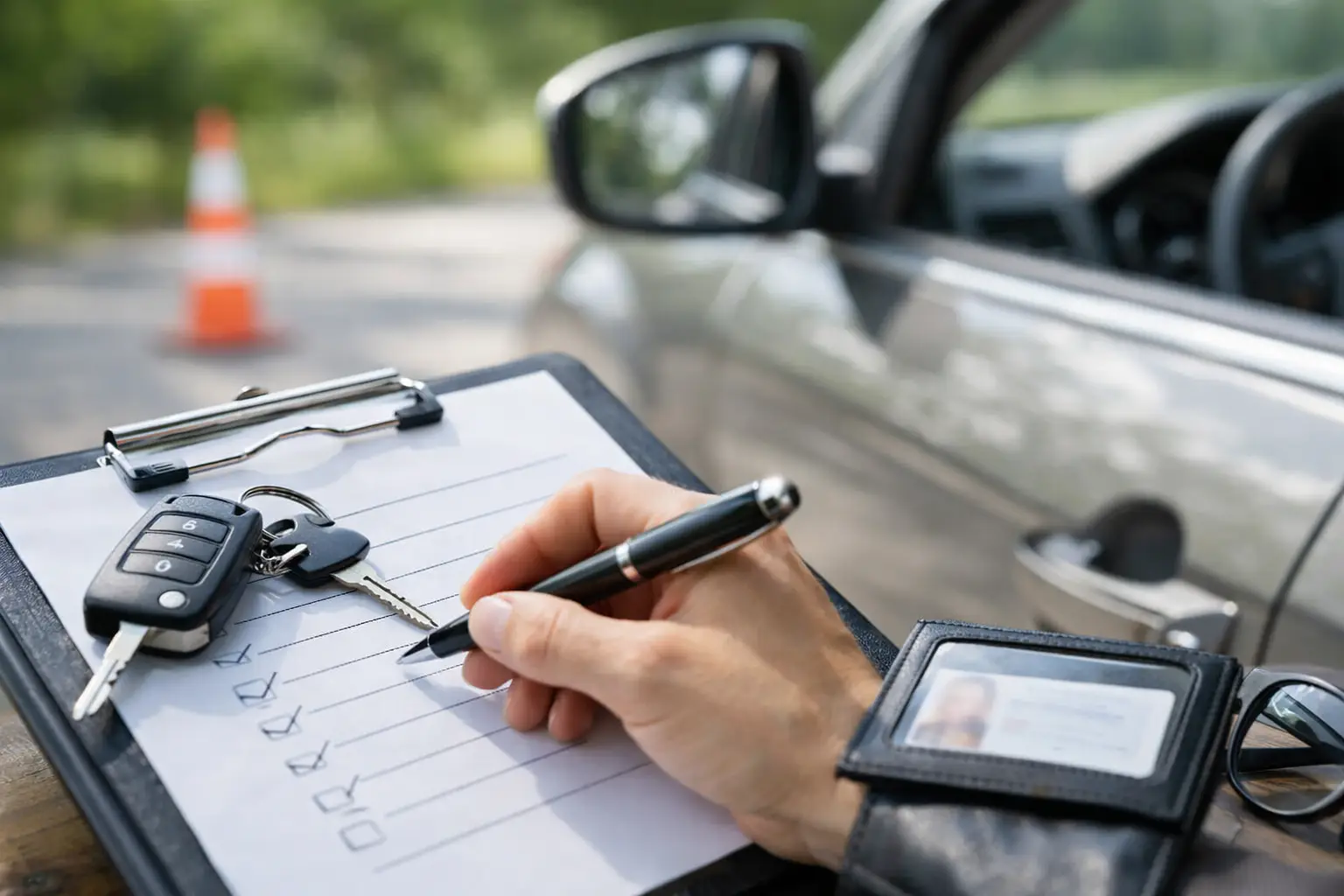
You can be a solid driver and still fail your test for something avoidable. A missing document, a burnt-out brake light, or one rushed stop can turn a good appointment into a frustrating rebook. That is why a clear g2 road test checklist matters – not as a pile of random reminders, but as a simple way to make sure nothing important gets missed.
Most people do not fail because they know nothing. They fail because nerves show up, routines fall apart, and small mistakes stack together. The fix is not more guessing. It is better preparation, a car that meets test standards, and enough practice that your reactions feel natural instead of forced.
Your g2 road test checklist starts before test day
A strong test day usually begins a few days earlier. If you wait until the morning of your appointment to think about paperwork, vehicle condition, or route practice, you are putting pressure on yourself when you should be focusing on staying calm.
Start with your documents. Make sure you have the license or permit required for your appointment, confirmation details if needed, and any glasses or corrective lenses you are required to wear. If you show up missing something basic, your driving skill will not even get a chance to speak for itself.
Then check the vehicle you plan to use. Examiners expect a roadworthy car, and if something is not working properly, the test may not go ahead. Walk around the vehicle and confirm the brake lights, turn signals, headlights, horn, mirrors, seatbelts, and windshield wipers are all functioning. Look at your tires too. If they are worn down or visibly damaged, that is a problem worth fixing before the appointment.
Clean the windshield and clear the inside of the car. A cluttered dashboard, foggy glass, or poor visibility creates stress you do not need. It also sends the message that the car has not been prepared carefully.
What to bring on test day
Your checklist should be short enough to remember and specific enough to trust. Bring your required identification and license documents, arrive with enough time to check in calmly, and make sure the vehicle has enough fuel or charge for the test. If you are using a school car or rental, confirm the booking details in advance so there are no surprises.
Wear shoes that let you feel the pedals properly. This sounds small, but heavy boots, loose sandals, or anything awkward on the foot can affect braking and control. Choose something comfortable and familiar.
You should also arrive mentally ready. That means not cramming at the last minute, not scrolling through random advice that conflicts with what you practiced, and not letting other nervous drivers throw off your focus. The goal is to show consistent habits, not to perform tricks.
Vehicle check: the part many drivers underestimate
A practical g2 road test checklist always includes a full car check, because even confident learners sometimes overlook this part. The examiner may look for obvious issues before the drive starts, and some will ask you to demonstrate basic functions such as signals or brake lights.
Pay close attention to these areas before you leave for the test center:
- Brake lights and tail lights
- Left and right turn signals
- Headlights and high beams
- Horn
- Windshield wipers and washer fluid
- Tires with safe tread and proper inflation
- Working seatbelts
- Clear mirrors and windows
- A clean dashboard with no warning lights that signal a serious issue
If your check engine light is on, it does not always mean the appointment will be canceled, but it is not something to ignore. The same goes for cracked mirrors, damaged windshields, or doors that do not open properly. Some issues are minor. Others are enough to stop the test before it starts. If you are unsure, get the car checked early rather than hoping it will be fine.
The driving habits examiners watch closely
Your car gets you into the test. Your habits determine the result. A lot of students focus on parking because it feels like the most obvious test item, but many points are lost in the basics: observation, speed control, stopping, and decision-making.
At this stage, examiners want to see that you are safe, aware, and predictable. They are not expecting perfection. They are looking for judgment. That means full stops where required, smooth acceleration, proper lane position, and visible mirror and blind spot checks.
Observation matters more than most people think
If your head stays still, the examiner may assume you are not checking properly even if you are using your eyes. Make your mirror checks and blind spot checks clear and natural. Do not exaggerate them in a dramatic way, but do make them visible.
This matters when changing lanes, turning, pulling away from the curb, and moving through busy intersections. Many test errors come from incomplete observation rather than poor steering.
Speed control has to be steady
Driving too fast is an obvious problem, but driving too slowly can also work against you. If the posted speed is reasonable and road conditions are normal, you should drive with confidence. Long hesitation, inconsistent pacing, and unnecessary slowing can suggest uncertainty.
That said, it depends on the situation. School zones, poor weather, heavy traffic, and visibility issues all call for adjustment. Good drivers do not worship the speed limit sign. They match speed to conditions while staying safe and lawful.
Stops and turns should be calm, not rushed
Rolling stops are one of the most common reasons drivers lose marks. Come to a complete stop where required, then proceed when it is safe. On turns, signal on time, choose the correct lane, and avoid drifting wide or cutting corners.
Simple mistakes often happen because drivers are in a hurry to show progress. Slowing your pace slightly can actually improve your performance.
G2 road test checklist for your practice sessions
The best checklist is not only for the appointment itself. It should shape the way you practice during the week before your test. If your practice is random, your results will be random too.
Use your final sessions to rehearse the skills most likely to show up: residential driving, lane changes, intersections, left and right turns, roadside stops, parking, and general traffic awareness. If there are known local test routes, practicing in the area helps because road design, lane markings, and traffic flow can feel more familiar.
Focus on repeatable habits instead of trying to cram every possible scenario. A student who consistently checks mirrors, scans ahead, stops properly, and keeps control of the vehicle is usually in a better position than someone trying to memorize every turn.
This is one reason many learners benefit from a final lesson right before the exam. A calm instructor can spot last-minute issues quickly, whether it is late signaling, weak shoulder checks, or hesitation at four-way stops. At Autoz Driving School, that kind of focused correction is often what turns nervous practice into test-ready driving.
What not to do on the day of the test
A useful checklist should also tell you what to avoid. Do not switch to a different car at the last minute unless you have practiced in it enough to feel comfortable. Every vehicle feels slightly different, especially when it comes to braking, visibility, and turning radius.
Do not overload yourself with advice from five different people on the same morning. Last-minute tips often create confusion. Stick with the habits you trained.
Do not assume being nervous means you are not ready. Most people feel some pressure. The goal is not to eliminate nerves completely. The goal is to drive well even with them there.
And do not treat one small mistake as the end of the test. Many drivers recover well after an imperfect moment. If something minor goes wrong, reset and keep driving safely.
A simple final check before you leave
On the morning of your appointment, give yourself a few extra minutes. Adjust your seat, mirrors, and steering position before the examiner gets in. Test the signals, check that the windshield is clear, and make sure you know where your documents are.
Take one deep breath and keep your attention on the next decision, not the final result. Passing usually comes from doing ordinary things well, over and over again.
A good g2 road test checklist is not about adding pressure. It is about removing preventable mistakes so your real driving ability can show. If you prepare your car, know your habits, and practice with structure, test day starts to feel a lot less intimidating and a lot more manageable.