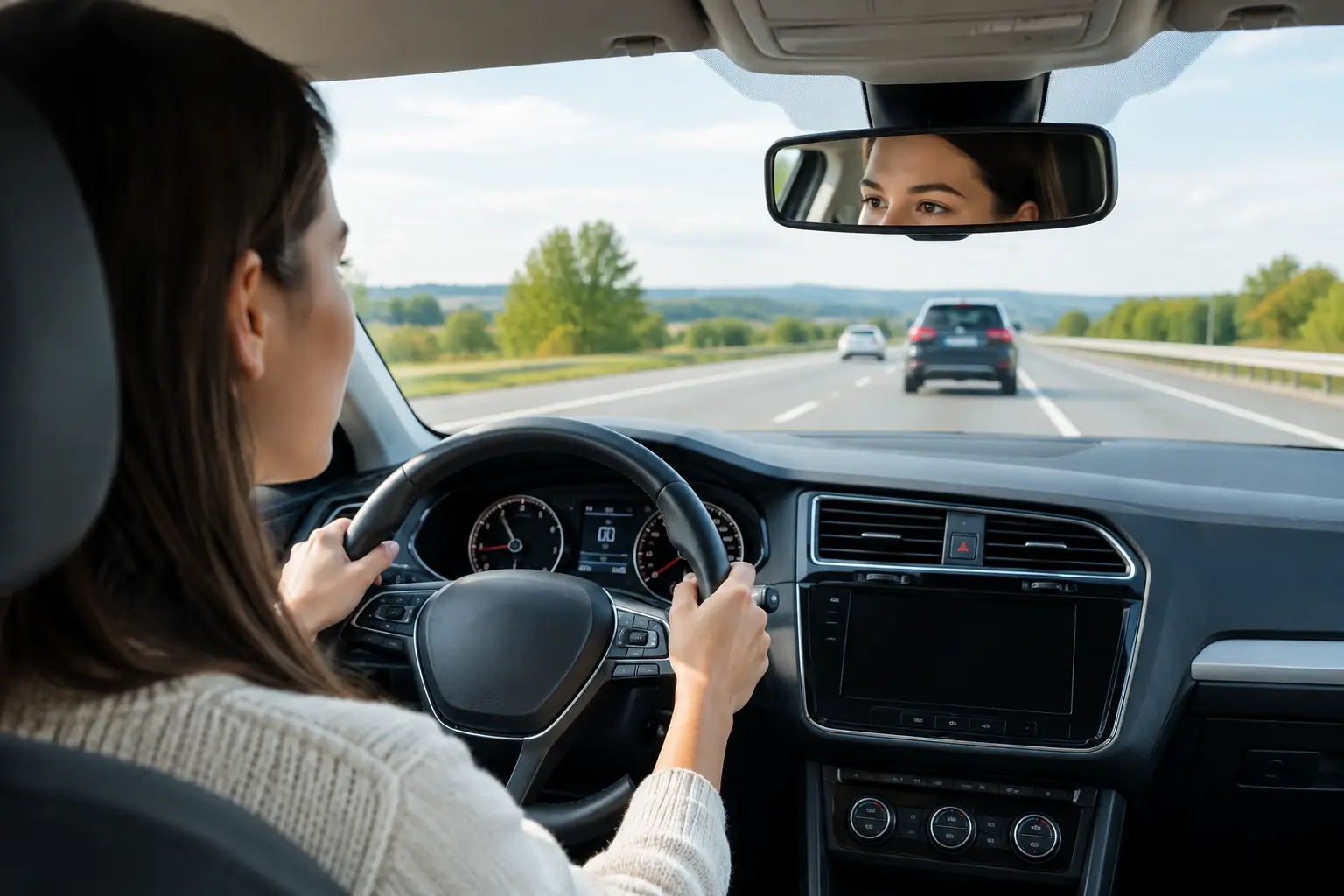
A lane change can take only a few seconds, but it is one of the moments when a new driver has the most decisions to make. You must manage your speed, read traffic, check for cyclists and vehicles in your blind spot, and move smoothly without forcing another driver to react. Learning safe lane changing techniques turns that pressure into a predictable routine – one that protects you on Ottawa roads and helps you show strong observation skills on a G2 or G road test.
Start With the Right Reason to Change Lanes
A safe lane change begins before you turn on the signal. Ask yourself whether moving is necessary now. You may need to enter a turn lane, prepare for an exit, avoid a parked vehicle, or follow the flow of traffic. But changing lanes simply because the lane beside you looks faster can create unnecessary risk, especially in busy traffic.
Give yourself time. If your turn is coming up, begin planning early rather than cutting across several lanes at the last moment. On a road test, examiners look for good judgment. Staying in your lane when there is no clear, safe opening is often the better decision.
The same principle applies when traffic is heavy. Missing one opening or taking a slightly longer route is not a failure. Forcing your way into a gap is. Calm drivers understand that another safe opportunity will come.
The Mirror, Signal, Shoulder Check Routine
The most reliable lane-change sequence is simple: check your mirrors, signal, check your blind spot, then move when the space is clear. Each part has a purpose, and skipping any one of them can leave you unaware of a vehicle, motorcycle, or cyclist beside you.
Check mirrors before signaling
Start by checking your rearview mirror and the side mirror in the direction you intend to move. This gives you a quick picture of traffic behind and beside your vehicle. Look for approaching vehicles, changing speeds, and drivers who may also be preparing to change lanes.
Mirrors are helpful, but they do not show everything. A vehicle can be beside your rear quarter panel and remain hidden from both mirrors. That is why the next step matters so much.
Signal early enough to communicate
Turn on your signal before you move toward the lane line. Signaling tells other road users what you plan to do. It does not give you the right of way or mean another driver must make room for you.
In normal traffic, signal several seconds before changing lanes. This gives drivers behind you time to understand your intention. Avoid signaling so early that people think you are making a different turn or entering a driveway. The goal is clear communication, not a rushed or confusing signal.
Perform a purposeful shoulder check
After signaling, quickly look over your shoulder toward the lane you are entering. This is your blind-spot check. It should be a brief, deliberate glance, not a long look that takes your attention off the road ahead.
A proper shoulder check is especially important near bike lanes, buses, and highway ramps. Cyclists may be traveling faster than expected, and smaller vehicles can disappear beside larger SUVs or trucks. If there is anything in your blind spot, stay in your lane and wait.
Find a Gap You Can Enter Without Forcing Traffic
The safest gap is one that allows you to enter the new lane without making anyone brake suddenly, speed up aggressively, or swerve. You should be able to match the general speed of traffic before and during the lane change.
Do not focus only on the space beside your car. Look at the space ahead and behind in the target lane. If you pull in closely ahead of another vehicle, that driver may have to brake. If you move in with a vehicle directly behind you, you may not have enough following distance if traffic slows.
On faster roads, a good gap can disappear quickly. If you are unsure whether there is enough room, wait. Hesitation is safer than committing to a space that is too small. With practice, your ability to judge closing speed and following distance will improve.
Move Smoothly, Then Recheck Your Space
Once the lane is clear, steer gradually into the next lane. Keep both hands controlled on the wheel and avoid jerking the vehicle sideways. A lane change should be one smooth movement, not a sharp turn followed by a correction.
Maintain a steady speed as you move over. Braking hard in the middle of a lane change can surprise the driver behind you. Accelerating too much can make it harder to judge your position and may put you too close to traffic ahead. Match the speed of the lane whenever possible.
After your vehicle is fully centered in the new lane, turn off the signal if it has not canceled automatically. Then check your mirrors again and rebuild a safe following distance. The lane change is not complete until you are settled in the lane with space around you.
Common Lane-Change Mistakes to Avoid
New drivers often know the steps but perform them too quickly. The most common problem is treating the mirror check, signal, and shoulder check as one rushed action. Slow the routine down enough to gather real information.
Another mistake is drifting toward the lane line before checking the blind spot. Keep your vehicle centered in your current lane until you have confirmed that it is safe to move. Drifting can pressure nearby drivers and makes your intention less predictable.
Watch for these other habits during practice:
- Changing lanes while passing an intersection, crosswalk, or pedestrian activity area
- Cutting closely in front of a large truck, bus, or emergency vehicle
- Moving into a lane without matching traffic speed
- Forgetting to check for cyclists before turning or moving right
- Making multiple lane changes in a row without reassessing traffic
Large vehicles deserve extra caution. Their blind spots are larger, their stopping distance is longer, and a driver may not see you if you travel beside them for too long. Pass efficiently when it is safe, and avoid cutting back in too soon.
Safe Lane Changing Techniques on Highways
Highway lane changes require more planning because speeds are higher and vehicles approach faster. Check farther behind you in the mirror, signal early, and give yourself extra time to assess the gap. A car that looks distant can reach your blind spot much sooner than you expect.
When entering a highway, use the acceleration lane to reach the speed of traffic when conditions allow. You are responsible for finding a safe opening and merging without stopping unless traffic conditions make it necessary. Do not expect highway traffic to automatically move over, although courteous drivers may create space when they can.
When preparing to exit, move into the correct lane early. Last-second exits are a common source of dangerous lane changes. If you miss an exit, continue safely and take the next available route. On a road test and in real driving, choosing safety over convenience is always the stronger decision.
Practice the Skill Before Test Day
Lane changes feel easier when you practice them in stages. Begin on quieter multi-lane roads where you can focus on the routine without heavy traffic. As your confidence grows, practice around busier intersections, highway entrances, and roads with cyclists.
Ask your instructor to watch for details you may not notice, such as signaling too late, missing a shoulder check, slowing down before moving over, or entering gaps that are too tight. Personalized feedback helps replace nervous habits with a consistent process. At Autoz Driving School, lessons can focus on the exact maneuvers that make you feel uncertain, including lane changes on local Ottawa test routes.
Do not practice only when you feel fully comfortable. Productive practice includes learning how to decide not to change lanes when traffic is unclear. That judgment is a real driving skill, not hesitation.
A confident lane change is quiet, controlled, and predictable. Give yourself time, check every area around the vehicle, and never let another driver’s impatience make the decision for you. The safest move is the one you can make with clear space and a clear mind.