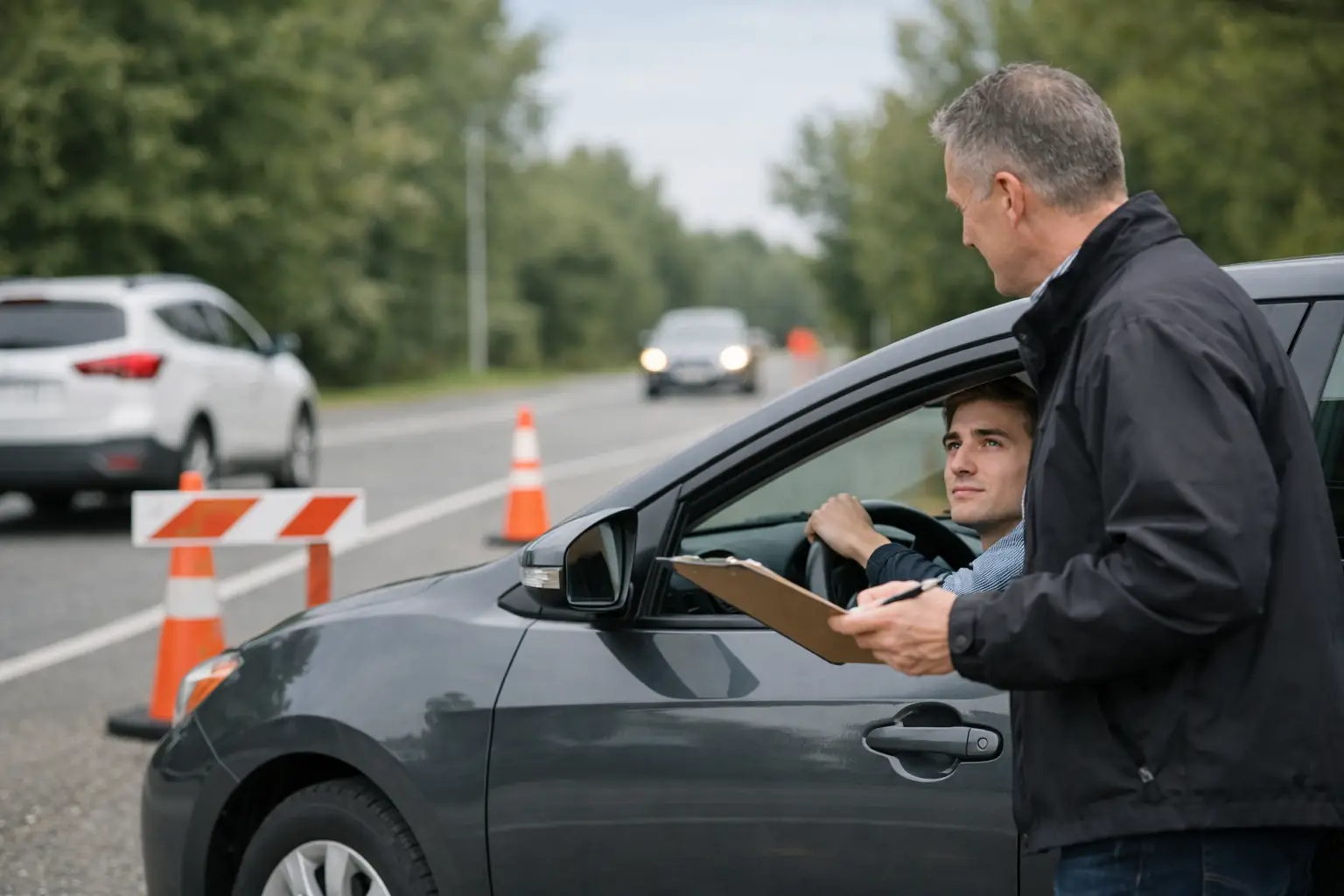
If you have a test date coming up, you are probably asking the exact question most drivers ask: how hard is g road test? The honest answer is that it is not impossible, but it is demanding in a very specific way. You are not being tested on fancy driving. You are being tested on whether you can drive safely, calmly, and consistently in real traffic without reminders.
That is what makes the G road test feel hard for many people. It is not usually one big mistake that causes trouble. It is a series of small habits under pressure – checking mirrors too late, hesitating too long, missing a speed change, or not scanning properly before a lane change. If your driving is solid but inconsistent, the test can feel tougher than expected.
How hard is G road test compared to G2?
For many drivers, the G test feels harder than the G2 because the stakes are higher and the roads are faster. On a G2 test, the focus is more on basic control, intersections, turns, lane position, and simple decision-making. On the G test, the examiner wants to see that you can handle advanced everyday driving, especially merging, highway speed, lane changes in busy traffic, and staying aware at all times.
That does not mean the G test is designed to trick you. It means the margin for hesitation is smaller. Highway driving moves quickly. Traffic gaps close fast. If you are unsure, timid, or late with your decisions, it becomes obvious. A driver can look careful but still lose points for not being decisive enough.
The good news is that many people who worry about the G test are closer than they think. If you already drive regularly on main roads and highways, follow signs well, and stay calm around traffic, the test is often more manageable than your nerves make it seem.
What actually makes the G road test hard?
The hardest part is usually not the route. It is the pressure of being observed. Drivers who perform well in normal life sometimes tighten up during the test. They overthink simple actions, drive too slowly, or become so focused on avoiding mistakes that they stop driving naturally.
Another challenge is divided attention. During the G test, you need to maintain speed, track surrounding traffic, read signs, check mirrors, watch blind spots, and respond to instructions without falling behind. That is why practice matters so much. Safe driving habits need to feel automatic before test day.
Highway merging is another point where people struggle. Examiners want to see that you can build speed properly on the ramp, judge traffic, and enter smoothly. Drivers who merge too slowly often create risk, even if they think they are being cautious. On the other hand, rushing without proper scanning is just as problematic. Good merging is controlled, confident, and well-timed.
Lane changes also matter more than many people expect. The examiner is watching your mirror checks, blind spot checks, timing, and spacing. A lane change should not look sudden or uncertain. If you drift, signal late, or move without a clear gap, that can hurt your result quickly.
What examiners are really looking for
A lot of people assume the examiner is looking for perfection. That is not the standard. They are looking for a safe, competent driver who can make sound decisions without coaching.
That includes steady speed control, proper observation, safe following distance, smooth braking, correct lane discipline, and awareness of the full traffic picture. They also want to see that you respond well to changing road conditions. If traffic is heavy, you should adjust. If a speed limit changes, you should notice. If a pedestrian may enter a crosswalk, you should be prepared.
Confidence matters, but not in the showy sense. The best test performance usually looks calm and ordinary. No aggressive moves, no dramatic corrections, and no guessing. Just clear observation, good timing, and consistent habits.
Common reasons people fail the G test
Most failures come from repeat issues rather than one rare disaster. Observation mistakes are common. That includes weak mirror habits, missed blind spot checks, or not scanning intersections properly. Another issue is speed management. Some drivers go too slow because they are nervous, while others miss posted changes and drift over the limit.
Merging problems are high on the list. Entering the highway too slowly, stopping when it is unnecessary, or failing to match traffic speed can all create concern. Lane changes are another major area. If your checks are incomplete or your timing is poor, the examiner may mark that as unsafe.
Following distance also matters more than people think. In heavier traffic, nervous drivers sometimes creep too close because they are focused on the car in front instead of the bigger traffic flow. At the same time, overly large gaps can make you seem hesitant if you are not managing them purposefully. It depends on traffic conditions, but your spacing should always show control.
Then there is test-day anxiety. Even experienced drivers can make unusual mistakes when they feel watched. That is why practice should not only build skill. It should build routine.
How to know if you are ready
A simple question helps: can you drive on busy roads and highways without someone quietly helping you in your head? If the answer is yes most of the time, you may be close. If you still need to think hard about mirror checks, speed changes, or merging decisions, you probably need more focused practice.
Readiness is not about feeling fearless. Very few people feel completely relaxed before a road test. Readiness is about whether your core habits stay strong even when you are nervous.
One of the best ways to measure this is a mock test. A proper practice run exposes the gaps quickly. Maybe your highway entry is fine, but your lane changes are rushed. Maybe your steering is solid, but you miss school zone signs or do not check early enough at intersections. Small corrections before the real test can make a big difference.
How to make the G road test feel easier
The smartest approach is to prepare for the exact skills the test rewards. General driving experience helps, but targeted practice helps more. Spend real time on highway entries and exits, lane changes in moderate traffic, speed control, and scanning routines. Practice until these actions feel repetitive, not dramatic.
It also helps to drive in the test area. Familiar roads reduce mental load. If you already know where speed limits tend to change, where highway ramps tighten, or where traffic tends to bunch up, you have more attention left for good decision-making.
A lesson with an instructor can speed up this process. A patient coach will not just tell you to practice more. They will point out the exact habits that are costing you marks and help you fix them efficiently. For nervous drivers, that structure can be the difference between hoping to pass and being genuinely prepared. For drivers in Ottawa, schools like Autoz Driving School focus heavily on local route knowledge, calm coaching, and first-attempt test preparation, which is exactly what many learners need at this stage.
If you failed before, does that mean the G test is too hard?
Not at all. A failed test does not automatically mean you are a bad driver. It usually means there were a few habits, decisions, or stress reactions that showed up at the wrong time. That can be fixed.
In fact, retakers often improve faster because they understand the pressure better the second time. They know the test is not abstract anymore. They know where they froze, rushed, or lost focus. With the right feedback, a previous failure can become useful information instead of a confidence problem.
The key is to avoid vague preparation. Do not just drive more and hope it works out. Practice the weak areas directly. If merging was the issue, work on merging. If observation was inconsistent, build a repeatable scan routine. The test gets easier when your preparation becomes specific.
So, how hard is G road test for the average driver?
For the average driver who has basic experience but limited highway confidence, the G test is moderately difficult. For a driver who practices regularly, understands the test standards, and gets comfortable with faster traffic, it is very passable. For a driver who avoids highways, panics under observation, or has inconsistent habits, it can feel very hard.
That is why there is no single answer. The difficulty depends less on your years behind the wheel and more on the quality of your habits. Two people can have the same amount of driving time and very different test results.
If you treat the G road test like a serious safety evaluation instead of a guessing game, it becomes much more manageable. Build your highway confidence, clean up the small habits, and practice until your decisions feel natural. Most people do not need magic to pass. They need clear feedback, enough repetition, and a calmer plan going into test day.
A little nerves are normal. Strong habits matter more.