To pass your driving test in Ontario, you need three things: enough supervised practice that the basics happen without thinking, a clear picture of what the DriveTest examiner is watching for, and a calm, well-planned test day. In Ottawa, that means practising on the kinds of roads you will see around the Walkley Road and Canotek Road DriveTest centres, fixing the small habits that cost marks, and arriving rested with a car that is ready to go.
How the Ontario licensing tests work
Ontario uses graduated licensing, so there are three separate tests on the way to a full licence:
- G1 knowledge test: a written test on road rules and traffic signs, plus a vision test. Study the official Driver’s Handbook from the Ministry of Transportation (MTO) before you book it.
- G2 road test: a practical test on city streets that checks basic control, observation and safe decision-making. You normally need to hold your G1 for 12 months first, or 8 months if you complete a Ministry-approved Beginner Driver Education (BDE) course.
- G road test: a longer practical test that adds higher-speed driving, usually including a highway section such as Highway 417 (the Queensway) or Highway 416. You need to hold your G2 for 12 months before taking it.
Fees, waiting periods and booking rules can change, so always confirm the current details on ontario.ca or the DriveTest website before you book.
The mistakes that cost the most marks
Lost marks on a road test rarely come from a lack of driving ability. They usually come from a few small habits that show up under pressure. These are the ones instructors see most often.
Missed observation
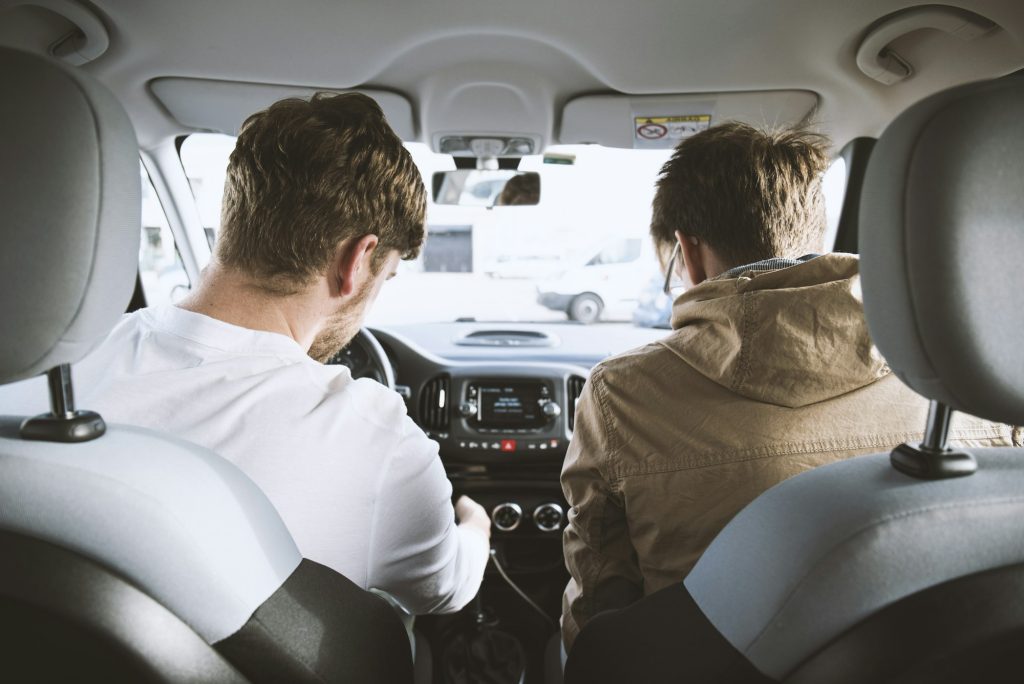
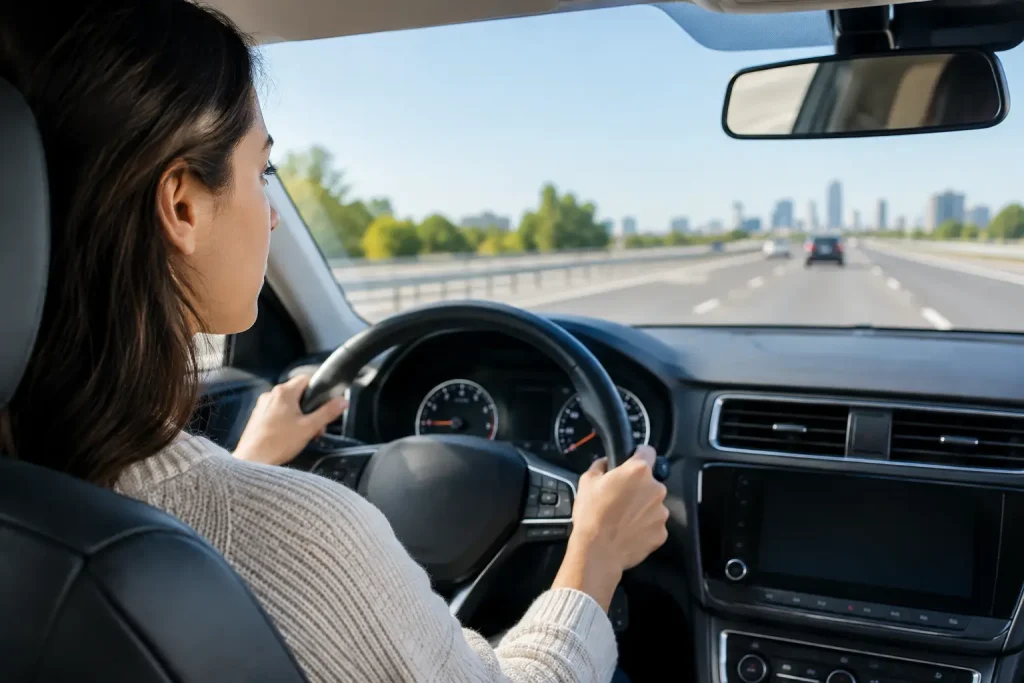
Examiners want to see your head move. Check your mirrors before you slow down, before every turn and before every lane change, and do a shoulder check into your blind spot before moving sideways or pulling away from the curb. A quick glance with your eyes only is easy to miss from the passenger seat.
Incomplete stops
At a stop sign or red light, the car must come to a full stop with no rolling. Stop behind the stop line or crosswalk, wait a moment, then creep forward if you need a better view. A rolling stop is an easy mistake to avoid and a costly one to make.
Late or missing signals
Signal early enough that other road users can react, and cancel your signal after the turn. Forgetting to signal when pulling away from a parked position is a classic test-day slip.
Speed control
Driving over the limit is an obvious problem, but driving well below it without a reason can also count against you. Watch for school zones and changing limits, and match your speed to conditions, especially on wet or snowy Ottawa roads.
Hesitation
Waiting too long at a clear intersection or refusing a safe gap tells the examiner you are not sure what to do. The fix is not to rush. It is to practise enough that you recognize a safe gap quickly and commit to it.
Skills to practise before you book
Use your practice time on the manoeuvres that actually appear on Ontario road tests. Aim to do each one smoothly and with full observation, several times in a row, before you book.
- Left and right turns at controlled and uncontrolled intersections, with correct lane position at the start and finish of the turn.
- Lane changes using the mirror, signal, shoulder check routine every single time.
- Parallel parking and reverse parking, with checks all around before and during the reverse.
- Three-point turns (also called a turnabout) on a quiet street.
- Roadside stops and pulling back into traffic safely.
- Residential, business and school zones, where speed and pedestrian awareness matter.
- For the G test: merging onto and exiting a highway, holding a steady speed, keeping a safe following distance and changing lanes at highway speed.
If you are nervous about the test itself, our guide on handling nervousness while learning to drive has practical ways to stay steady.
Getting to know Ottawa test areas
You cannot memorize a road test route, and examiners can take you anywhere nearby. What you can do is get comfortable with the type of driving around your test centre. Both Ottawa centres sit near a mix of busy arterial roads, commercial driveways, residential streets and highway access. Practise in similar areas: multi-lane roads with turn lanes, plazas with cars pulling in and out, quiet streets for parking and turnabouts, and, for the G test, on-ramps and off-ramps on the Queensway.
Practise at different times of day too. Traffic around Ottawa looks very different at 8am than at 2pm, and our article on safe driving in Ottawa’s rush hour covers the habits that help in heavy traffic.
Test-day checklist
- Documents: bring your current licence and anything DriveTest asks for when you book. Check the requirements in advance.
- Vehicle: the car must be in safe working order. Test the signals, brake lights, headlights, horn, wipers and tires the day before. The examiner can refuse a car that is not roadworthy.
- Timing: arrive early so you are not rushing through traffic to get there.
- Warm up: a short drive before the test helps your hands and eyes settle into the routine.
- Weather: in an Ottawa winter, clear all the snow and ice off the car, including the roof and lights, and leave extra time.
- During the test: listen to each instruction fully, ask the examiner to repeat it if you are unsure, and if you make a mistake, put it behind you and focus on the next turn.
How AUTOZ helps you prepare
At AUTOZ Driving School, our certified instructors give one-on-one lessons in automatic cars, including a Tesla, on weekdays and weekends. Lessons focus on the exact skills and habits examiners look for, and your instructor will tell you honestly whether you are ready to book or need a little more practice.
- If you are a new driver, our Ministry-approved BDE online course combines online learning at your own pace with 10 hours of in-car training, and lets you take your G2 road test after 8 months instead of 12.
- For targeted practice, book G2 lessons or G lessons in packages from 1 to 10 hours.
- Our road test package includes a 1-hour warm-up lesson right before your test and use of the AUTOZ car for the test itself ($150 + HST for G2, $170 + HST for G).
Frequently asked questions
How many lessons do I need before my road test?
It depends on how much supervised driving you already have and how comfortable you feel in traffic. Some learners only need a few hours to clean up habits, while others need more time on turns, parking or highway driving. A first lesson with an instructor is the quickest way to get an honest answer.
Can I use a driving school car for my road test?
Yes. Many learners use a school car because it is familiar from lessons and known to be in good working order. With the AUTOZ road test package, you get a warm-up lesson right before the test and use of the car for the test.
What happens if I fail my road test?
You can book another attempt, although fees and waiting periods apply and can change, so check DriveTest for current details. Ask the examiner to explain the marks you lost, then spend your next lessons working on exactly those points.
Is the G test harder than the G2 test?
The G test is longer and includes higher-speed driving, often on a highway, so it asks more of your judgment at speed. The basics are the same: good observation, smooth control and safe, confident decisions.
If you have a road test coming up in Ottawa, we would be glad to help you get ready. You can book your lessons online or message us on WhatsApp at 613-884-1705 to ask which package fits you best.