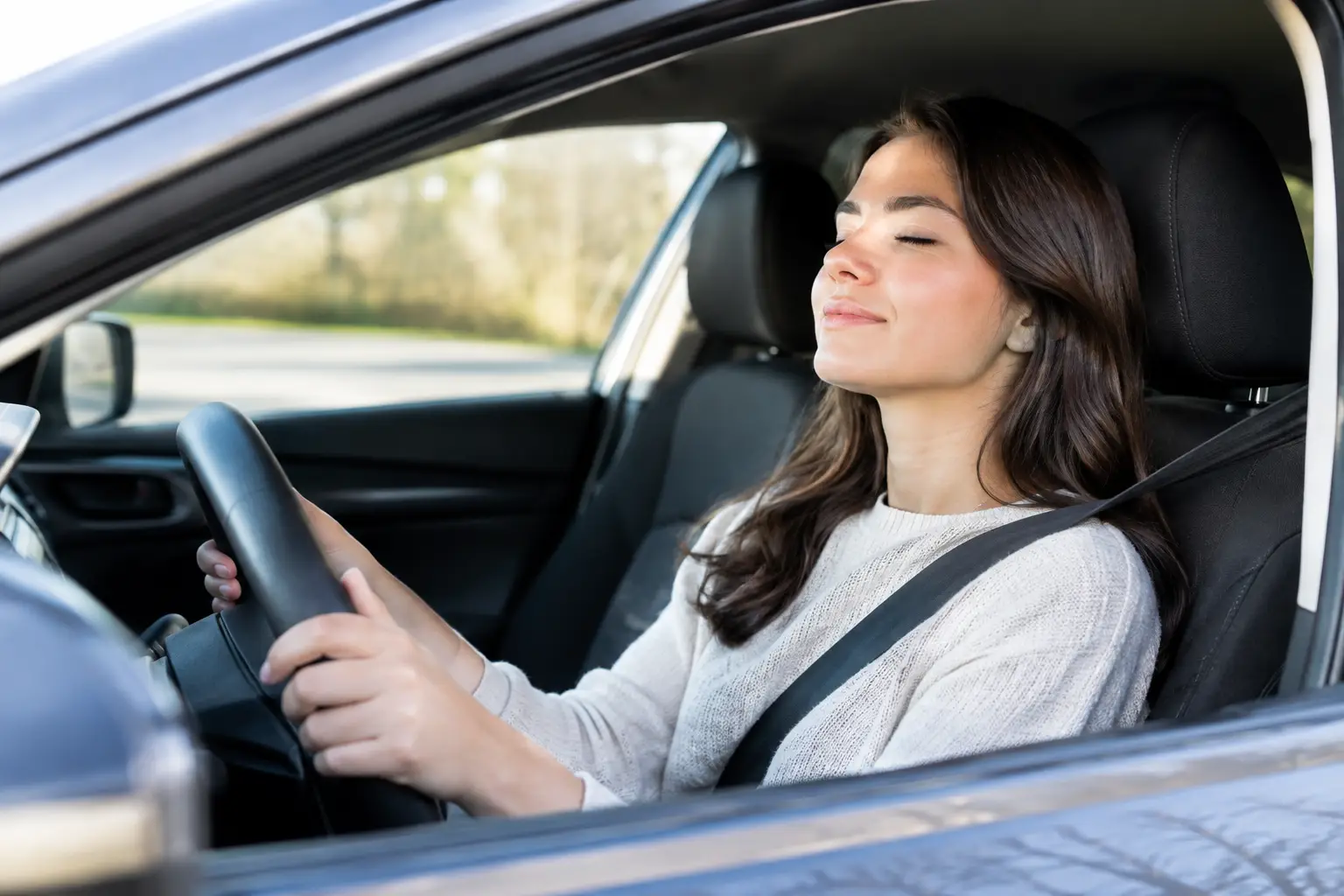
A driving test can make even a well-prepared student feel different behind the wheel. You may know how to parallel park, check your mirrors, and make safe turns during practice, then suddenly worry about every small move on test day. The best ways to stay calm are not about pretending you are not nervous. They are about giving yourself a simple routine that keeps your attention on safe driving, one decision at a time.
Why Driving Test Nerves Feel So Strong
A road test has a clear outcome: pass or try again. That pressure can make normal nerves feel much bigger than they are. Many students start imagining the examiner watching every move, traffic getting worse, or a single mistake ending the test.
The truth is that an examiner is looking for safe, responsible driving. They are not expecting perfection. A brief hesitation, a less-than-perfect parking attempt, or taking an extra moment to assess an intersection does not automatically mean failure. Dangerous choices, missed observations, and ignoring traffic rules are what create serious concerns.
Your goal is not to impress anyone with fast or fancy driving. Your goal is to show the same steady habits you have practiced: observe, decide, signal, position the vehicle, and proceed safely.
The Best Ways to Stay Calm Before You Start Driving
1. Practice the test routine, not just the maneuvers
Confidence grows when the day feels familiar. During your lessons, practice the full sequence around a road test: getting comfortable in the driver’s seat, adjusting mirrors, checking blind spots, entering traffic, changing lanes, parking, and responding to directions.
A student who has only practiced parallel parking in an empty lot may still feel overwhelmed when asked to park after several minutes of city driving. A student who has practiced realistic test conditions knows that each skill is simply part of the drive. This is especially useful for G2 and full G tests, where observation and decision-making matter throughout the route.
2. Use a short breathing reset
You do not need a complicated relaxation technique in the parking lot. Try this instead: breathe in slowly for four counts, hold for four, then breathe out for six. Repeat it three times before you put the car in gear.
A longer exhale helps reduce the physical rush that can make your hands shake or your thoughts race. If you feel nervous during the test, do the same reset safely at a red light. Keep your eyes on the road environment, relax your grip on the wheel, and take one controlled breath.
3. Arrive early enough to avoid rushing
Rushing creates anxiety before the test has even started. Plan to arrive early, but not so early that you spend an hour sitting in the car building up stress. About 15 to 20 minutes gives you time to check in, use the restroom, review your documents, and settle into the vehicle.
The night before, confirm the location, your appointment time, and what identification or paperwork you need. Put everything in one place. Small preparation details protect your focus when it matters.
4. Keep your pre-test meal simple
Skipping food can leave you distracted and lightheaded. Too much caffeine can make normal nerves feel like panic. Aim for a light meal or snack that gives you steady energy, along with water.
What works depends on you. If coffee is already part of your routine, there is no need to change everything on test day. Just avoid doubling your usual amount because you did not sleep well. The goal is to feel alert and comfortable, not overly energized.
Replace Pressure With a Clear Driving Plan
Nerves become harder to manage when your mind is jumping ahead. You are turning left but thinking about the highway merge later in the test. Bring yourself back to the next safe action.
Focus on the next 10 seconds
A road test is not one giant event. It is a series of short moments. At any point, ask yourself: What is the speed limit? What is happening ahead? Where are pedestrians, cyclists, and other vehicles? What do I need to do next?
This approach prevents overthinking. Instead of telling yourself, “I have to pass,” tell yourself, “I need to scan this intersection and make a safe turn.” That is a task you can control.
Use the habits your examiner can see
Good drivers observe consistently, but test anxiety can make students forget to show those observations clearly. Check mirrors regularly. Scan intersections before entering. Make blind-spot checks before changing lanes, pulling away from the curb, or moving over.
Do not perform exaggerated movements that take your attention away from traffic. Natural, clear head checks and steady visual scanning are enough. When you follow a repeatable observation routine, you have less mental space for worry.
Give yourself permission to be patient
Many test mistakes happen because students feel pressured to move before it is safe. They rush a turn, accept a small gap, or change lanes at the last second because they are afraid of looking unsure.
Being patient is not a weakness. If you need to wait for a safe opening, wait. If you miss a turn, continue safely and let the examiner guide you. Taking the wrong route is usually less serious than making an unsafe decision to correct it.
Prepare for the Situations That Trigger Anxiety
Everyone has a different moment that raises their stress level. For some students, it is parallel parking. For others, it is merging onto a busy road, making an unprotected left turn, or hearing the examiner give a direction they did not fully catch.
Practice your specific concern until you have a process. For parallel parking, know your reference points, move slowly, and remember that controlled adjustments are allowed when done safely. For highway driving, practice building speed on the ramp, checking mirrors and blind spots, and merging with traffic flow instead of stopping unnecessarily.
If you do not understand an examiner’s direction, calmly ask for it to be repeated. It is better to clarify than guess. Examiners expect drivers to process information safely, and clear communication is part of responsible driving.
What to Do If You Make a Mistake
One of the best ways to stay calm is to stop treating every imperfect moment as a failure. If you make a minor mistake, do not replay it in your mind while the road keeps moving. Reset your attention and continue driving safely.
For example, you might brake a little harder than intended, take an extra moment when parking, or realize you could have positioned yourself better before a turn. Notice it, correct your driving if needed, and move on. Worrying about a past moment can lead to a second mistake in the present.
The same rule applies if you receive feedback after a practice test. Feedback is not proof that you cannot drive. It is a map of what to practice next. Students often make the fastest progress when they stop defending mistakes and start using them as specific coaching points.
Build Confidence With the Right Practice Support
The calmest drivers are usually not the ones who never feel nervous. They are the ones who know exactly what to do when nerves show up. Personalized lessons can help you identify the skills that need more repetition, from lane changes and parking to Ottawa test-area traffic patterns and highway driving.
At Autoz Driving School, patient one-on-one coaching is designed to turn uncertainty into a reliable routine. A focused lesson before your test can be more valuable than hours of anxious last-minute driving with someone who cannot explain what you need to improve.
The evening before your test, avoid cramming. Review your basic routine, prepare your documents, choose comfortable shoes, and get rest. On the day, breathe, scan, drive within the rules, and handle one situation at a time. You have already done the work. Now give yourself the space to show it.