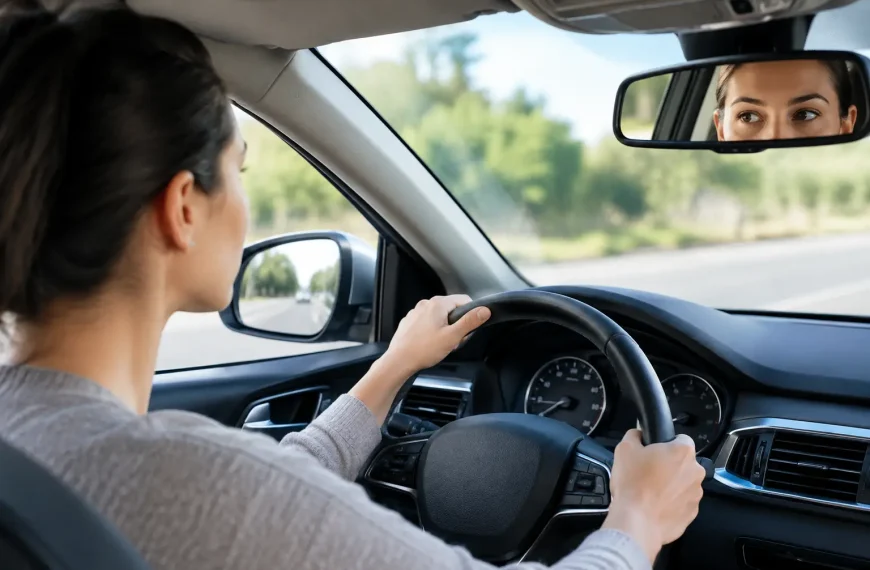
The first lesson should not feel like a test you are already failing. It should feel like the start of a clear plan. Asking the best questions for a driving instructor helps you find someone who can explain what to do, correct mistakes without adding pressure, and prepare you for the roads and test situations that matter most.
A good instructor welcomes questions. They know nervous new drivers, adult learners returning after years away, and road test retakers need more than general advice. They need honest feedback, practical repetition, and a calm person in the passenger seat.
Questions to ask before you book
1. What is your teaching approach for nervous or new drivers?
This question tells you whether the instructor adapts to the student or expects every student to learn at the same pace. Look for an answer that mentions patience, clear explanations, gradual skill-building, and a plan for handling nerves.
If you are anxious, do not settle for someone who simply says, “Relax.” A helpful instructor can break a difficult skill into smaller steps, explain why it matters, and let you practice it until it feels familiar.
2. What will we cover in my first lesson?
The answer should be specific. A first lesson may include adjusting mirrors and seating, smooth braking and acceleration, steering control, turns, lane position, and scanning habits. For a more experienced driver, it may begin with an assessment of current skills.
This also helps you set realistic expectations. You do not need to be perfect on day one. You do need an instructor who can identify where you are now and show you what comes next.
3. How do you assess my current driving level?
The right lesson plan depends on your experience. A complete beginner needs a different approach than someone preparing for a G2 or full G road test, or an adult who has driven in another country.
Ask how the instructor identifies strengths and weaknesses. A useful assessment looks beyond whether you can keep the car moving. It should consider observation, speed control, decision-making, parking, lane changes, highway confidence, and response to busy traffic.
4. Can you help me practice the roads and situations near my test location?
Local familiarity is valuable, especially when you are preparing for a road test. An instructor should not promise a secret route or guarantee the exact streets you will drive. Test routes can change, and memorizing a route is not the same as learning to drive safely.
What they can do is prepare you for the kinds of intersections, lane changes, merging areas, residential streets, and traffic patterns you may encounter. For Ottawa-area learners, that local context can make practice more focused and less stressful.
5. What vehicle will I learn in, and can I use it for the test?
Ask whether lessons are offered in an automatic vehicle, what safety features are available, and whether the car is properly insured for instruction. If you plan to use the school vehicle on test day, confirm that option early.
The vehicle matters because familiarity reduces one more source of stress. Whether you learn in a conventional car or a modern Tesla, you should understand the controls well before your road test. The goal is not to rely on technology. It is to build safe habits that transfer to any vehicle.
Best questions for a driving instructor during lessons
6. What is the most important skill I should improve right now?
This is one of the best questions for a driving instructor because it cuts through vague feedback. Instead of trying to fix everything at once, you can focus on the issue that will make the biggest difference.
The answer might be earlier mirror checks, more consistent speed, smoother braking, better gap judgment, or clearer observation at intersections. Ask for one priority and a way to practice it between lessons.
7. Can you explain why that was a mistake?
A correction is more useful when you understand the reason behind it. “Check your mirror” is helpful. “Check your mirror before braking because the driver behind you may need warning of your speed change” gives the habit meaning.
Understanding the why helps you make safe choices when the road looks different from the practice route. It also helps you remember the lesson under pressure.
8. What should I be looking for before I make this move?
Use this question before turns, lane changes, merges, parking maneuvers, and entering intersections. Driving is largely about observation and timing, not just controlling the wheel.
A strong instructor can teach you a repeatable visual routine: scan ahead, check mirrors, check blind spots when needed, identify hazards, choose a safe gap, then act. With practice, that routine becomes quicker and more natural.
9. Am I checking mirrors and blind spots at the right time?
Many learners know they should check mirrors but lose points because the check happens too late, too quickly, or without a blind-spot check when one is needed. This question invites precise coaching.
Ask your instructor to tell you whether your observation is visible, timely, and connected to your next action. A good habit is not a dramatic head movement for the examiner. It is a genuine check that helps you make a safe decision.
10. How can I make my braking, steering, and turns smoother?
Smooth control is not just about comfort. Sudden braking, wide turns, or inconsistent speed can signal that you are not planning far enough ahead.
Your instructor may have you look farther down the road, ease off the accelerator earlier, brake progressively, or slow before turning rather than during the turn. Small adjustments often create noticeable improvement within a few lessons.
11. What should I practice with a supervising driver between lessons?
Private practice is where many skills become automatic, but only if the practice is purposeful. Ask for a simple plan based on your current level, such as repeated right and left turns, quiet-neighborhood scanning, parking setup, or highway merging.
Be honest about how much practice time you have. A busy student may need a short, focused routine rather than an unrealistic plan. Quality repetition is more valuable than driving around without a goal.
Questions that prepare you for the road test
12. What are the mistakes that could cause me to fail?
You deserve a direct answer. Serious errors often involve safety: failing to observe, ignoring signs or signals, unsafe lane changes, poor right-of-way decisions, speeding, or requiring examiner intervention.
Still, do not obsess over failure. Use the answer to understand the difference between a minor adjustment and a safety-critical mistake. Your goal is steady, legal, observant driving from the first minute to the last.
13. What test skills need more repetition before I book?
Ask this before choosing a test date, not just the day before. Your instructor should be able to name the skills you perform consistently and the ones that are still unpredictable.
It depends on the driver. One person may need more parking practice, while another needs work on lane changes, highway driving, or maintaining the speed limit. Booking only when your skills are reliable can save time, money, and disappointment.
14. Can we do a mock road test?
A mock test is one of the most practical ways to identify gaps. Your instructor can give directions with limited coaching, observe your habits, and review the result afterward.
The point is not to create fear. It is to show you what changes when you must make decisions independently. Ask for clear feedback afterward: what went well, what needs attention, and whether you are currently test-ready.
15. What should I do if I make a mistake during the test?
One imperfect turn or awkward park does not automatically end a road test. What matters is whether you respond safely and continue making sound decisions.
Ask your instructor how to recover without panicking. Usually, the best response is simple: stay calm, follow the next instruction, keep observing, and avoid trying to overcorrect. A safe driver does not need to be flawless. A safe driver stays aware and adjusts.
The right instructor will never make you feel embarrassed for asking basic questions. At Autoz Driving School, the goal is to replace uncertainty with a practical plan, one skill at a time. Bring these questions to your next lesson, listen closely to the answers, and let each drive give you one more reason to trust yourself behind the wheel.