Your hands tighten on the steering wheel. A car follows a little too closely, the next intersection comes up fast, and suddenly you are thinking about every possible mistake. That is what driving anxiety can feel like. It is frustrating, but it is also common, especially for new drivers, adults returning to driving, newcomers learning local roads, and anyone preparing for a road test after a difficult experience.
The good news is that confidence is not something you either have or do not have. It comes from repeating the right skills in a calm, structured way. You do not need to be fearless to become a safe driver. You need a clear process, patient practice, and enough experience to know you can handle what happens next.
What Driving Anxiety Actually Looks Like
Driving anxiety does not always look like refusing to get behind the wheel. Sometimes it shows up as overthinking every lane change, braking too early, avoiding highways, or feeling tense for hours before a lesson. Some learners drive reasonably well until an instructor, parent, passenger, or examiner sits beside them. Then the pressure makes familiar skills feel difficult.
It can also create a cycle. You worry about driving, so you avoid practicing. Because you practice less, situations stay unfamiliar. Then the next drive feels even bigger than it really is. The goal is not to push yourself into the most stressful situation immediately. The goal is to break that cycle with manageable, purposeful practice.
A certain amount of nervousness is normal. It can even make you more alert. Anxiety becomes a problem when it stops you from making clear decisions, practicing consistently, or taking the steps you need to get licensed. If fear feels overwhelming, causes panic symptoms, or is connected to a previous collision, professional mental health support can be a valuable part of your plan alongside driving instruction.
Why Road Tests Can Make Anxiety Worse
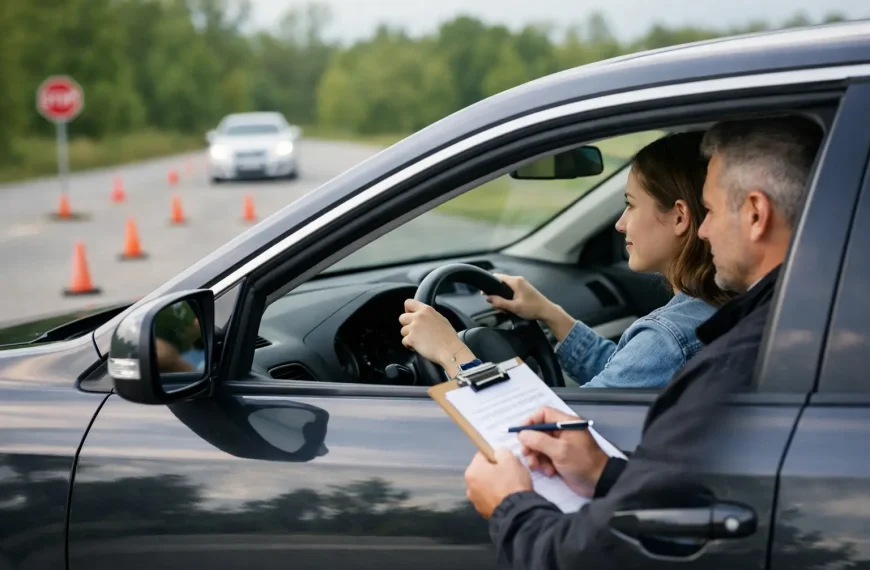
A road test adds a layer of pressure because there is a result attached to the drive. You may worry about the cost of retesting, disappointing family, taking time off work, or making one mistake that ends the exam. Many drivers start treating the examiner as someone waiting for them to fail.
A road test is not designed to reward perfection. It is meant to confirm that you can drive safely, follow the rules, observe your surroundings, and make sound decisions. Small errors may happen. What matters is whether you recover safely and continue demonstrating control.
The best preparation is specific. Instead of taking random drives and hoping confidence appears, practice the skills that are usually tested: observation, mirror checks, smooth braking, turns, lane changes, parking, merging, speed control, and defensive driving. When you know what you are being assessed on, the test feels less mysterious.
Build Confidence One Situation at a Time
Trying to conquer every fear in one long drive usually backfires. A better approach is to start where you can succeed and add challenge gradually. If quiet residential streets feel manageable, practice there until steering, stopping, and scanning feel less demanding. Then move to busier intersections, wider roads, parking lots, and highway driving when you are ready.
This is not about avoiding difficult roads forever. It is about building the foundation first. A driver who is still struggling with basic speed control will naturally feel overwhelmed in heavy traffic. Once the basics become more automatic, there is more attention available for traffic patterns, signs, pedestrians, and other drivers.
Before each practice session, choose one or two goals. For example, you might focus on smooth stops and full observation at intersections. On another day, your goal may be making confident lane changes. Clear goals turn a lesson from a vague stressful event into a task you can measure.
Afterward, ask yourself three questions: What felt better than last time? What needs another round of practice? What is the next small step? This keeps your attention on improvement instead of replaying one imperfect moment.
Practice the Skills That Trigger Stress
Most anxious drivers have a few situations they especially dislike. Common examples include left turns at busy intersections, parallel parking, entering a highway, changing lanes, and driving near large trucks. Avoiding these situations may bring short-term relief, but it does not build long-term confidence.
Work on them in stages. For highway driving, you might begin by learning how to check mirrors and blind spots on quieter roads. Next, practice entering a less busy highway with a qualified instructor. Later, repeat the process during more typical traffic conditions. The same principle applies to parking: begin in an open lot, use reference points, and then move to real curbside spaces.
Repetition matters more than one perfect attempt. Your brain learns that a situation is manageable when you handle it safely more than once.
Use a Simple Routine Before You Drive
A calm start does not guarantee a stress-free drive, but it gives you a better chance of staying focused. Arrive a few minutes early if possible. Adjust the seat, mirrors, and steering wheel before moving. Put your phone away, choose a comfortable temperature, and take a few slow breaths.
Then give yourself a practical reminder: “I do not need to rush. I will look ahead, check my mirrors, and make safe choices.” This is more useful than telling yourself not to be nervous. Your body may still feel nervous, but you can direct your attention to actions you control.
During the drive, keep your eyes moving. Look well ahead, check mirrors regularly, and scan intersections before entering them. Drivers often feel more anxious when they stare at the car directly in front of them. A wider visual scan gives you more time to notice changes and respond smoothly.
If you make a mistake, do not try to fix it with a sudden move. Missing a turn, taking the wrong exit, or choosing a later lane change is usually less dangerous than forcing a correction. Continue safely and let the route adjust. Safe driving is not about never being inconvenienced.
Choose Feedback That Helps You Improve
The person teaching you can make a major difference. Constant criticism, unclear directions, or last-second commands can increase stress and make it harder to learn. You need instruction that is calm, direct, and specific enough to use on your next attempt.
Good coaching identifies the skill behind the mistake. Instead of only saying, “You were too close,” an instructor can explain how to create more following distance, where to look, and when to ease off the accelerator. That gives you a solution, not just a reason to feel bad.
Private lessons are particularly helpful when you want practice tailored to your pace. A patient instructor can identify whether anxiety comes from observation habits, unfamiliar rules, parking technique, highway merging, or test pressure. Then you can spend lesson time on the areas that will make the biggest difference.
For Ottawa-area learners, Autoz Driving School provides one-on-one coaching, refresher lessons, road test preparation, and practice designed around real driving conditions. Familiarity with local routes can help, but strong observation and safe decision-making are what carry you through any route.
Preparing for Test Day Without Adding Pressure
The night before your test, avoid cramming new skills. Review your routine, confirm the location and time, and make sure you have the required documents. Get enough rest and give yourself extra time to arrive. Rushing into the parking lot already tense is not a helpful start.
On test day, focus on the next task rather than the final result. At the beginning, settle into the car properly. Adjust your seat and mirrors. Listen to each instruction fully. If you do not hear or understand an instruction, ask for clarification instead of guessing.
Remember that calm driving can look slower because it is more deliberate. That does not mean hesitating unnecessarily. Be decisive when it is safe to proceed, maintain an appropriate speed, and show clear observation. Examiners need to see that you are aware, prepared, and in control.
When Confidence Starts Feeling Real
Confidence rarely arrives as a dramatic moment where all nerves disappear. More often, it shows up quietly. You notice that you handled a busy intersection without freezing. You recover from a missed turn without panic. You park successfully after a few adjustments. You begin thinking about traffic instead of only thinking about yourself.
That is real progress. Driving is a skill built through repetition, judgment, and patience. Give yourself permission to learn at a pace that is challenging but manageable, and keep practicing the situations you would rather avoid. Each safe drive gives you proof that you are becoming the calm, capable driver you want to be.