The best first try G2 pass example is not a driver who never feels nervous. It is a driver who has a clear routine, recognizes hazards early, and keeps making safe decisions even when the road test feels stressful. That is what examiners want to see: calm control, strong observation, and responsible driving from the moment the vehicle starts moving.
For many new drivers in Ottawa, the G2 test feels like one high-pressure chance to prove everything at once. In reality, the test is a series of practical decisions. Your preparation should focus on making those decisions feel familiar before test day.
What a First Try G2 Pass Example Looks Like
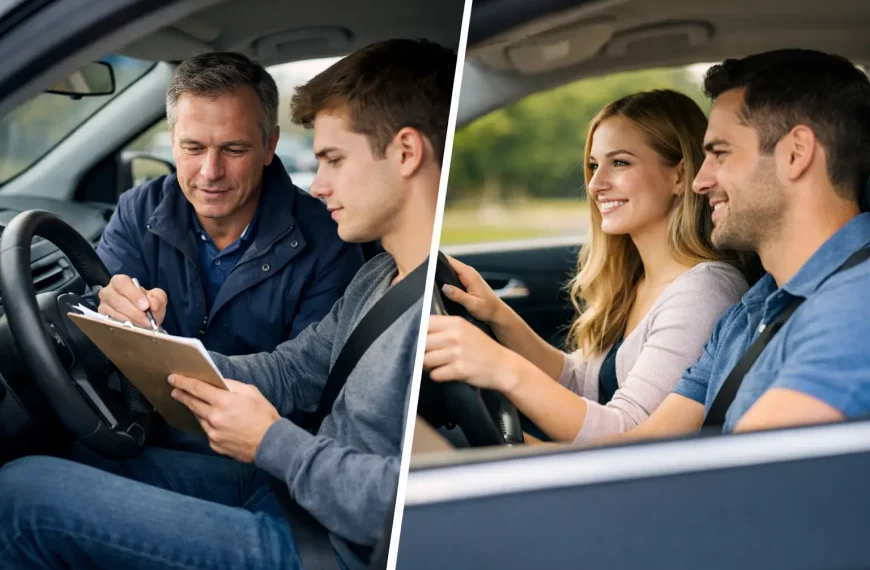
Imagine a student arriving at the test center 20 minutes early. They adjust the seat, mirrors, and steering wheel before the examiner gets in. They know where the defrost, headlights, turn signals, and parking brake are located. Before leaving the parking space, they check mirrors, signal, and perform a clear shoulder check.
The examiner does not need dramatic head movements or perfect silence. They need to see that the student is actively checking the environment and driving with intention. The student stays close to the appropriate speed without rushing, leaves space around the vehicle, and scans ahead for changing lights, pedestrians, cyclists, and parked cars.
At an intersection, the student approaches smoothly, checks both directions, and yields when required. When turning right, they check for pedestrians before and during the turn. When changing lanes, they use a full sequence: mirror check, signal, shoulder check, move when the lane is clear, then cancel the signal.
Later, the examiner asks for a three-point turn and parallel parking. The student may make a small adjustment, and that is fine. They remain observant, keep the vehicle controlled, and finish in a safe position. A first-try pass is not about looking flashy. It is about showing sound judgment consistently.
What Examiners Are Actually Watching
A G2 road test assesses whether you can drive safely on everyday roads without your supervising driver beside you. That means the examiner is watching more than parking maneuvers. They are looking for habits that protect you and everyone around you.
Observation has to be visible
You may be checking your mirrors in your peripheral vision, but the examiner cannot score what they cannot see. Use natural, noticeable mirror checks and shoulder checks. This is especially important before pulling away from the curb, turning, changing lanes, merging, and moving around parked vehicles.
New drivers sometimes overcorrect by constantly moving their head. That can take attention away from the road. The goal is not performance. Build a steady scan pattern so your checks are obvious but still natural.
Speed control matters more than speed confidence
Driving too slowly can create problems when traffic is moving normally, but speeding is a much bigger risk. Match the posted speed limit when conditions allow. If rain, snow, poor visibility, construction, or heavy traffic makes the limit unsafe, reduce your speed with a clear reason.
A strong driver also manages speed before the turn. Brake smoothly while traveling straight, enter the turn at a controlled pace, and accelerate gently after the vehicle is pointed where it needs to go. Braking hard in the middle of a turn can make the drive look rushed and unsettled.
Right-of-way decisions need patience
Many test errors happen because a student tries to be polite instead of predictable. Do not wave another driver through when you have the right-of-way unless the situation clearly requires it. Do not enter an intersection because someone behind you seems impatient. Wait for a safe gap, follow the rules, and let your driving communicate confidence.
At stop signs, come to a complete stop behind the line or before the crosswalk. Count a brief pause, scan carefully, and proceed only when the way is clear. Rolling stops are one of the easiest mistakes to avoid with focused practice.
The Skills That Turn Practice Into a Pass
A student can know the rules and still feel unprepared if they have only practiced in quiet neighborhoods. Road readiness comes from repeating skills in realistic conditions, including busier intersections, lane changes, school zones, hills, and unfamiliar streets.
Start by making your basic controls automatic. You should be able to signal, adjust climate controls for visibility, use windshield wipers, and identify dashboard warnings without losing focus. If you are using a different vehicle for your road test than the one you practice in, spend time learning its braking feel, mirror setup, blind spots, and signal controls.
Then practice the maneuvers examiners commonly request: roadside stops, three-point turns, parallel parking, uphill and downhill parking, lane changes, left and right turns, and backing up in a straight line. Do not repeat a maneuver only until it works once. Repeat it until you can recover calmly when the first attempt is not perfect.
For example, during parallel parking, you might begin slightly too far from the vehicle ahead. Instead of panicking, stop safely, assess the space, and make a controlled adjustment. Examiners understand that real drivers sometimes correct their position. What matters is whether you stay aware, avoid hitting the curb or another vehicle, and remain in control.
A Smart Practice Plan for Ottawa Drivers
Local route familiarity can reduce test-day surprises, but memorizing a route is not enough. Construction, traffic, weather, and examiner directions can change your drive. Practice the types of roads and decisions you are likely to face around your selected test location rather than trying to memorize every turn.
A useful plan includes short, focused sessions. One lesson might center on lane changes and busy intersections. Another may focus on parking and residential right-of-way rules. Your final practice drive should feel like a mock test, with independent driving, clear verbal directions from the instructor, and feedback saved until you have parked.
Professional instruction can be especially valuable when a family member has taught you different habits than the test expects. An experienced instructor can identify small issues that are easy to miss, such as turning too wide, stopping too far from the line, checking mirrors too late, or waiting too long to accelerate into a safe gap. Autoz Driving School helps students practice these details with patient coaching and road-test-focused preparation.
How to Handle Nerves on Test Day
Nerves do not mean you are unprepared. They often mean the test matters to you. The key is to give yourself a process that works even when your hands feel shaky.
Arrive early enough to settle in, but not so early that you spend an hour building anxiety. Wear comfortable shoes with a secure grip. Make sure the vehicle is clean, fueled, insured, and operating properly, with working lights and no warning issues that could prevent the test from starting.
Before you begin, take one slow breath and return to your routine: seat, mirrors, seat belt, controls, observe, signal, move when safe. If you make a minor mistake, do not assume you have failed. Continue driving safely. A single imperfect park or a cautious correction does not automatically end a test. Let the examiner decide what is scoreable while you focus on the next safe decision.
If you do not understand an instruction, ask the examiner to repeat it. That is better than guessing. If an instruction would put you in an unsafe position, prioritize safety and explain briefly when appropriate.
The Difference Between Passing and Just Hoping
Hope says, “I think I can do it.” Preparation says, “I have handled this situation before.” The first-try drivers who feel most confident are not always the ones with the most driving hours. They are the ones who have practiced deliberately, received honest feedback, and corrected weak spots before the road test.
Give yourself permission to take an extra lesson if lane changes, parking, or busy intersections still feel uncertain. A little more practice costs far less than rushing into a test before you are ready. Build the habits that make you safe after the examiner leaves the car, and your best pass example will be your own.