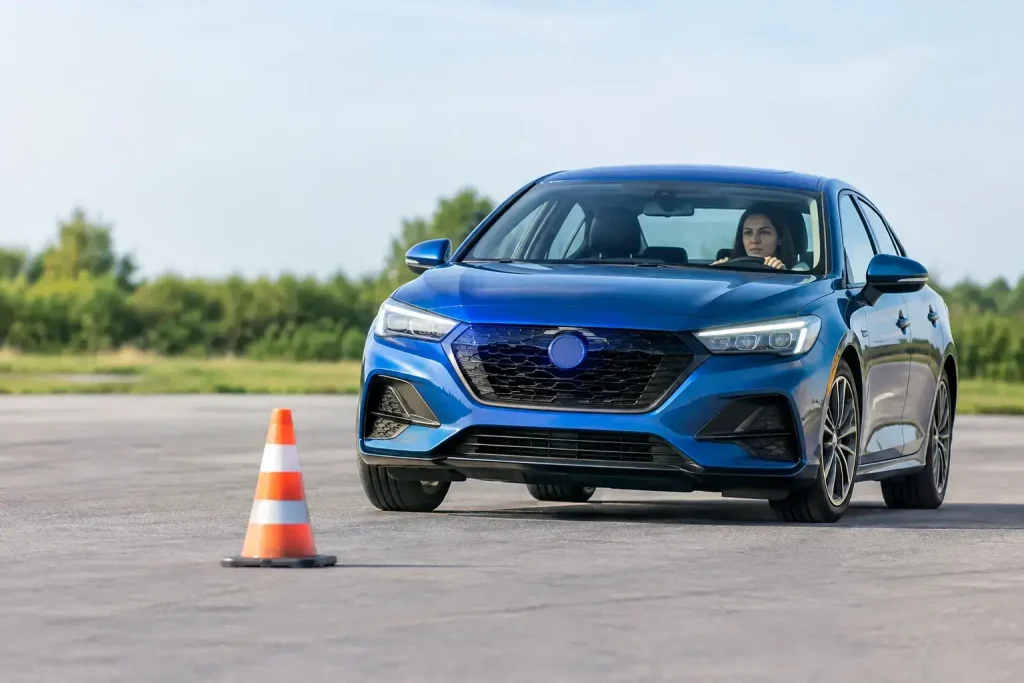
Getting your G2 means you can finally drive without a supervising driver in the passenger seat. That freedom feels great, but it also comes with responsibilities that can affect your license, your insurance, and your progress toward a full G license. This guide to G2 license restrictions explains what Ontario drivers need to know before heading out on their own.
A G2 license gives you far more independence than a G1, including the ability to drive on highways and at night. Still, graduated licensing rules are designed to help newer drivers gain experience safely. Knowing the rules now can prevent an expensive mistake later.
What You Can Do With a G2 License
With a G2 license, you may drive on your own anywhere in Ontario, including 400-series highways, as long as you follow the conditions of your license. You do not need an accompanying driver with a full G license, and you can drive at any time of day.
This is a major step up from G1 driving. It also means you are fully responsible for every decision behind the wheel: checking blind spots, managing speed, judging gaps in traffic, responding to bad weather, and staying focused when passengers are talking.
For many new drivers, the first few months of independent driving are when confidence grows fastest. They can also be when risky habits start. Treat every trip as practice for the kind of calm, consistent driving expected on the G road test.
The Most Important G2 License Restrictions
The main restrictions relate to alcohol and cannabis, young passengers during late-night hours, and the requirement to keep building safe driving experience before attempting the G test.
Zero Alcohol and Drug Tolerance
G2 drivers must maintain a zero blood alcohol concentration. This applies regardless of whether you are over the legal drinking age. If you have had alcohol, do not drive.
Ontario also has zero-tolerance rules for cannabis and other drugs for novice drivers. Do not assume that feeling normal means you are safe or legally allowed to drive. Impairment can affect reaction time, attention, lane position, and decision-making long after the obvious effects seem to have passed.
A violation can lead to immediate roadside consequences, license suspension, financial penalties, and a delay in moving forward in the licensing process. It can also create problems with insurance. The simple rule is the best one: if alcohol, cannabis, or drugs are part of your plans, arrange another way home.
Late-Night Passenger Limits for Young G2 Drivers
If you are age 19 or younger, passenger limits apply between midnight and 5 a.m. These rules apply to passengers who are 19 or younger.
During your first six months with a G2 license, you may carry only one passenger age 19 or younger during those late-night hours. After six months, you may carry up to three passengers age 19 or younger between midnight and 5 a.m.
There are exceptions. Immediate family members are not counted toward the limit. The restriction also does not apply if a fully licensed driver with at least four years of driving experience is in the front passenger seat. That accompanying driver must have a blood alcohol concentration below the legal limit.
These limits are not meant to punish young drivers. Night driving already requires more attention because visibility is lower, fatigue is more common, and hazards can appear later. Adding a car full of friends can create distraction and pressure to take risks. Plan rides before the night starts so no one is surprised by the rules.
No Shortcut to the Full G License
A G2 license is not permanent. You need to pass the G road test to earn a full G license, and you must hold your G2 for at least 12 months before taking that test. Completing an approved Beginner Driver Education course can reduce that waiting period to eight months.
The G test assesses skills that matter at higher speeds and in heavier traffic. Expect highway driving, lane changes, merging, exiting, space management, and observation habits that show you can drive independently and safely.
Time alone does not automatically prepare you for this test. Someone who drives the same short route every day may have fewer opportunities to practice merging, changing lanes on busy roads, or making confident decisions at highway speed. Purposeful practice makes the difference.
Rules That Apply to Every G2 Driver
Some rules are not unique to G2 drivers, but they matter especially when you are still gaining experience. Distracted driving is one of the biggest examples. Holding or using a phone while driving is illegal, even when you are stopped at a red light. Set your navigation, playlist, and phone settings before you shift into drive.
Seat belts are another non-negotiable. Every person in the vehicle needs to wear one, and as the driver, you are responsible for making sure passengers under 16 are properly buckled up. Keep in mind that the number of passengers cannot exceed the number of working seat belts in the vehicle.
You must also follow posted speed limits, move over when required for stopped emergency and roadside vehicles, and drive according to conditions. A speed that is legal on a clear afternoon may be unsafe during heavy rain, snow, fog, or freezing temperatures.
Demerit Points and Suspensions
New drivers do not have much room for repeated mistakes. Demerit points can be added for certain traffic convictions, and serious offenses can bring immediate consequences. Even a single poor decision, such as stunt driving, impaired driving, or dangerous driving, can have long-term effects on your license status and insurance costs.
If you receive a ticket, do not ignore it or assume it is minor because you still have your G2. Understand what you were charged with and how it could affect your driving record. More importantly, use it as a reason to improve the skill or judgment that led to the situation.
How to Build Safe G2 Driving Habits
The best way to protect your license is to build routines that reduce pressure behind the wheel. Before leaving, adjust your seat and mirrors, set your route, put your phone away, and give yourself enough time. Rushing is one of the easiest ways to make mistakes.
When practicing, choose a mix of conditions. Drive in daylight and after dark. Practice in light rain when conditions are safe. Take routes with highway merges, multilane roads, busy intersections, and parking situations. Start with familiar areas, then gradually add more challenging routes as your confidence improves.
It also helps to get feedback before small habits become permanent. Common issues include incomplete stops, weak mirror checks, late signaling, driving too close to parked cars, and hesitation when merging. A patient instructor can identify these patterns quickly and help you correct them with clear, repeatable techniques.
For Ottawa learners, local coaching can be especially useful before the G test. Road layouts, highway entrances, traffic flow, construction, and seasonal weather all affect how you drive. Autoz Driving School helps G2 drivers turn everyday driving experience into test-ready skills through focused lessons, refresher sessions, and practical road test preparation.
When to Book G Test Preparation
Consider a refresher lesson if you have not driven on the highway recently, feel anxious about lane changes, have failed a road test before, or are unsure what examiners expect. You do not need to wait until you feel completely ready. In fact, getting professional feedback early gives you more time to practice the right skills.
A strong lesson should feel specific to you. You may need more work on merging and speed control, while another driver may need help with observation or decision-making at intersections. The goal is not to memorize a route. It is to become the safe, predictable driver who can handle unfamiliar roads with confidence.
Your G2 license is a valuable opportunity to build real experience, not just wait out a licensing period. Drive sober, manage your passengers, stay focused, and practice the skills that will carry you confidently toward your full G license.