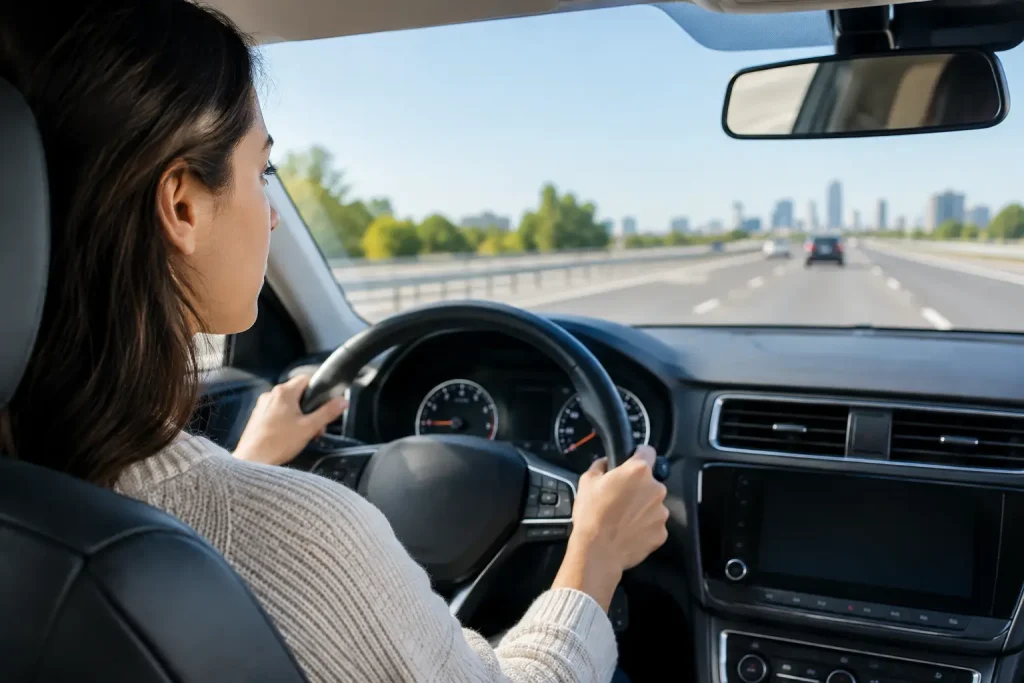
The safest way to handle Ottawa’s rush hour is to give yourself more time and more space: leave earlier than you think you need to, keep a bigger gap to the car ahead, and make every lane change and merge slow, signalled and checked. Most rush hour stress on the Queensway and on busy downtown streets comes from drivers who are late and following too closely, so planning ahead and driving defensively removes much of the risk.
Plan the trip before you start the car
Rush hour driving starts before you leave the driveway. A few minutes of planning makes the whole drive calmer.
- Know the busy windows. Weekday mornings and late afternoons are the heaviest times on Highway 417, Highway 174 and the main routes into downtown. If your schedule allows, leaving 20 or 30 minutes earlier or later can make a noticeable difference.
- Check traffic first. Look at a map app before you leave, not while you are driving. If there is a collision on the Queensway, you can choose another route while you are still parked.
- Set up the car. Adjust your mirrors and seat, set your navigation and choose your audio before you put the car in gear.
- Build in a buffer. Adding 10 to 15 extra minutes means a slowdown is an inconvenience instead of a reason to speed or cut in.
Space is your best safety tool
In crowded traffic, the typical risks are rear-end bumps and sideswipes during lane changes. Both come down to space.
Keep a following gap
Leave at least a two to three second gap to the vehicle ahead in normal conditions, and more in rain, snow or at night. Pick a fixed object such as a sign, and count from when the car ahead passes it until you reach it. In stop-and-go traffic, stop far enough back that you can see the rear tires of the car in front touching the road. That gives you room to steer around it if it stalls, and room to absorb a push if someone hits you from behind.
Look further ahead
Do not just watch the bumper in front of you. Look several cars ahead, through their windows, for brake lights. If you see traffic slowing early, you can ease off the accelerator smoothly instead of braking hard. Smooth driving is safer for you and for the drivers behind you.
Watch the space around you
Check your mirrors every few seconds so you always know who is beside and behind you. If someone is tailgating you, do not brake-check them. Increase the gap in front of you instead, so you can slow down gradually if you need to, and let them pass when it is safe.
Merging and lane changes on the Queensway
Highway 417 is where many Ottawa drivers feel the most pressure, especially at busy interchanges where lanes merge and split.
- Use the full on-ramp to match the speed of highway traffic. Merging too slowly forces other drivers to brake.
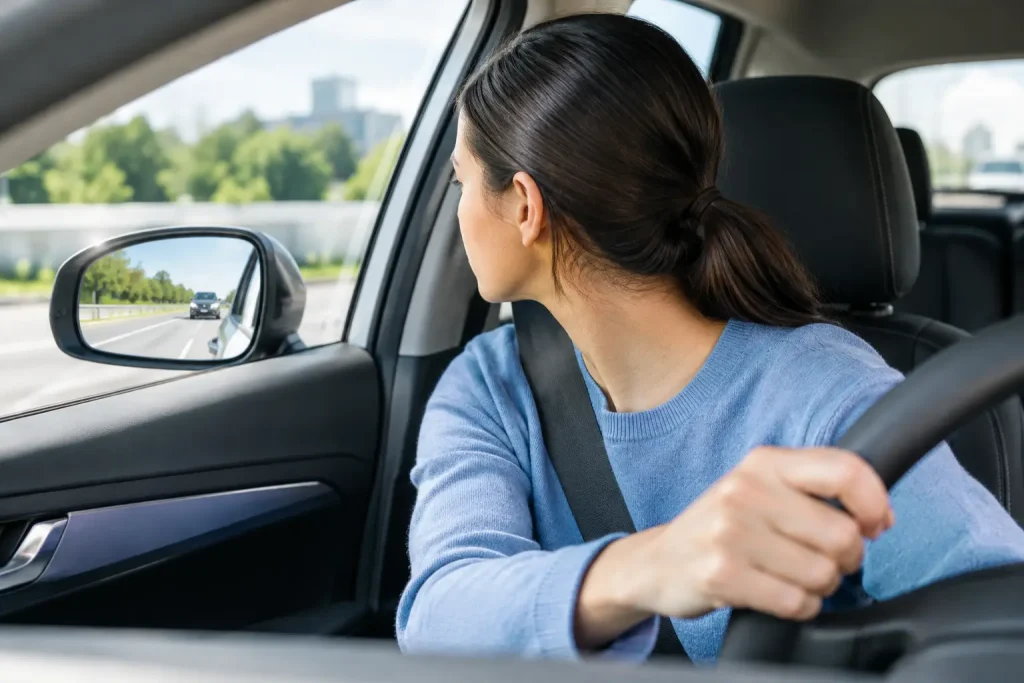
- Signal early, check your mirror, then shoulder check your blind spot before you move over. Every time, even in a lane you use daily.
- Change one lane at a time. Crossing several lanes in one move is a common cause of sideswipes.
- Get into your exit lane early. If you know your exit is coming up, move over well in advance rather than cutting across at the last moment. If you miss it, take the next exit.
- Let people in. When traffic is heavy, taking turns at a merge keeps traffic moving and lowers everyone’s stress.
If highway driving makes you tense, our guide on how to handle driving anxiety covers practical ways to build up to it.
Downtown streets, buses, cyclists and pedestrians
Downtown Ottawa at rush hour asks for a different kind of attention. Speeds are lower, but there is much more going on around you.
Buses
OC Transpo buses stop often and pull back into traffic. Leave them extra room, do not crowd them at stops, and be ready for passengers stepping off near the curb. In Ontario, when a bus at a stop signals to pull out from a bus bay, you should let it merge when it is safe to do so.
Cyclists
Many downtown and central streets have bike lanes. Before turning right, check your mirror and shoulder for cyclists coming up beside you. When opening your door after parking, check behind you first. Give cyclists at least one metre of space when you pass them, as Ontario law requires.
Pedestrians
People walking to work cross quickly and sometimes outside crosswalks. Scan the corners at every intersection, especially when turning, and watch for people stepping out between stopped cars. At pedestrian crossovers, Ontario drivers must wait until the pedestrian has completely crossed the road before moving on.
Stay calm and stay focused
Heavy traffic is tiring and frustrating, and frustration leads to bad decisions such as speeding to close a gap, cutting in or running a late yellow light.
- Accept the delay. Weaving from lane to lane saves very little time in heavy traffic, and it raises your risk every time.
- Keep the phone away. Using a hand-held phone while driving is illegal in Ontario, and stop-and-go traffic is exactly when people are tempted to look down. Put it out of reach or use a hands-free setup you set before leaving.
- Do not take other drivers personally. If someone cuts you off, ease off, let them go and keep your own driving smooth.
- Respect the limit. Driving faster to “catch up” with traffic only shortens your reaction time.
Rush hour in an Ottawa winter
Winter makes everything above more important. Roads can be icy in the early morning, snowbanks narrow the lanes and hide pedestrians, and the light is low during both commutes. Double your following distance on snowy or icy roads, brake earlier and more gently, clear all snow and ice from your windows, lights and roof before you leave, and give yourself even more time. Our winter driving guide for Ottawa goes into more detail.
Building rush hour confidence with AUTOZ
Busy traffic is easier to handle once you have practised it with someone calm beside you. At AUTOZ Driving School, our certified instructors give one-on-one lessons in automatic cars, including a Tesla, and can plan a lesson around the exact roads that worry you, whether that is merging onto the Queensway or turning left downtown at 5pm.
- New drivers can work on traffic skills in our G2 lessons.
- Drivers preparing for highway driving and the G road test can book G lessons.
- Already licensed and just want a refresher? Our private lessons work for that too.
Frequently asked questions
When is rush hour in Ottawa?
Traffic is generally heaviest on weekday mornings and late afternoons, when people are travelling to and from work and school. Exact times vary by route and by day, so check a live traffic map before you leave.
What following distance should I keep in heavy traffic?
Aim for at least two to three seconds in good conditions and more in rain, snow or darkness. In stop-and-go traffic, stop where you can still see the rear tires of the car ahead touching the pavement.
Can a learner with a G1 drive on the Queensway?
Under current Ontario rules, G1 drivers cannot drive on 400-series highways or high-speed expressways unless they are accompanied by a driving instructor. Rules can change, so confirm the current restrictions on ontario.ca.
How can I practise rush hour driving safely?
Start with quieter times and routes, then build up to busier ones as your confidence grows. A lesson with an instructor during busier traffic is a safe way to practise merging, lane changes and downtown turns with expert feedback.
If you want help feeling more confident in Ottawa traffic, you can book lessons online or reach us on WhatsApp at 613-884-1705. We are happy to suggest the right number of hours for you.