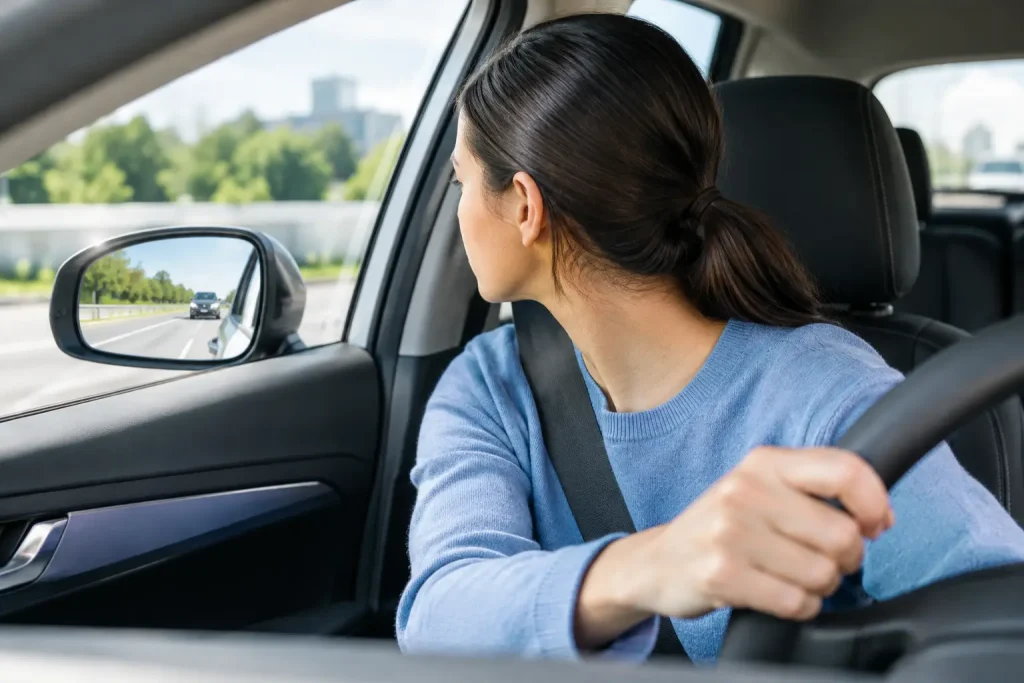
Feeling nervous while learning to drive is normal, and it usually fades as you build skill one small step at a time. The most effective approach is to tell your instructor how you feel, start in quiet areas, practise one skill at a time, and use simple breathing to stay steady behind the wheel. Learners in Ottawa go from nervous first lessons to confident road tests all the time, and the steps below show how.
Why learning to drive feels so stressful
Driving asks you to do several new things at once: control the car, watch the road, check mirrors, read signs and predict what other people will do. When all of that is new, your brain is working hard, and it is easy to feel overloaded. Add traffic, a horn behind you, or the feeling that someone is judging you, and nerves kick in.
That is not a sign that you are a bad driver or that you will never get it. It is a sign that the skills are not automatic yet. Experienced drivers check mirrors and signal without thinking because they have done it thousands of times. You will get there too. The goal is not to never feel nervous, but to feel nervous and still drive safely, until the nerves become smaller over time.
Before your first lesson
A little preparation takes a lot of pressure off the first time in the driver’s seat.
- Know the rules. Review your G1 handbook, especially right-of-way, signs and what to do at intersections. Knowing what to expect cuts down the number of surprises.
- Tell your instructor you are nervous. Mention it when you book, or at the start of the lesson. A good instructor will adjust the pace and choose a quieter area to start.
- Sleep and eat well. Being tired or hungry makes nerves worse and slows your reactions.
- Arrive a few minutes early. Rushing to a lesson raises your stress before you even start the car.
- Wear comfortable shoes. Thin, flat soles help you feel the pedals.
During your lessons
Start somewhere quiet
Your first lessons should happen in calm places such as empty parking lots or quiet residential streets. There you can practise starting, stopping, steering and turning without traffic pressure. Busier roads come later, once the basics feel easier.
Focus on one skill at a time
Pick one or two goals for each lesson: smooth stops, checking blind spots, or a clean left turn. When you try to fix everything at once, you end up feeling like you are failing at everything. When you focus on one thing, you can see yourself improve.
Breathe slowly
When you are anxious, your breathing gets fast and shallow. Before you start the car, take a few slow breaths: in through your nose for about four seconds, then out through your mouth a little longer. At a red light, relax your shoulders and loosen your grip on the wheel.
Ask questions
If something confuses you, ask. If you want to pull over and reset, say so. A good instructor would much rather stop for a minute than have you push on while overwhelmed.
Handling mistakes calmly
You will make mistakes. Everyone does, including people who become excellent drivers. You might stall, brake too hard, miss a shoulder check or take a turn wide. What matters is what happens next.
- Stay with the moment. Deal with the road in front of you first. You can think about the mistake once you are stopped safely.
- Ask what to do differently. Treat each mistake as information. Your instructor can explain what happened and how to fix it.
- Watch your self-talk. Swap “I’m terrible at this” for “I’m still learning this part.” It sounds small, but it changes how the next few minutes go.
Your instructor is there to keep the lesson safe. Knowing that someone experienced is right beside you can help you relax and focus on learning.
Practising between lessons on your G1
Lessons work best when you also practise in between. With a G1, you must drive with an accompanying driver who meets Ontario’s requirements, and there are other conditions too, such as limits on highways and night driving. Check the current G1 rules on ontario.ca, since they can change.
Choose a calm, patient supervising driver. Someone who yells or grabs the wheel can make anxiety worse. Start with the same quiet routes you used in lessons, then slowly build up: a busier residential street, then a main road, then more traffic. In Ottawa, many learners find it easier to practise on weekend mornings, when roads are quieter, before moving to weekday traffic.
Calming road test nerves
Many learners feel fine in lessons and then panic before the road test. A few habits help:
- Practise the test format. Ask your instructor to run a mock test, so the real one feels familiar.
- Get to know the area. Ottawa’s DriveTest centres are on Walkley Road and Canotek Road. Driving near the one you booked helps you feel more at home on the day.
- Warm up first. A short lesson right before your test helps you settle into the car and shake off nerves.
- Remember the examiner is not trying to trick you. They want to see you drive safely and follow the rules, as you do in lessons.
If you do not pass, it is not the end of the story. Many people need more than one attempt. Ask what to work on, practise those skills, and book again.
How AUTOZ helps nervous learners
Every private lesson at AUTOZ is one-on-one with a certified instructor, so the pace is set by you. If you are nervous, tell us, and we will start somewhere quiet and build up step by step. We teach in automatic cars, including a Tesla, so you can focus on observation and decisions instead of a clutch.
If you are just starting out, our Ministry-approved BDE online course ($650 plus HST) gives you online theory at your own pace plus 10 hours of in-car training. For test day, our road test package includes a 1-hour warm-up lesson right before your test and the use of our car for the test. It is $150 plus HST for the G2 and $170 plus HST for the G.
If you already have your licence but still feel anxious behind the wheel, our guide on how to handle driving anxiety is written for you.
Frequently asked questions
Is it normal to be scared of driving as a beginner?
Yes, it is very common. Driving is a new and complex skill, and feeling nervous at the start is a natural reaction. For most learners, the fear shrinks as basic skills become automatic.
How can I stop shaking before a driving lesson?
Take slow breaths, loosen your grip on the wheel, and remind yourself that your instructor is there to keep you safe. Tell your instructor how you feel so they can start somewhere quiet. If your anxiety feels severe or affects daily life, it may help to talk to a doctor.
Should I tell my instructor I have anxiety?
Yes. Your instructor can only adjust the lesson if they know. It also takes away the pressure of pretending to be calm.
What if I fail my road test because of nerves?
It happens, and you can book another test. Ask for feedback, practise the skills that caused trouble, and consider a warm-up lesson before your next attempt. Check DriveTest for current rebooking rules and fees.
Ready to start at a pace that feels right for you? Book a lesson online, or message us on WhatsApp at 613-884-1705 and tell us how you are feeling about driving.