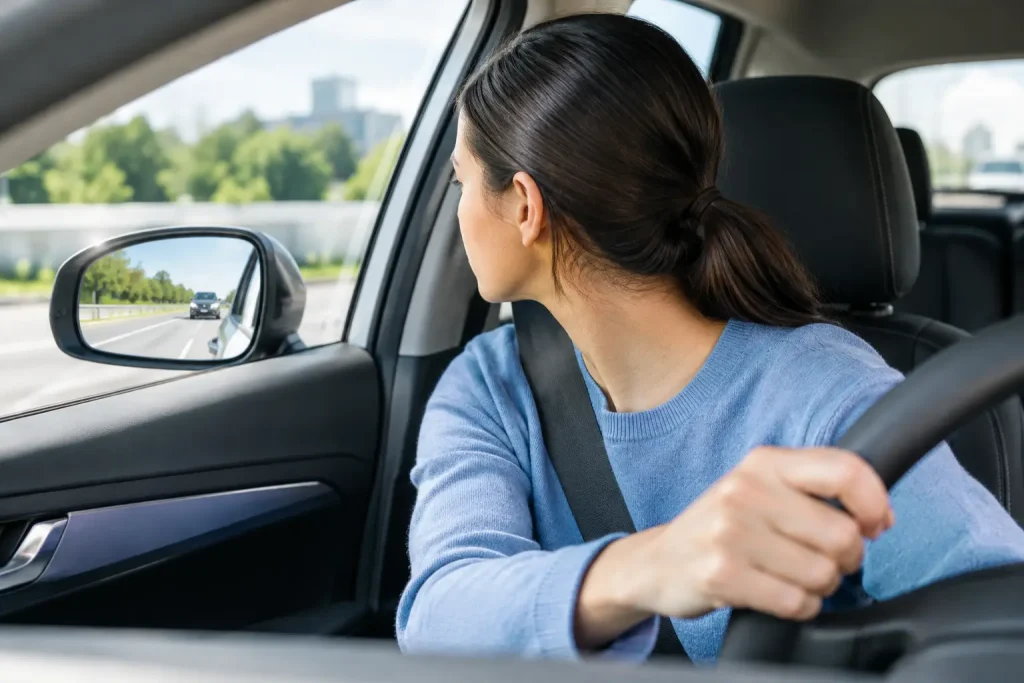
A driver’s license in Ontario is not a one-test finish line. It is a step-by-step process designed to build real experience before you are driving independently in heavy traffic, on highways, and in difficult conditions. Ontario graduated licensing explained simply: you move from G1 to G2 to a full G license, earning more freedom and responsibility at every stage.
For new drivers in Ottawa, the process can feel confusing because each level has its own rules, wait times, and road test expectations. Knowing what comes next helps you practice with a purpose, avoid costly test-day surprises, and get your license with confidence.
Ontario Graduated Licensing Explained: The 3 Levels
Ontario’s Graduated Licensing System has three stages: G1, G2, and G. Most drivers begin at G1, then pass two practical road tests before receiving a full Class G license.
The system is built around experience, not just passing exams. A road test examiner needs to see that you can make safe, consistent decisions, not merely complete a few maneuvers. That is why the waiting periods matter. They give you time to encounter real intersections, changing weather, rush-hour traffic, parking lots, and highway driving.
G1: Your learner’s permit
You can apply for a G1 license at age 16. To get it, you must pass a vision test and a written knowledge test covering traffic signs and Ontario road rules. You will also need acceptable identification and payment for the required fees.
A G1 license allows you to practice, but only with a qualified accompanying driver. That driver must have a full Class G license or higher, at least four years of driving experience, and a blood alcohol level below the legal limit. They must sit in the front passenger seat and be ready to guide you.
G1 drivers cannot drive alone. You also cannot drive between midnight and 5 a.m., drive on certain high-speed highways unless accompanied by an approved driving instructor, or have any alcohol or cannabis in your system. Your blood alcohol concentration must be zero.
For the first six months of G1 driving, you may carry only one passenger aged 19 or under between midnight and 5 a.m. After six months, that limit increases to three passengers aged 19 or under. There are exceptions for immediate family members.
The G1 stage is where good habits begin. Work on smooth braking, steering control, mirror checks, lane position, turns, parking, and scanning well ahead. It is much easier to build safe habits early than to correct rushed or nervous driving later.
G2: Your independent driving stage
After holding your G1 for 12 months, you can take the G1 exit test, commonly called the G2 road test. If you complete an approved Beginner Driver Education course, the waiting period can be reduced to eight months.
The G2 test focuses on everyday city driving. Depending on the route and local test center, you may be assessed on residential streets, busier roads, intersections, lane changes, parallel parking, three-point turns, roadside stops, and general traffic awareness. In Ottawa, route conditions can vary quickly with construction, school zones, cyclists, buses, and winter weather, so strong observation matters as much as vehicle control.
Once you pass, you receive your G2 license. This is a major step because you can drive without a supervising driver. However, a G2 is still a probationary license. You must maintain a zero blood alcohol level, and additional restrictions apply to young drivers and drivers aged 19 or under during late-night hours.
A G2 gives you independence, but it should not be treated as the end of learning. This is the stage to gain experience on highways, practice driving at night, handle heavier traffic, and become comfortable making safe decisions without someone beside you.
Full G: Your complete Ontario license
You must hold your G2 for at least 12 months before taking the final G road test. The G test is designed to assess your ability to drive safely at higher speeds and in more complex traffic environments.
Highway driving is a central part of this test. You may be asked to enter a highway, accelerate appropriately on the ramp, merge safely, change lanes, maintain speed and spacing, exit correctly, and return to city roads. Examiners also look for consistent mirror checks, effective blind-spot checks, safe following distance, speed control, and calm decision-making.
Passing the G test earns you a full Class G license. For many drivers, the hardest part is not one particular maneuver. It is showing that every part of the drive is controlled and predictable. A safe driver does not force a lane change, brake late, drift through an intersection, or rely on luck when merging.
How Long Does Ontario Licensing Take?
The fastest typical path is eight months from G1 to G2 if you complete an approved Beginner Driver Education course, followed by at least 12 months with a G2 before the G test. That means the shortest possible timeline is about 20 months.
Without an approved course, you generally wait 12 months before your G2 test and another 12 months before your G test. In practice, your timeline may be longer if you need more practice, cannot find a test appointment that fits your schedule, or need to retake an exam.
There is no benefit to rushing before you are ready. A failed test costs time, money, and confidence. On the other hand, waiting too long without regular practice can make skills rusty. The best approach is steady lessons, structured practice, and a test booking date that gives you a clear goal.
What Examiners Are Really Watching For
Road tests are not about perfect driving. Small mistakes can happen. What matters is whether you remain safe, aware, and in control throughout the drive.
Examiners pay close attention to observation. That means checking mirrors regularly, looking left-right-left at intersections, checking blind spots before moving sideways, and noticing pedestrians, cyclists, signs, and changing traffic patterns. Many otherwise capable drivers lose points because they know what to do but do not show the examiner that they checked.
They also watch how you manage speed. Driving too fast is an obvious problem, but driving far below the speed limit without a reason can also disrupt traffic. Aim for a safe, legal speed that matches the road, weather, visibility, and traffic flow.
Judgment is equally important. At a stop sign, come to a complete stop at the correct location and proceed only when the intersection is clear. When turning left, wait for a safe gap rather than trying to squeeze through. When merging, build speed on the ramp and join traffic smoothly instead of stopping unless traffic conditions require it.
How to Prepare for Your G2 or G Test
Start by identifying the skills that make you uneasy. For some learners, it is parallel parking. For others, it is lane changes, highway merges, or busy intersections. Targeted practice is more productive than repeating only the routes you already find easy.
For a G2 test, practice the basics until they feel automatic: complete stops, controlled turns, proper lane position, parking, observation, and safe right-of-way decisions. For a G test, add regular highway sessions and focus on merging, lane changes, exits, speed matching, and maintaining space around your vehicle.
A professional lesson can be especially helpful close to test day because an instructor can spot habits you may not notice, such as incomplete blind-spot checks, late braking, weak steering control, or hesitation at intersections. Local preparation also helps you understand the types of roads and traffic situations you may encounter around Ottawa test centers.
Autoz Driving School provides patient one-on-one coaching for G2 and G road tests, with practical feedback that helps drivers replace anxiety with a clear plan. Whether you are a first-time test taker, a newcomer adjusting to Ontario rules, or returning after an unsuccessful attempt, focused practice can make a real difference.
Common Mistakes That Delay Progress
The most common issue is treating the road test like a memorization exercise. Learning a route can be useful, but traffic changes every minute. Your real goal is to understand safe driving principles well enough to handle an unfamiliar situation.
Another mistake is practicing only in quiet neighborhoods. Residential driving is valuable, but it does not fully prepare you for multi-lane roads, highway ramps, complex intersections, or busy commercial areas. Build your experience gradually, then challenge yourself in different conditions.
Finally, do not wait until the week before your test to address a major weakness. If highway merging makes you nervous, start practicing it well before your G test. Confidence grows from repetition with useful feedback, not from hoping the difficult part will not appear on the route.
Your license is more than a card in your wallet. It represents the ability to make safe choices when no one is there to tell you what to do. Take each stage seriously, practice consistently, and give yourself the preparation needed to drive with confidence long after test day.